

A practical guide to checking licensing, verification, payment routes and bonus terms before deciding where to play.
The Licence Is the First Thing I Check
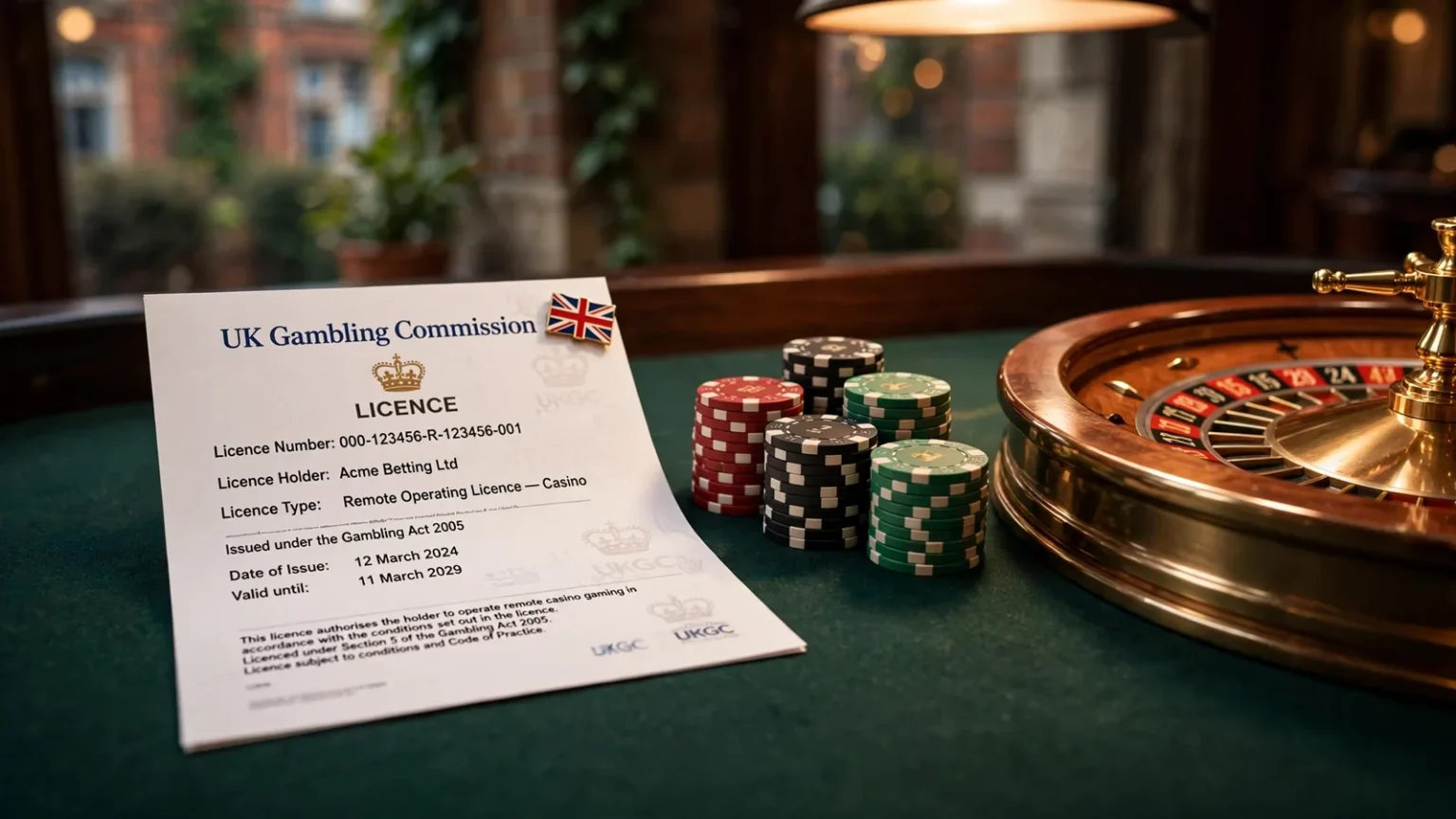
When I’m looking at a casino, I don’t start with the welcome offer or the games. I start with the UKGC licence. A polished site can make a lot of claims about being “trusted”; that word doesn’t tell me who regulates it. For an operator serving players in Great Britain, a UKGC licence is the legal baseline. Without one, it cannot legally offer gambling to those players.
That check is not a stamp of approval for every part of the experience. It answers a narrower, more useful question first: is this operator authorised to serve the market? I used to take a licence badge in a website footer at face value. It was easy to miss that a badge is only a claim made by the site. Now I look for a working link to the regulator’s official register and verify the entry there.
You can open the UK Gambling Commission’s public register from the licence information. If the casino provides a licence number, use it to find the corresponding entry. Don’t stop when a search result looks close enough. Check that the details in the register connect the casino you are visiting to the operator that holds the licence.
Match the site to the register
I compare three things: the exact website domain, the trading name and the legal business. The domain is the address in your browser, not just the casino’s brand name. A company may operate under a trading name that differs from its legal business name, so the register should make that relationship understandable. If the site shows one domain but the record points to another, or the names don’t line up, pause and establish why before you deposit.
This is where a quick glance can mislead. A familiar brand name on a page does not prove that the page belongs to the registered operator. Nor does a company name that happens to resemble the one in the footer. Read the entry, compare the details carefully and make sure the record applies to the site in front of you. If you can’t find a relevant entry, or can’t connect it to the exact domain and business, don’t treat a generic licence statement as confirmation.
UK Online Casino Payouts: What RTP Really Means
The register is more useful than a badge because it lets you check the operator against the regulator’s own record. Keep the page open while comparing the details rather than relying on a screenshot, logo or copied licence number. A number printed on a casino page is not proof by itself; the point is to confirm it in the Commission’s public register and see that the other identifying details fit.
I also wouldn’t assume that a licence held by a company somewhere in a wider group automatically covers every site using a related name. The entry needs to identify the relevant business and domain. If the relationship between the brand and the listed legal business is unclear, contact the operator for an explanation and check whether that explanation matches the register. If it still doesn’t, I’d leave the deposit button alone.
What this check can and cannot tell you
A current UKGC licence establishes that the operator is authorised to provide gambling services to the market under the Commission’s rules. It is a necessary first check, not a personal guarantee that you will like the site, win money or never encounter a problem. I find it helps to keep those ideas separate: authorisation is something you can verify; “safe” as a broad marketing promise is not.
The register is also a practical way to avoid relying on vague wording such as “fully licensed” without knowing which regulator is being claimed. Look for the UKGC entry itself. The regulator oversees operators serving British players, and a casino needs the relevant UK Gambling Commission licence to operate legally for them. If the site’s wording leaves you unsure whether it has that licence, check the official record rather than interpreting the wording generously.
I know it is tempting to move on when the site looks professional and the sign-up page is already open. I’ve made that mistake: I treated confidence in the design as if it were evidence about the operator. It isn’t. A brief register check gives you something concrete to compare before you hand over account details or money.
Do
- Use the UK Gambling Commission’s public register
- Verify the exact website domain
- Compare the trading name and legal business
Don’t
- Trust a licence badge in the footer at face value
- Rely on screenshots or copied licence numbers
- Assume a group licence covers every related site
One last point: if you arrive here through a partner link and register, this site may receive a commission. That does not replace your own check. I’d still verify the licence number, domain, trading name and legal business in the Commission’s register before depositing. Start there. Nothing flashy.
What “Safe” Should Mean in 2026
When I think about a safe online casino in the UK, I don’t mean a site that looks polished or has a padlock in the address bar. I mean one where the protections show up in ordinary use: you can set boundaries on your account, step away when you need to, and see that player funds are kept apart from the operator’s own working money.
That last point is easy to skim past. UKGC-licensed operators must segregate player funds from operating capital. In plain English, money held for players is separated from the business’s day-to-day funds. It is a useful safeguard, not a promise that every pound will be returned in every possible circumstance. I’d treat it as one part of the picture, rather than as a magic word that makes a casino risk-free.
Limits you can actually use
A casino should let you set a deposit limit and make account-level controls accessible. New customers must be prompted to set a financial limit before their first deposit. That matters because it puts the decision in front of you before money is moving, rather than leaving the tools buried somewhere you might never look.
Merkur Casino Online UK: Games, Bonuses and Checks
I’ve made the mistake of thinking I could keep track in my head. That works until it doesn’t. A limit gives you a boundary the account can enforce, instead of relying on a promise made to yourself in the middle of a session. You should be able to find the control in your account and adjust your settings there; it shouldn’t be presented as a perk or hidden behind marketing language.
Take a moment to understand what the limit controls and how it behaves before you play. A deposit limit is about money going into the account; it is not the same thing as a reminder to take a break. Set a figure that fits your own circumstances, and don’t treat a casino’s suggested setting as a recommendation tailored to you.
Time-outs are for stopping, not winning back
UKGC-licensed operators must provide time-outs. I think of one as a way to pause access when I’m getting too absorbed, not as a clever tactic for returning in a better mood and winning back losses. The useful question is simple: can you find the option without hunting through promotional pages, and do you understand what happens when you activate it?
If you notice that you’re playing longer than you intended, a pause can help create distance from the account. It cannot make earlier decisions disappear, and it cannot decide for you when to stop. That part remains yours. Still, a visible, usable control is better than a vague “play responsibly” line at the bottom of a page.
Self-exclusion should connect to GamStop
Self-exclusion is a stronger step than a temporary pause. UKGC-licensed casinos must provide self-exclusion through GamStop, the scheme intended to exclude a person from participating with registered gambling operators. If you choose this route, take the process seriously and read what it covers rather than treating it as another account setting to toggle casually.
Self-exclusion through GamStop applies across all participating registered gambling operators, whereas closing a single account only affects that specific operator.
I wouldn’t rely on closing one casino account as a substitute. Self-exclusion through GamStop is there to apply across participating operators, while closing a single account concerns that operator. If gambling is causing you harm, it may also help to speak to a support service such as GamCare or BeGambleAware. Asking for help is not a failure. It’s a sensible next step.
A practical check, not a label
“Safe” is often used as if it were a badge. It isn’t. The day-to-day test is whether the safeguards are present and understandable: player funds segregated from operating capital, financial limits offered before the first deposit, accessible account controls, time-outs and self-exclusion through GamStop.
I also pay attention to whether I can find those tools before I need them. A control that exists only in the terms is hard to use when you’re stressed or in a rush. Look through the account settings and the responsible-gambling information while you’re calm. If the options are difficult to locate or unclear, don’t let a reassuring slogan do the thinking for you.
None of these measures removes the risk of gambling or makes a casino harmless. They give you practical ways to set boundaries and pause, while the separation of funds is a safeguard around how player money is handled. That’s a more useful meaning of “safe” than glossy design. Less theatre. More control.
Offshore Sites: Know Which Protections You May Be Giving Up
An offshore licence can look reassuring on a homepage. I used to see a regulator’s badge and take it as a general stamp of safety. It isn’t. A licence issued outside the UK does not put an operator under the UK Gambling Commission’s rules for serving customers in Great Britain, and the protections attached to that licence may be different.
Anjouan Casino Licence in the UK: What It Means
That difference matters more than the design of the site or how polished its games look. Offshore regulators do not all work to the same standards. Their licences do not offer the same level of player protection as a UKGC licence or one from the Malta Gaming Authority (MGA). That is not a claim that every offshore regulator is identical; it means you should not treat a foreign licence as an interchangeable substitute for UK oversight.
GamStop and the practical gap
Operators licensed offshore are not required to connect to GAMSTOP. So if you have registered with the UK self-exclusion scheme, do not assume that setting will prevent you from opening an account or gambling at a non GamStop casino. The operator may have its own controls, but that is not the same as being part of GAMSTOP.
This is one reason I would not describe a site as a safe online gambling option for a UK player simply because it displays a licence. The key question is what that licence actually binds the operator to do, and whether the protections you rely on are part of that system. If you need self-exclusion to hold across participating UK operators, an offshore site can leave a gap.
That gap is easy to underestimate. I have made the mistake of judging a casino by what it showed me on the front page, then only later noticing which regulator sat behind the badge. A reassuring logo is not the same as a protection you can use.
Offshore Risks
Offshore sites are not required to connect to GAMSTOP and sit outside the UK’s dispute-resolution channels for gambling operators.
What happens if there is a dispute?
Non GamStop casinos sit outside the UK’s dispute-resolution channels for gambling operators. If you fall out with one over an account decision or a payment, do not assume you can use the UKGC-regulated route available for complaints about operators under its oversight. You may have to rely on the operator’s own complaint process and whatever avenues the offshore regulator provides.
Those routes can vary. Read the complaints information before you deposit, and check which regulator is named in the terms. The mere presence of a complaints page does not show that it offers the same independent process or recourse you might expect from a UK-regulated casino.
The same caution applies to funds held by the operator. Without an identifiable UKGC licence entry, you should not assume UK-specific consumer-funds protections apply. A site might describe how it handles customer money, but that statement alone does not establish that UK rules govern it or that your funds have a particular level of protection.
What the licence does not tell you
A foreign licence tells you that the operator claims to be authorised under another system. It does not, by itself, tell you that GAMSTOP applies, that UK dispute resolution is available, or that UK consumer-funds safeguards cover you. Those are separate questions, and the answers matter if something goes wrong.
I would keep that distinction in mind when reading safe casino reviews, especially if the page focuses on bonuses, game choice or a fast sign-up. Those details can be useful, but they do not settle the regulatory question. If there is no identifiable UKGC licence entry, don’t assume the protections tied to one come along for free.
Curacao Casino Licence in the UK: What It Means
This is not about declaring every offshore operator a scam. It is about knowing which system you are relying on before money or a complaint is involved. A foreign regulator may have its own rules, but you should understand their scope rather than filling in the gaps with assumptions.
One final point: this site may receive a commission if you register with a partner casino. That does not change which regulator oversees an operator, so treat editorial recommendations and licensing checks as separate things. The licence is the boundary.
Real-Money Play Has Limits, Even When a Site Looks Relaxed
I used to read a low minimum stake as a sign I could keep things under control. It isn’t. What matters is the amount you choose to risk, how quickly you return to the game, and whether the operator’s rules make you pause before spending more.
On UKGC-licensed sites, new customers must be prompted to set a financial limit before their first deposit, and account-level limit controls must remain accessible. I’d treat that prompt as a useful moment to decide what you can afford to lose, not as a box to click through. A limit only helps if you set it deliberately and don’t keep changing it to chase a session.
The rules also place boundaries around slot stakes. The maximum stake per game cycle is £5 for customers aged 25 and over, and £2 for those aged 18 to 24. Those are ceilings, not recommended amounts, and they don’t turn a risky session into a safe one. I’ve made the mistake of thinking that a permitted stake was therefore sensible for me. It wasn’t.
Attention: Maximum stakes per game cycle are capped at £5 for customers aged 25 and over, and £2 for those aged 18 to 24.
You may also encounter claims about the range of stakes at UK casinos. One specialist review reported a minimum stake of £0.10 and bets reaching £100 per round at most casinos it considered. That is a report from that review, not a rule or a reliable promise about every operator. Check the game and the casino’s own terms before you play; a headline figure doesn’t tell you what a particular bet will cost.
Spending controls aren’t the only condition to be aware of. UKGC-licensed operators must carry out enhanced affordability checks when customers meet certain criteria at spend thresholds that are not disclosed in advance. Those checks can involve asking for income verification. That may feel intrusive if you weren’t expecting it, but it is part of how licensed platforms respond to spending patterns that meet their criteria.
Non-GamStop casinos are different on this point: there is no equivalent systematic trigger requiring the same kind of affordability check. That absence shouldn’t be mistaken for evidence that spending there is safer or that you’ll face fewer consequences if play gets out of hand. Operators serving Great Britain must hold a UKGC licence; a site without one is outside that regulatory system, even if it accepts your registration.
Gibraltar Casino Licence in the UK: What It Means
So when a site makes real-money play look effortless, I’d look past the relaxed tone and check what controls are actually available, what stake the game permits, and whether the operator is UKGC-licensed. The feel of the page tells you little about the conditions attached to your money.
“Flexible” can be costly.
Before You Deposit, Get Verification Out of the Way
I used to treat account verification as something to deal with only when I wanted to cash out. That was backwards. A licensed operator must check your identity before processing a withdrawal, so leaving the paperwork until then can turn a routine request into a delay.
There are two checks to keep straight. Age verification comes first: on licensed platforms, you must be verified as old enough before accessing gambling-related content, including free demos, and the operator must verify your age before letting you deposit. Identity checks are also needed before a withdrawal can be processed. Getting your documents ready early makes the second step less likely to catch you by surprise.
Prepare the documents before funding your account
After creating an account, submit your documents before you deposit. The standard set is:
- A government-issued photo ID, such as a passport or driving licence.
- Proof of address dated within the past three months, such as a utility bill or bank statement.
- In some cases, confirmation that you own the payment method registered to the account.
The operator will tell you how to upload them and whether it needs anything else. Use clear, readable images and check that the details match the information you entered when registering. A blurry document or a mismatch can mean another request and more waiting.
I once assumed that a successful sign-up meant the account was ready for everything. It didn’t. Account created is not the same as identity confirmed. Getting the checks done before putting money in gives you time to respond if the operator asks for a clearer image or another document, rather than discovering a problem when you are waiting for a withdrawal.
Don’t mistake a quick sign-up for a cleared account
If a casino lets you browse games or create a profile quickly, that does not mean it has completed every check. A licensed site should verify your age before showing gambling-related content, even a demo, and before accepting a deposit. It may still need to confirm your identity before releasing a withdrawal.
Account Verification
- Submit a government-issued photo ID
- Provide proof of address dated within the past three months
- Confirm ownership of the registered payment method
- Check account messages for pending document status
Before depositing, check your account messages or verification area for the status of your documents. If anything is marked as pending, find out what is missing first. Keep the details you provide consistent, and avoid sending documents through an unapproved channel; follow the operator’s stated upload process.
This is basic account preparation, not a guarantee that a withdrawal will be immediate. The operator may need to review what you submitted, and extra information may be requested. But sorting it early removes one avoidable obstacle at the point you want to withdraw. Small chore. Worth doing.
If you register through a partner link, Basswin UK Guide may receive a commission.
Bonus “Value” Depends on the Small Print
I used to see a bonus figure and mentally add it to my balance. That was premature. Bonus funds can come with a wagering requirement: a stated amount of eligible betting that must be completed before bonus-linked funds can be withdrawn. The key detail is what the requirement applies to.
It may be calculated against the bonus alone, or against your deposit and bonus together. A specialist review illustrates the difference with a £100 deposit and a £100 bonus at 35x: applying the calculation to the bonus means £3,500 in turnover; applying it to the combined £200 means £7,000. That is a comparison of the arithmetic, not a description of a permitted UK offer: incentive wagering requirements at a UKGC-licensed casino must not exceed 10x. Check the actual terms, not just the headline offer.
Casino without a Swedish licence: UK guide
Then look at which games count, and how much each stake contributes. A specialist review describes slots as contributing 100% of each pound staked, while table games may contribute 5% to 10%. Those figures are not a promise about every casino’s terms. If a game contributes less, your play may count more slowly towards the requirement—or not qualify at all. The eligible-games list matters.
Bet limits can catch you out too. A specialist review reports that many operators cap eligible bets at £5 per spin while bonus credit is active; treat that as a reported practice, not a universal rule. The casino’s own terms determine the cap. Exceeding it may affect whether a bet counts, so check the limit before playing rather than trying to work it out after a balance changes.
There is another rule worth checking when an offer bundles products: one incentive must not combine more than one type of gambling product, such as betting and casino play. If the offer seems to make a single bonus depend on multiple product types, read the terms carefully before accepting it.
This isn’t about proving who you are; it’s about understanding what you are agreeing to. I now check the calculation basis, eligible games and maximum qualifying stake before I opt in. “Up to” can look generous. The conditions do the real talking.
Basswin UK Guide may receive a commission if you register with a partner casino.
Secure Payments: Check the Route, Not the Slogan
A payment badge can make a checkout look reassuring. It does not tell you whether the casino is properly regulated, or what happens if a payment goes missing. I used to treat familiar logos as a shortcut. They aren’t one.
Crypto withdrawal process
A blockchain transfer is not immediate upon request. The casino must first process the withdrawal, after which the transaction is sent on-chain, typically settling within 10–30 minutes.
Before sending money, read the payment instructions on the casino’s own site. Check which company receives the funds, whether the method is available for both deposits and withdrawals, and whether the terms explain how a withdrawal is handled. If the name shown by your bank or wallet differs from what you expected, pause and clarify it with the operator before authorising anything. A payment route should be understandable before you use it.
Crypto needs a separate bit of attention. A blockchain transfer is not the same thing as an operator approving a withdrawal: the casino may have to process the request first, and only then can it be sent on-chain. A specialist review reports that crypto withdrawals settle on-chain within 10–30 minutes after operator processing; treat that as a reported timing, not a promise for every casino or transaction. Processing at the operator and confirmation on the network are distinct steps.
Check the coin and network the operator accepts, and make sure the receiving address and network match before confirming a transfer. Crypto transactions can be difficult or impossible to reverse if details are wrong. Keep the transaction record and any withdrawal reference, so you can explain what happened if you need to contact support. If the casino’s instructions are vague, or the support team cannot explain the route clearly, I would not send funds just to find out.
Calling a casino a “secure crypto casino” is marketing unless the actual process stands up to scrutiny. Crypto can change how money moves; it does not establish that the operator is trustworthy or give you UKGC protections. I separate those questions now. Less guesswork.
Basswin UK Guide may receive a commission if you register with a partner casino. That does not change the checks worth making before you pay.
UK Online Casinos Without Registration: What It Means
Slots Should Not Be Rushed
The first thing I noticed when playing slots under British rules was what I couldn’t do: set the game to spin on its own and look away. Autoplay has been removed from UKGC-licensed slot games since 2021. You have to start each spin yourself, which makes it harder to let the game run while your attention is elsewhere.
There is also a minimum pace built into each spin. In Britain, an online slot spin must last at least 2.5 seconds. That rule is intended to slow play and reduce the intensity of a session. It doesn’t change the result of a spin or make a game safe in the sense of removing the risk of losing money. It does put a limit on how quickly one spin can follow another.
I used to treat a faster game as a better one. That was a mistake. The quicker I clicked, the less time I gave myself to notice how long I’d been playing or whether I still wanted to continue. A pause between spins is small, but it gives you a moment to make that choice.
When you’re comparing online slot games in Britain, the useful safety question is not which one looks calm or cheerful. It’s whether the game follows the rules that govern play here, including the ban on autoplay and the minimum spin duration. A polished screen is no proof of anything; the mechanics matter more.
If a slot lets you switch on autoplay or makes spins run faster than the required pace, don’t assume that is normal for a UK-regulated game. Features can differ outside the British system, so the same familiar-looking game may not behave the same way everywhere.
UK Slot Rules
- Autoplay has been removed from all UKGC-licensed slot games
- Every online slot spin must last at least 2.5 seconds
- These rules are designed to slow play and reduce session intensity
These rules do not guarantee a good session, and they can’t make a losing run feel harmless. I still find it easy to get absorbed in repeated spins. Slower is not safe by itself. It simply leaves you a little more room to notice what you’re doing.
Deposits, Transfers and the Credit-Card Ban
When I’m choosing how to fund an account, I start with the cashier page, not a banner promising “easy deposits”. The options shown there tell you which routes the operator actually accepts for your account. Check the minimum and maximum displayed, any deposit fee, and whether the method can also be used for withdrawals. A familiar payment logo is not a reason to assume every route will work both ways.
There is a firm UK rule on credit cards: remote gambling operators must not accept them for gambling payments. That includes a credit-card payment routed through a money service business, and a digital wallet cannot be used to get around the restriction if it lets credit-card funds pay for gambling. The ban has applied to UK casino operators since April 2020. If a payment is declined, don’t keep trying to disguise its source; choose a permitted route shown by the operator instead.
Bank transfers can suit someone who would rather move money directly from a bank account, but don’t plan around instant arrival. A specialist review covering several brands recorded transfer times of 3–5 banking days. Treat that as a reported timeframe, not a promise for your account: the operator’s payment page and your bank’s processing can affect when funds arrive.
PayPal is not a given at non-GamStop casinos. A specialist review notes that availability depends on PayPal approving the merchant, so seeing the name elsewhere does not establish that it will appear in a particular cashier. Check before you rely on it.
I also separate the payment method from the offer attached to it. A “no deposit bonus” is not a deposit route, and an offer does not make a payment method safe by itself. Read the cashier’s terms before sending money, keep a record of the transaction, and make sure you know which route the operator says it accepts. Boring, but useful.
A Casino App Still Needs the Same Checks
An app icon can make a casino feel established. I used to treat a polished download as a kind of endorsement; it isn’t. The app is just another way into the operator’s service, so check the company behind it before you create an account or deposit.
For customers in Great Britain, a casino offering gambling must hold a current UKGC licence. Find the licence number in the app or on the operator’s website, then cross-check it against the UK Gambling Commission’s public register. Compare the exact website domain, trading name and legal business shown there. A badge, a licence number without a matching entry, or an app-store listing is not enough.
The operator should provide a working link to the register beside its licence information. I’d open that link myself rather than rely on a screenshot or a claim in the app. Small check. Worth doing.
Account checks still apply when you play on a phone. On licensed platforms, age verification is required before you can access gambling-related content, including free demos, and the operator must confirm your age before allowing a deposit. Every licensed operator also has to verify your identity before processing a withdrawal. That last step can catch people out: seeing a balance in the app does not mean the account is ready to cash out.
If the app sends you to a website to finish registration or resolve an account issue, check that the domain still matches the one in the regulator’s register. Don’t assume an app published under a familiar brand name is proof that the operator is licensed.
A safe online casino app in the UK is not a separate category with lighter rules. Judge the operator, not the icon. Basswin UK Guide may receive a commission if you register with a casino through a partner link; that does not replace your own licence check.
Is it safe to play at online casinos in the UK?
A UKGC-licensed casino is the regulated option for players in Great Britain and must provide protections such as deposit limits, time-outs and GamStop self-exclusion. A licence is an important safeguard, not a guarantee that gambling is risk-free.
How do I verify whether a UK online casino is safe before depositing?
Follow the licence link to the UK Gambling Commission’s public register and check that the listed operator, trading name and website domain match the casino you are visiting. Don’t rely on a badge or licence number shown on the site alone.
What does a dependable online UK casino combine?
Look for a UKGC licence that matches the casino’s domain and operator, usable account controls such as deposit limits, time-outs and GamStop self-exclusion, and separation of player funds from operating money.
What determines how an online casino bonus works in practice?
Check whether wagering applies to the bonus alone or to the deposit and bonus combined, and which games count toward it: slots usually contribute 100% of stakes, while table games typically contribute 5% to 10%. Most operators also limit eligible bets to £5 per spin while bonus credit is active.
What are the differences between UK-licensed and non-UK-regulated online casinos?
UKGC-licensed casinos must provide protections including deposit limits, time-outs and GamStop self-exclusion; offshore operators are not required to connect to GamStop and do not offer the same UK dispute-resolution channels. The UK credit-card deposit ban does not apply to offshore operators, and UKGC slot rules include no autoplay and a minimum 2.5-second interval between spins.
What responsible gambling tools can I use?
At UKGC-licensed casinos, you can use deposit limits, time-outs and self-exclusion through GamStop. New customers must be prompted to set a financial limit before their first deposit.
Recommended online casinos
- x3betBonus: Welcome Pack 100% Up to £1.000 + 200 Free Spins · Payout speed: 1-3 business days
- EvoSpinBonus: 125% up to €2500 + 125 Free Spins · Payout speed: 1-3 business days
- NightLuckBonus: Welcome Pack + 805% Up To 6400€ + 280 FS · Payout speed: 1-3 business days
- BeOnBetBonus: 100% up to €500 + 100 FS · Payout speed: 1-3 business days
- DieselwinBonus: Welcome Pack 250% up to £4000 + 200 FS · Payout speed: 1-3 business days
- JetsetspinsBonus: 200% Bonus + 100 Free Spins + Free Royal Wheel · Payout speed: 1-3 business days
- ZombillionBonus: Welcome Pack 250% up to £4000 + 200 FS · Payout speed: 1-3 business days
- AmunbetBonus: Join now and get 450% up to 2,700 GBP + 450 FS · Payout speed: 1-3 business days
- SpinFormulaBonus: 550% Up To £15,000 + 550 FS · Payout speed: 1-3 business days
- BritsinoBonus: Welcome Package – Get your £2,200 + 2,000 FS · Payout speed: 1-3 business days
Material created by the team Basswin UK Guide