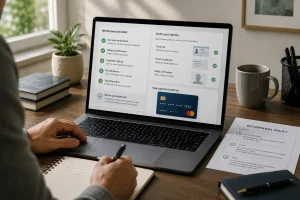


A practical look at licensing, payout delays, bonus restrictions and the safeguards that may be missing outside the UK system.
What “offshore” means for a UK player
When people in Britain talk about an offshore casino, they generally mean an online gambling operator that takes British customers but does not hold a licence from the UK Gambling Commission (UKGC). The word describes the operator’s position outside the British licensing system; it does not simply mean that a website, server or company address is physically overseas.
That distinction is the useful starting point. A casino can have an overseas licence and still be described as offshore in the UK context, because that licence is not a UKGC licence. Its regulator may be based elsewhere, but that does not put the operator under the UK Gambling Commission’s authority. “Licensed” is not a complete answer on its own. You have to ask: licensed by whom, and for which market?
I used to read the word as though it were a location label, almost like seeing where a company had opened an office. That misses the part that matters to a UK player. The important difference is whether the operator holds the licence required to serve the British market under the UK system. A foreign licence and a UKGC licence are not interchangeable just because both involve a regulator.
The same point applies to phrases such as “international casino” or “non-UK casino”. They may tell you that a business is based outside Britain, or is presenting itself as serving customers across borders, but they do not establish that it has permission from the UKGC. In everyday conversation, people may use these labels loosely. For clarity, I use “offshore” here for an operator licensed outside the UK and not regulated by the UKGC.
That does not mean every site using the label is identical. The word alone tells you neither which overseas authority issued a licence nor what that authority’s rules require. It also does not describe the quality of a site, the games it carries or whether a particular customer will have a smooth experience. It is a category, not a verdict.
Non-GamStop Curacao Casino Sites: What to Check
There is a tempting shortcut in this area: treat “licensed” as a general stamp of approval and move on. I have made that mistake. But the regulator named by a site matters, because a licence from an overseas authority does not make the operator part of the UKGC system. The reverse is true too: a business being based abroad does not, by itself, tell you whether it holds a UKGC licence. Location and licensing status are related ideas, not the same one.
So when someone asks for the best offshore casinos in the UK, the phrase can sound as if it means “the best casinos that happen to be abroad”. In this context, it usually points to something more specific: operators without a UKGC licence that accept British customers. That wording does not make them UK-licensed, and it should not blur the difference between the two regulatory positions.
It is also worth keeping the terms separate from the player’s legal position. Calling a site offshore is a description of the operator and its licensing arrangement; it is not a claim that the player has committed an offence. The broader legal question has its own detail, so I would not use the label itself as a shortcut for deciding what the law says about a person who visits one.
UK mobile casinos: paying by phone credit
Nor does the label tell you what practical safeguards apply. The UKGC does not regulate these operators, so you should not read “offshore” as meaning that British rules automatically follow the casino abroad. Equally, the label cannot tell you every term or process a particular site uses. Those questions need to be considered separately rather than guessed from a flag, a logo or a confident line of marketing.
For me, the cleanest definition is simple: an offshore casino, in the UK market, is an online gambling operator accepting British customers without a UKGC licence, and operating under an overseas licence rather than UKGC regulation. That is what the term means here. It is not a recommendation, a ranking or proof that the operator offers protections equivalent to a UK-licensed casino.
A label is only the starting point.
Reading casino sites without trusting the sales pitch
A licence badge can look reassuring. I used to treat it as a shortcut: see a seal in the footer, assume somebody official had checked the whole operation, move on. That was too generous. A licence claim is a starting point for checking, not a verdict on whether a casino is right for a UK player.
Attention: A licence claim is a starting point for checking, not a verdict on whether a casino is right for a UK player.
Read the wording carefully. A site may say it is “licensed”, “regulated” or “fully compliant”, but those words do not tell you by themselves which company holds the licence, which regulator issued it, or what the permission actually covers. The operator’s legal name matters too. It may not match the name on the homepage, so look for the company details and see whether they connect clearly to the licence information.
A claim about an offshore casino licence also does not mean the operator is authorised by the UK Gambling Commission. Offshore casinos are outside the UKGC system and are not regulated by the Commission. That distinction is easy to miss when a site puts a regulator’s emblem beside a bold promise of “safe play”. The emblem, even if genuine, does not turn an overseas licence into a UKGC licence.
What a licence claim can establish
If the details are specific and can be checked, a licence may help identify the regulator and the company responsible for the site. That is useful information. It gives you something more concrete to assess than a slogan or a row of badges.
A specialist casino review may describe many offshore platforms as licensed and regulated by reputable authorities, and say this means they comply with relevant laws and guidelines. Treat that as a broad description, not a guarantee about every site or every licence. The word “reputable” is an assessment; it is not itself proof. Nor does a licence claim establish that the operator offers UKGC-level protections, or that you would have the same routes for resolving a complaint as you would with a UKGC-licensed operator.
Online casinos with no sister sites in the UK
I would look for the exact regulator and licence holder rather than relying on a logo. If the site gives a licence number or links to a regulator’s records, compare the details there where possible. Check that the named company corresponds to the operator you are using, not merely to a business with a similar name. If the page offers only vague wording and a decorative seal, you have learned very little.
What the sales language leaves out
“Licensed” is not a synonym for “risk-free”. It does not tell you how a regulator handles complaints, what rules apply to a particular product, or how a dispute would be dealt with. You need to know which jurisdiction is involved before those details mean anything. A site may be operating under an overseas authority, but that does not place it under UKGC oversight.
The same caution applies to claims such as “trusted”, “secure” and “fair”. They may sound like evidence, but without clear supporting detail they are just claims made by the business. A licence should be considered alongside the operator’s identity and the precise scope of its permission. It should not be used as a substitute for checking those things.
There is another gap worth keeping in view: offshore operators do not provide UKGC-mandated affordability checks. So an attractive licence badge does not mean the operator follows the UK’s regulatory safeguards. That is not a minor footnote. It changes what protections you can expect.
Do
- Look for the exact regulator and licence holder
- Check if the company name matches the operator
- Compare details with the regulator’s records
Don’t
- Treat a licence badge as a guarantee
- Rely on vague wording or decorative seals
- Assume a licence implies UKGC-level protection
I also separate a site’s own statements from independent description. A homepage is advertising; a review can be useful, but it can have its own commercial angle. Neither should be treated as the regulator speaking. The more a page leans on grand phrases while avoiding a clear company name or regulator, the less weight I give its reassurance.
A practical way to read the footer
When checking casino sites with an offshore licence, I’d use a short sequence:
- Find the operator’s legal name and the regulator it says issued the licence.
- Look for licence details that can be checked, rather than trusting a badge on its own.
- Make sure the company named in the licence information is connected to the site you are visiting.
- Keep the jurisdiction separate from UKGC authorisation; one does not imply the other.
- Treat broad promises about safety or compliance as claims until their basis is clear.
This will not tell you that a site is suitable, and it cannot make an offshore operator equivalent to a UKGC-licensed casino. It does help you notice when the sales pitch is doing more work than the actual licensing information.
My old shortcut was to see a seal and stop asking questions. Now I read the company name, the regulator and the limits of the claim. Less shiny. More useful.
Recommended online casinos
- x3betBonus: Welcome Pack 100% Up to £1.000 + 200 Free Spins · Payout speed: 1-3 business days
- EvoSpinBonus: 125% up to €2500 + 125 Free Spins · Payout speed: 1-3 business days
- NightLuckBonus: Welcome Pack + 805% Up To 6400€ + 280 FS · Payout speed: 1-3 business days
- BeOnBetBonus: 100% up to €500 + 100 FS · Payout speed: 1-3 business days
- DieselwinBonus: Welcome Pack 250% up to £4000 + 200 FS · Payout speed: 1-3 business days
- JetsetspinsBonus: 200% Bonus + 100 Free Spins + Free Royal Wheel · Payout speed: 1-3 business days
- ZombillionBonus: Welcome Pack 250% up to £4000 + 200 FS · Payout speed: 1-3 business days
- AmunbetBonus: Join now and get 450% up to 2,700 GBP + 450 FS · Payout speed: 1-3 business days
- SpinFormulaBonus: 550% Up To £15,000 + 550 FS · Payout speed: 1-3 business days
- BritsinoBonus: Welcome Package – Get your £2,200 + 2,000 FS · Payout speed: 1-3 business days
Fast payouts: what the clock actually depends on
“Fast payouts” sounds like one simple promise: request your money and see it arrive soon. In practice, there are two clocks to think about. One is the casino’s own handling of your withdrawal; the other is the payment processing after the casino releases it. A headline time can blur those stages together, which makes it hard to tell what the operator is actually promising.
For Skrill and Neteller, reports indicate that most foreign casinos clear withdrawals within 24 hours, with many processing them in under 12. That is the casino’s stated or reported handling time, not a guarantee that every request will be completed on that schedule. If a withdrawal sits pending, the waiting time may have more to do with the operator’s process than with the e-wallet itself.
USA Casinos for UK Players: Licensing and Risks
I used to read “quick withdrawals” as if it meant the money would be available almost as soon as I clicked the button. That was too generous an interpretation. The useful detail is whether the casino describes a processing window, a pending period, or the time after approval. Those are not necessarily the same thing.
The operator still has to deal with its own rules before a payment leaves. A specialist review reports that withdrawal limits, pending periods and verification procedures can differ considerably between operators. That variation matters: one casino might move a request through promptly, while another could leave it waiting under its own procedures. “Fast” needs context.
A pending period is especially easy to misread. The request has been made, but the payment may not yet have been sent. Verification can also affect the wait if the operator needs to check details before approving a withdrawal. So even when an e-wallet is described as a quick route, the operator’s handling can be the part that sets the pace.
When I look at a payout claim, I try to find the point at which the clock starts and what event stops it. Does the stated time begin when you submit the request, or only after the casino has approved it? Does the wording describe processing by the site or arrival in the wallet? If those details are unclear, a short-looking estimate may not tell you much about the time you will actually wait.
Payment speed depends on two distinct clocks: the casino’s internal handling time and the subsequent payment processing time.
It is also worth separating a reported pattern from a promise about a particular casino. The figures for Skrill and Neteller describe what many operators are reported to do; they do not tell you how a specific withdrawal will be handled. Nor do they remove the possibility that an operator’s own procedures add waiting time.
I have learnt not to treat a payment logo or a bold speed claim as the whole story. The clock depends on the method, but it also depends on the casino’s queue, rules and checks. Read the timing language carefully. “Quick” is not a timetable.
Bonus money is not cash you can withdraw
The word “bonus” makes the offer sound like extra money in your balance. It may appear there, but that does not mean you can withdraw it. With an offshore casino bonus, the key question is what you must do before the bonus funds become cash you can take out. That condition is usually described as a wagering requirement.
A wagering requirement sets a target for qualifying bets. The multiple is applied to the bonus amount, not treated as a small fee you pay once. So the headline figure can hide a much larger amount of betting. I’ve learned to look past the offer banner and work through the arithmetic first. Less exciting. More useful.
One specialist review illustrates the difference with a £20 bonus carrying a 35x wagering requirement: the player would need to place £700 in qualifying bets before cashing out. That is the betting target, not a promise that the bonus will turn into £700, or that the money wagered will come back. Bets can lose along the way, and the bonus remains subject to the offer’s rules.
Best Casino App UK: What to Check Before Playing
The same review gives a larger illustration: a 100% match bonus of £100 with a 35x requirement means £3,500 in bets must be placed before the bonus funds convert to withdrawable cash. “100% match” sounds generous; the requirement changes what that headline means in practice. It is not free cash. It is a condition attached to bonus funds.
Before accepting an offer, check which balance the wagering applies to, what counts as a qualifying bet, and whether there are restrictions on how the bonus can be used. Those details can determine how much betting is needed and whether your preferred play contributes at all. Do not assume the headline explains the mechanics.
The phrase “no deposit” can sound like there is nothing to lose. It only describes how the offer is received; it does not, by itself, tell you whether winnings can be withdrawn straight away. A no-deposit bonus may still have conditions attached, so read those before treating any resulting balance as yours to cash out. The words on the banner are not the full deal.
I would also separate the amount you must wager from the amount you might win. Meeting a target does not guarantee a profit; it only satisfies a stated condition, assuming the bets qualify under the terms. If the rules are hard to find or unclear, I would not count the displayed bonus as money I can rely on. That is the simple test: can you explain the requirement before you opt in? If not, pause.
Bonus Wagering Calculation
Step 1: Identify the bonus and requirement
Take a £100 match bonus with a 35x wagering requirement.
Step 2: Calculate the betting target
Multiply the bonus amount by the requirement (£100 × 35).
Step 3: Determine the total qualifying bets
Recognise that £3,500 in bets must be placed before the bonus funds convert to withdrawable cash.
Licensing risks and the point where things can go wrong
The risk I pay most attention to is not whether a site has a polished lobby. It is what happens when a withdrawal becomes a dispute. An offshore licence is not a UK Gambling Commission licence, and a badge on a website does not give you the protections or routes for complaint associated with a UK-licensed operator.
There is also a legal line on the operator’s side. A company without the required UKGC licence is acting illegally if it advertises gambling services in the UK or provides gambling facilities to UK customers. That is different from saying the customer has committed an offence. The practical point for someone weighing up a site is that its willingness to accept a British player does not mean it has permission to serve the British market.
The consequences can be painfully ordinary: you request your winnings, and the operator refuses to pay. Gambling.com has reported cases in which unlicensed sites withheld winnings and customers were left without legal recourse. That is a report of cases, not a claim that every offshore operator behaves this way. But the possibility matters, because getting a decision reversed can be much harder when the operator sits outside the UK regulatory system.
I have learned not to treat a licence logo as a safety net. If a dispute arises, the question is not just whether the site displays offshore casino licences, but which regulator issued the licence, what oversight it provides, and whether there is a usable complaint route. A foreign regulator is not the UKGC, and it cannot give you the same UK framework for taking a complaint forward. “Licensed” is not a magic word.
Before depositing, I would look for clear terms on withdrawals, account closure and complaints, and keep copies of the rules and relevant messages. That will not force a site to pay, but it gives you a record if the operator changes its explanation or says you breached a condition. I used to skim terms until money was already involved. Bad timing.
A list of offshore casinos can make comparison look simple, but the name at the top tells you little about what happens when a payment is challenged. The useful check is whether the operator’s stated licence and complaint process are identifiable, and whether you understand the limits of that route. If the only answer is a vague promise that support will sort it out, I would treat that as a warning, not reassurance.
None of this proves a particular site will refuse a withdrawal. It does mean the consequences of a refusal can be more difficult to address than they would be with a UKGC-licensed operator. That gap is the risk.
Withdrawal methods: speed, delays and trade-offs
A bank transfer can feel like the sensible, familiar choice when you want winnings sent to your account. The drawback is the wait. A specialist review reports that bank withdrawals from foreign casinos can take five to seven business days, and that some operators add a processing delay before the transfer even reaches the banking system.
That means “sent” and “received” are not necessarily the same moment. There can be a casino-side wait followed by the bank’s own timeline. I’d read the withdrawal terms with both stages in mind, rather than treating a processing estimate as a promise that the money will be in your account by then. Slow going.
Bank Transfer
Familiar route but slow; can take five to seven business days with additional casino processing delays.
Cryptocurrency
Often clears in under an hour, though the final value in pounds may fluctuate due to market volatility.
Crypto can be much quicker on the clock. A specialist review reports that withdrawals at foreign casinos often clear in under an hour, faster than fiat methods. But speed is only one part of the decision: crypto’s value can move, so the amount you receive may be worth more or less in pounds by the time you convert or use it.
That trade-off is easy to miss when a site leads with “instant” payments. A quick transfer does not make the value stable, and the speed claim does not tell you how the casino handles a request before releasing it. I’d separate the time taken to clear from the value you ultimately keep.
If you are weighing offshore casino withdrawal methods, compare the outcome you care about: a bank transfer offers a familiar route but can mean several business days of waiting; crypto may clear much sooner but exposes the value to fluctuation. Neither description tells you what a particular operator will do with your request, so read its stated terms rather than assuming every site follows the same process.
There is also a bigger point behind the payment choice. Offshore casinos are not regulated by the UK Gambling Commission, and they do not provide UKGC-mandated affordability checks. A fast crypto withdrawal does not change either fact or give you the protections attached to a UKGC-licensed operator.
I used to focus on the quickest-looking option and treat the rest as small print. That is backwards. First decide whether you can accept a variable value or a longer bank wait; then check the casino’s own withdrawal conditions before depositing. If the method’s trade-off does not suit you, an offshore casino alternative may simply be not using that site. A payment label is not reassurance.
What the industry connections reveal—and what “chargeback” does not promise
A casino’s games are only part of the picture. I’ve learned to look at the business relationships behind a brand too, because they can show who earns money when customers play—and lose. That does not, by itself, tell you whether a particular operator will treat you fairly. It does give you a reason to read the details rather than relying on a polished homepage.
One documented example involves Santeda and SIS. Santeda operated brands under a Curaçao licence, but that licence did not authorise it to operate in the UK or the US. Under a contract between the companies, SIS received a percentage of revenue from losing bets made through Santeda’s brands. That is a specific commercial arrangement, not proof that every supplier or partner in the casino industry shares revenue in the same way.
Still, it changes how I think about industry connections. A name appearing beside a casino might mean a supplier, a commercial partner, or something else; it does not automatically mean that the company endorses the operator or takes responsibility for customer complaints. Ask what the relationship actually is, and who is responsible for what. The label alone tells you very little.
The same caution applies when you see “chargeback” presented as a way to get money back. A chargeback is not a guaranteed refund, and its mention does not establish that a disputed gambling payment will be reversed. The outcome depends on the circumstances and the payment provider’s process; don’t treat the word as a safety net or a reason to deposit money you cannot afford to lose.
Licensing Risk
Unlicensed sites may withhold winnings, leaving customers without legal recourse as they sit outside the UK regulatory system.
I would also separate that question from the games themselves. People often search for information about games at an offshore casino as though a familiar title or supplier settles whether the site is trustworthy. It doesn’t. A game catalogue cannot confirm the operator’s regulatory status, explain a contract between businesses, or promise that a payment dispute will go your way.
Offshore casinos are not regulated by the UK Gambling Commission, and they do not provide UKGC-mandated affordability checks. That matters when weighing any claim about oversight or protection. A commercial connection is not a substitute for regulation, and a chargeback is not a substitute for checking who is taking your money.
I used to read a recognisable name as reassurance. It isn’t enough. Find out what the relationship means, keep the claims separate, and don’t mistake a possible route for recovering funds for a promise that you will recover them.
The UK legality question, without the sales spin
I used to read “overseas licence” as if it answered the whole legal question. It doesn’t. The key distinction is between the person placing a bet and the operator offering gambling to people in Great Britain.
A British player is not committing an offence simply by betting with a casino licensed abroad. UK law does not prohibit an individual from placing bets with an overseas operator, and there is no criminal penalty for the player merely for doing so. That remains true even when the casino does not hold a UK Gambling Commission licence.
The operator’s position is different. An online gambling site that offers its services to customers in England, Scotland or Wales must hold a Gambling Commission licence. A licence from another country does not replace it. If an operator provides gambling facilities to people in those parts of Great Britain without the required UK licence, the operator is acting illegally.
That distinction is easy to blur on an offshore casino site. A foreign licence may be presented as proof that the business is licensed somewhere, but it does not mean the business is authorised to serve the British market. “Licensed” needs a destination attached to it. Licensed where? And for which customers?
So the short version is not that every offshore casino is legal in Britain, nor that a player breaks the law by visiting one. The law places the licensing requirement on the operator offering gambling here, while it does not criminalise the individual customer for placing a bet with a casino abroad. Different sides of the same transaction. Easy to muddle.
When I see a claim that a site is a “best offshore casino UK” choice, I treat that as sales language, not a legal conclusion. A ranking cannot turn a foreign licence into a UK Gambling Commission licence, and a player’s lack of criminal liability does not make an unlicensed operator’s offer lawful.
That’s the line worth keeping clear: the player is not committing a UK offence simply by betting overseas; an operator offering gambling to customers in England, Scotland or Wales without a UKGC licence is breaking the rules that apply to it. No spin needed.
Free spins still come with terms
Free spins can look like the cleanest kind of casino promotion: no extra cash balance to understand, just spins attached to an offer. I’ve found that the label does less explaining than it seems. It tells you the format, not what the spins are worth to you or what rules apply.
How to assess free spins
Check the conditions attached specifically to the spins, including what the offer requires, how resulting winnings are treated, and whether there are limits on withdrawing them.
A specialist review of foreign-casino promotions groups free-spin packages alongside deposit matches, no-deposit bonuses and cashback offers as common promotion types. That is a useful way to place them: they are one part of a broader menu, not a special category that should be treated as automatically better. “Free” is the sales word. The terms are the useful bit.
Before accepting an offer, I would look for the conditions attached specifically to the spins. Check what the offer requires, how any resulting winnings are treated, and whether there are limits on using or withdrawing them. Those details can change the practical value of the promotion. If the terms are hard to find or unclear, I would not assume the headline tells the whole story.
There is also a difference between receiving spins and receiving withdrawable money. The spins are a promotional feature; they do not, by themselves, tell you what you can ultimately take out. That is why I would read the offer conditions before opting in, rather than after a win has made the small print suddenly interesting. Learned that late.
If you are comparing a “best offshore casino” claim with a free-spins offer, keep the two ideas separate. A generous-looking promotion is not proof that a site is a good choice, and a free-spins headline cannot establish how fairly a dispute would be handled. Offshore casinos are not regulated by the UK Gambling Commission, and they do not provide the affordability checks mandated for UKGC-licensed operators.
I would treat a free-spins offer as a set of terms to assess, not a gift to count on. If the conditions do not make sense before you take it, the sensible move is to leave it alone. No spin is worth guessing.
Offshore operators, crypto and the safeguards you give up
A casino that takes cryptocurrency can look like a different sort of operation: wallet addresses, coin balances and payments that never touch your bank account. But the payment method does not change who regulates the operator. Offshore sites are not regulated by the UK Gambling Commission, and using crypto does not bring them inside the UK system.
Non-UK-Registered Casinos: Rules, Risks and Licences
That distinction matters more than the branding. A site may describe itself as secure or present its crypto option as a modern alternative, but neither phrase tells you what protections apply if you have a problem. I used to treat a slick payment page as a sign that the whole operation was dependable. It isn’t. A way to move money is not the same thing as oversight.
There is another safeguard to be clear about: offshore operators do not provide the affordability checks mandated by the UKGC. Those checks are part of the UK regulatory framework; a foreign casino outside that framework does not become subject to them because it accepts British customers or offers familiar payment options. Less friction can sound attractive in the moment. It can also mean fewer interventions when gambling is becoming difficult to control.
GamStop is a separate issue, and an important one. It covers all operators licensed by the UKGC. If you register for self-exclusion through GamStop, you are excluded from every UK-licensed gambling site. Foreign casinos outside the Commission’s remit are not covered by that scheme. So a self-exclusion that blocks access within the UK-licensed market should not be mistaken for a block across every site that might accept a British player.
That is not a workaround to recommend. If you signed up to GamStop because you needed distance from gambling, choosing a non-GamStop casino can undo the practical barrier you were trying to put in place. Crypto does not make that decision safer, and a different currency does not restore the safeguards that are absent.
I would separate the questions before putting any money in: who oversees the operator, what protections are missing, and whether the payment method makes it easier to act without pausing. Those are not small-print details. They affect what support and restrictions you can rely on.
Different rails. Same gap.
Is it legal for UK residents to use casino sites that operate outside the UK’s licensing framework?
Yes, there is no UK law that makes it illegal for you to bet with an overseas casino. However, an operator must hold a UK Gambling Commission licence to offer gambling services to customers in England, Scotland and Wales.
What is the fastest way to withdraw from an online casino in the UK?
E-wallets are generally the fastest fiat option, with most operators processing withdrawals within 24 hours. At foreign casinos, crypto withdrawals often clear in under an hour, though the value can fluctuate.
How do I know if an online casino is safe?
Check the operator’s legal company name, the regulator that issued its licence and what that licence covers. An overseas licence does not provide UKGC regulation or guarantee UK-level protections, and a licence badge alone is not proof that a site is safe.
What happens if I have a dispute with a foreign casino?
You are outside the UKGC system, so the Commission does not regulate the operator. Some unlicensed sites have refused to pay winnings, leaving customers with no legal recourse.
Are foreign casinos safe for UK players to use?
Not automatically: foreign casinos are outside UKGC regulation, and protections vary between operators. Some unlicensed sites have refused to pay winnings, so check the operator’s licence and terms rather than relying on a safety claim.
Are bonuses at foreign casinos actually better than at UKGC-licensed sites?
Foreign casinos often offer larger welcome packages, including deposit matches, free spins, no-deposit bonuses and cashback. Check the wagering requirements: for example, a 100% match bonus of £100 with a 35x requirement means £3,500 in qualifying bets before the bonus can become withdrawable.
Can I play at a casino licensed outside the UK?
Yes, playing at a casino licensed outside the UK is not illegal for you as a British player. The operator’s overseas licence does not, however, authorise it to offer services in the UK without a UKGC licence.
Material created by the team Basswin UK Guide