
A guide to offshore licensing, UK legal distinctions, withdrawal risks, payment access and safeguards outside the UK system.
What “Non-UK-Regulated” Actually Means
A non-UK-regulated casino is an online gambling site that operates without oversight from the UK Gambling Commission (UKGC). The phrase describes the regulator the operator does not answer to; it does not, by itself, tell you whether the site has a licence somewhere else.
That distinction matters. “Non-UK-regulated” can sound like “unregulated”, but those are not automatically the same thing. A casino may hold a licence issued by another jurisdiction while having no UKGC oversight. The name of that jurisdiction is useful context, but it does not turn the licence into a UK licence.
I’ve learned not to treat a badge or a country name as a shortcut for understanding a site. The wording on a homepage can make a licence claim look like a broad endorsement. It is narrower than that: it identifies a claimed regulatory connection, not the UKGC’s oversight.
The different labels
You may see “non-UK registered casinos”, “non-UK-regulated online casinos” or “casinos not registered in the UK” used to describe much the same broad category. Strictly, “registered” and “regulated” are not identical ideas. A business may be registered as a company in one place and licensed to offer gambling under a regulator in another. In this context, the important point is whether the operator is overseen by the UK Gambling Commission.
“Non-UK based” is also not a reliable substitute for “non-UK-regulated”. A company’s base and the regulator overseeing its gambling operations are separate details. The UKGC requirement for operators serving customers in Great Britain applies regardless of where an operator is based. So a foreign address alone does not establish which regulatory framework applies.
This is why I’d read the label as a starting point, not a verdict. It tells you to look beyond the site’s presentation and identify which regulator, if any, is responsible for the gambling service. It does not tell you whether the operator is trustworthy, what protections apply, or whether a particular licence claim is current.
Jurisdictions you may see named
Non-UK-regulated casinos are commonly associated with licences from Malta, Curaçao, Gibraltar or Anjouan. These names refer to jurisdictions outside the UKGC system. They do not all describe one shared regulator or one identical licensing arrangement; seeing one of them tells you where a licence may have been issued, not that the site is regulated by the UKGC.
Non-GamStop European Casinos: UK Rules Explained
The practical difference is easy to miss when a casino uses several flags, seals or licence references on its pages. A foreign licence and a UKGC licence are not interchangeable labels. If the site is described as licensed in one of those jurisdictions, that is a claim about its non-UK regulatory status. It does not mean that the UK Gambling Commission supervises it.
Nor does the jurisdiction name alone settle what you should think of the operator. I wouldn’t read “licensed” as a promise that every part of a service has the same oversight or protections as a UKGC-regulated one. The word is only useful when you know who issued the licence and which company it applies to. A badge without that context is just a badge.
How this relates to GamStop
People also use “casinos not on GamStop” when looking for non-UK-regulated casinos. The terms are related in common conversation, but they are not definitions of the same thing: one describes a site’s regulatory position, while the other refers to its relationship with a self-exclusion scheme. A search for one label can bring up sites described using the other, but that overlap should not blur what each phrase means.
That is also why “UK casinos not registered with GamStop” can be confusing wording. It can sound as if GamStop registration were a gambling licence. It is not the same question as whether the UKGC oversees an operator. Keep those distinctions separate and the terminology becomes less slippery.
For the rest of this discussion, I use “non-UK-regulated casino” to mean an online gambling site without UK Gambling Commission oversight. If a site names Malta, Curaçao, Gibraltar or Anjouan, that may explain the foreign licensing context; it does not make the site UK-regulated. The label is a classification, not an endorsement.
A non-UK-regulated casino is an online gambling site that operates without oversight from the UK Gambling Commission (UKGC), though it may hold a licence in another jurisdiction.
What UK Law Says About Playing on Offshore Sites
The legal position is easier to muddle than casino adverts make it sound. The key distinction is between the rules for an operator that offers gambling to people in Great Britain and the position of the person who opens an account. Those are not the same question.
Under the Gambling Act 2005, a remote operator serving customers in Great Britain needs a licence from the UK Gambling Commission. That obligation does not disappear because a company is based abroad or holds permission from another jurisdiction. If a casino is aimed at the British market, its location is not a workaround for the local licensing requirement.
That is the operator’s side of the line. The individual-player side is different. UK law does not explicitly forbid British citizens from using gambling services licensed in other countries, and a player does not commit a criminal offence simply by gambling on a site that lacks a UK licence. I would not turn that into “it must be fine, then”. It is a narrower point about criminal liability, not a stamp of approval.
“Available to play” is not “licensed to serve”
When people look for online casinos not registered in the UK, they can mean several things: a site that loads in a browser, a site that accepts a British customer, or a site authorised to provide gambling services to people in Great Britain. Those descriptions can overlap, but they are not interchangeable.
Casino Sites: Deposits, Licensing and UK Access
A website being accessible does not establish that its operator has the required UK permission. Nor does a foreign licence, by itself, show that the operator is authorised to serve the British market. The relevant question for the operator is whether it holds the UK Gambling Commission licence required for that market.
The rules concern the service being offered, not merely where the company has an office. That is why “based overseas” and “outside UK regulation” do not automatically answer the licensing question. A remote business can be located elsewhere and still fall under the requirement to hold a UK licence when it serves Great Britain.
The Gambling Act applies in England, Wales and Scotland; Northern Ireland is outside that Act. So it is worth avoiding sweeping claims that every part of the UK is covered in precisely the same way. For Great Britain, the licensing requirement for operators serving local customers is the central point.
What this means for a player
If you have been searching for online casinos not registered with GamStop UK, or for live casinos not registered with GamStop, that wording can blur two separate issues. Whether a casino participates in a self-exclusion scheme is not the same legal question as whether its operator has the UK licence needed to serve Great Britain. The first does not settle the second.
Likewise, calling a site “safe”, “reputable” or one of the best casinos not registered with GamStop does not establish its legal status. Those are promotional descriptions, not regulatory categories. I have learned to be wary when a confident label is doing the work that a clear explanation should do.
Legal Distinction
While gambling on an unlicensed site is not a criminal offence for the player under UK law, the operator must still hold a UK licence to legally serve customers in Great Britain.
The same applies to new online casinos not registered with GamStop or a list of top casinos not registered with GamStop 2026. Newness, a foreign licence, or a prominent claim about being available to UK players does not replace the question of UK authorisation. And a site appearing in a search result is not evidence that the UK Gambling Commission has licensed it.
So there are two statements to hold together, even if they sound awkward side by side: operators offering gambling to customers in Great Britain must have the required UK licence, while a player who gambles on an unlicensed site does not, on that basis alone, commit a criminal offence under UK law. One concerns the operator’s regulatory duty; the other concerns whether the player is committing a crime.
That distinction matters if you are weighing the legal risk of using an online casino not registered in the UK. It does not turn an unlicensed operator into a UK-regulated one, and it does not mean the site has permission to supply gambling services in Great Britain. Equally, saying that the operator may be outside the UK licensing system is not the same as saying that the player will be prosecuted for placing a bet.
I would read the claims carefully and keep the questions separate: is the operator authorised to serve customers in Great Britain, and what does the law say about the person using the service? “Not a criminal offence for the player” answers only the latter. It does not answer whether the operator is meeting its obligations.
Online casinos with no sister sites in the UK
That is the legal distinction worth keeping in view. Don’t confuse access with authorisation.
The Withdrawal Problems You Need to Factor In
The moment you request a payout is when the promise on a casino page meets the operator’s actual process. With a non-UK-regulated casino, that process can be harder to predict than the deposit screen suggests. I wouldn’t treat a displayed estimate as a guarantee: the time can depend on the payment method, the checks on your account and the operator’s own handling of the request.
Published accounts of withdrawal timing do not agree. One estimate puts withdrawals at casinos not on GamStop at 24 hours to five business days, depending on the method. Another says a withdrawal at a non-UK-regulated casino can take as long as three or four weeks. Those are materially different expectations, not two ways of saying “quick”. There is no regulatory clock to enforce a stated payout time in this context, so a delay may leave you waiting without a straightforward way to make the operator meet its advertised schedule.
That uncertainty matters whether you are looking at a new casino site or one you have used before. A site being described as a UK casino not registered with GamStop tells you something about its relationship with the self-exclusion scheme; it tells you nothing dependable about how promptly it will release a balance. The same goes for slot sites not registered with GamStop, including Curaçao casino sites not registered with GamStop. The label is not a payout record.
Withdrawal times at non-UK-regulated casinos can vary significantly, with reports ranging from 24 hours to several weeks, as there is no regulatory clock to enforce payouts.
A large balance may not come out at once
A specialist review has reported that some non-UK-regulated casinos set daily, weekly or monthly withdrawal limits. If a limit applies, a large win may have to be paid in instalments rather than as one transfer. That can stretch the time before you receive the full amount, even if each individual request is processed without a delay.
Treat that as a possibility to verify for the specific casino, not as a standard rule for every site. Look for the withdrawal limit in the account terms before you play, and check whether it applies to the amount you can request, the amount the operator will process, or both. If the wording is unclear, ask the operator to explain it in writing before money is at stake. A vague answer is useful information in itself.
“Fast withdrawals” is advertising language, not a promise you can safely build around. Find the actual terms for your account and keep a copy of them. If the site changes its conditions or applies a limit differently from what you understood, having the wording you saw can help you describe the problem clearly, even though it does not guarantee a particular outcome.
Verification can arrive at payout time
An operator may ask for identity or account documents as part of a withdrawal check. A specialist review has also described cases where offshore operators request notarised documents or a video call. Those are reported possibilities, not steps every casino will require, but they show why it is worth checking the verification rules before depositing.
Casino No ID Verification in the UK: What It Means
Read the requested-document list carefully. Check whether documents have to be current, whether details on your account must match them, and how the operator wants them submitted. If the process is only explained after you request money, or the requested steps keep changing, it can become difficult to tell what remains before a payout can be approved. Keep a record of what you sent and when, and save the operator’s replies.
I’d be cautious about assuming that completing an initial account check settles every later question. A withdrawal request can prompt further scrutiny, and a request for more information can hold up processing. That does not by itself prove misconduct; it does mean you should not count an unapproved balance as money already in your hands.
Delays and frozen accounts
A withdrawal can be delayed while the operator reviews a request, and an account may be frozen during a dispute or further checks. If that happens, record the dates, the explanation given and any steps the operator says you need to take. Ask for a clear written account of what is preventing the withdrawal, rather than relying on a succession of vague assurances.
Do
- Record dates and explanations given for delays
- Request written accounts of withdrawal blocks
- Verify payout terms before depositing
Don’t
- Rely on displayed payout estimates as guarantees
- Assume an initial account check settles all future verification
- Trust vague assurances regarding frozen accounts
There is a difference between a stated processing window and a meaningful route to make a late payment happen. At a UK casino registered with the relevant regulator, the operator sits within the UK regulatory system; a casino site not registered in the UK does not offer that same framework for enforcing a payout timetable. That distinction is easy to overlook while you are focused on the balance on screen.
Before you play, work out how you would handle a long wait, staged withdrawals or an account review. If the answer is that you need the money promptly, don’t treat a non-UK-regulated casino’s estimated payout time as dependable income. The practical test is not how quickly a deposit appears. It is what the terms allow once you ask for your money back.
Curaçao Sites, Gamban and the Payment Catch
A Curaçao label may catch your eye, but it tells you little about how a deposit will travel—or how you could get money back out. Non-UK-regulated casinos may list cards, e-wallets, bank transfers and cryptocurrency, sometimes using payment processors other than the familiar UK names. The route can vary from one casino to another.
That is where I’d slow down. A payment button is not a promise that the same method will be available for withdrawals. A casino might accept a deposit through one route while offering a different set of cash-out options. Check the cashier and the terms before sending money, and don’t assume that a method appearing at deposit stage settles the question.
Crypto has a particular catch. It can bypass the UK ban on gambling funded by credit cards, but that describes the payment route—not a guarantee about how a casino handles your account or pays out. “Easy deposits” is marketing language; what matters is the actual route for both directions.
Some accounts of offshore payment options also mention deposits charged to a mobile phone bill or taken from a prepaid balance. That claim comes from a specialist review, so I would treat it as an option reported for some sites, not as a standard feature you can expect to find. Availability can change, and the operator’s own cashier is what you would need to check.
There is another distinction worth keeping straight when you are looking at Curaçao casinos not on GamStop. GamStop is the UK Gambling Commission’s self-exclusion scheme; a casino outside it is not part of that scheme. Gamban is a separate service, so a site’s GamStop status does not, by itself, tell you whether Gamban will block access to it. Nor does a casino’s payment menu answer that question. Don’t treat “not registered with Gamban” as a reliable label for what the software will or will not block.
I’ve learned not to read a convenient deposit option as proof that the whole transaction is straightforward. Check the withdrawal route separately, and look at the casino’s own stated terms before you pay in. If the payment route is unclear, pause. No rush.
What a UK-Registered Online Casino Has to Meet
“Registered” can mean two different things on a casino website. You might register an account by entering your details; that only gives you access to the site. It does not show that the operator is authorised to offer gambling to customers in Great Britain.
How to identify UK registration
Check whether the operator holds a licence from the UK Gambling Commission. A foreign address, a polished website design, or the ability to create an account does not establish that the operator is licensed to serve Great Britain.
The distinction I check is whether the operator holds a licence from the UK Gambling Commission. If a company serves customers in Great Britain, it needs that licence even if its headquarters, servers or parent company are based elsewhere. A foreign address does not remove the requirement, and a site being reachable from a British browser does not meet it.
That sounds simple, but the wording on a homepage can blur the point. A casino may describe itself as “licensed” without making clear which authority issued the licence or what markets that permission covers. The word alone tells you very little about whether the operator is licensed to serve Great Britain. Nor does being listed in an app store, accepting a British payment method or letting you create an account establish that status.
I used to treat a polished site as a kind of proof. It isn’t. A convincing design and a smooth sign-up flow can tell you that the website works; they cannot tell you that its operator has the required UK Gambling Commission permission. That distinction matters before you deposit, not after something goes wrong.
For a UK registered online casino, the useful question is therefore not simply whether the site is available here. Ask whether the company behind it has the relevant UK Gambling Commission licence to serve customers in Great Britain. The operator’s location does not change that test.
This is a narrower point than whether a site has a licence somewhere. A casino may hold permission from another jurisdiction, but that does not make it UK-licensed. Treat claims about being “regulated” as incomplete until you know which regulator is meant and whether the operator has permission for the British market. Availability is not authorisation. Big difference.
I also keep the wording precise: the rule described here concerns Great Britain, not every part of the United Kingdom. That is why a broad label such as “UK casino” can be less useful than checking the actual operator and the market it is authorised to serve.
So when you see “registered online casino” in a description, don’t assume the word means regulatory approval. Account registration and permission to serve British customers are separate things. For Great Britain, the relevant standard is a UK Gambling Commission licence held by the operator—not merely a site that opens on your phone.
Recommended online casinos
- x3betBonus: Welcome Pack 100% Up to £1.000 + 200 Free Spins · Payout speed: 1-3 business days
- EvoSpinBonus: 125% up to €2500 + 125 Free Spins · Payout speed: 1-3 business days
- NightLuckBonus: Welcome Pack + 805% Up To 6400€ + 280 FS · Payout speed: 1-3 business days
- BeOnBetBonus: 100% up to €500 + 100 FS · Payout speed: 1-3 business days
- DieselwinBonus: Welcome Pack 250% up to £4000 + 200 FS · Payout speed: 1-3 business days
- JetsetspinsBonus: 200% Bonus + 100 Free Spins + Free Royal Wheel · Payout speed: 1-3 business days
- ZombillionBonus: Welcome Pack 250% up to £4000 + 200 FS · Payout speed: 1-3 business days
- AmunbetBonus: Join now and get 450% up to 2,700 GBP + 450 FS · Payout speed: 1-3 business days
- SpinFormulaBonus: 550% Up To £15,000 + 550 FS · Payout speed: 1-3 business days
- BritsinoBonus: Welcome Package – Get your £2,200 + 2,000 FS · Payout speed: 1-3 business days
How to Check Whether a Licence Is Worth Trusting
A licence badge on a casino homepage is a claim, not proof. I’d treat it as a lead to check, not a reason to trust the site. Before relying on it, look for the operator in the relevant regulator’s public register and compare the entry with what the casino says about itself.
Start with the company name, not just the brand. A casino may use a trading name that differs from the legal entity named on its licence, so check whether the details connect clearly. If the register lists a different company, or the casino gives you no way to reconcile the names, don’t fill in the gap yourself. I’ve learned that a polished badge can make a weak claim look settled.
Verifying a Licence
Check the legal entity
Look for the operator in the regulator’s public register using the company name rather than just the brand name.
Confirm status and date
Verify that the licence is current and has not expired on the regulator’s own official register.
Validate the jurisdiction
Identify which specific authority issued the licence and whether it actually authorises operation in the intended market.
Then check the entry’s status and expiry date. A licence that has expired, or whose current status cannot be confirmed, is not the same as a current authorisation. Make sure you are looking at the regulator’s own register rather than a logo, a copied certificate or a page repeating the operator’s description. Take care with spelling, too: similar company names are not automatically the same business.
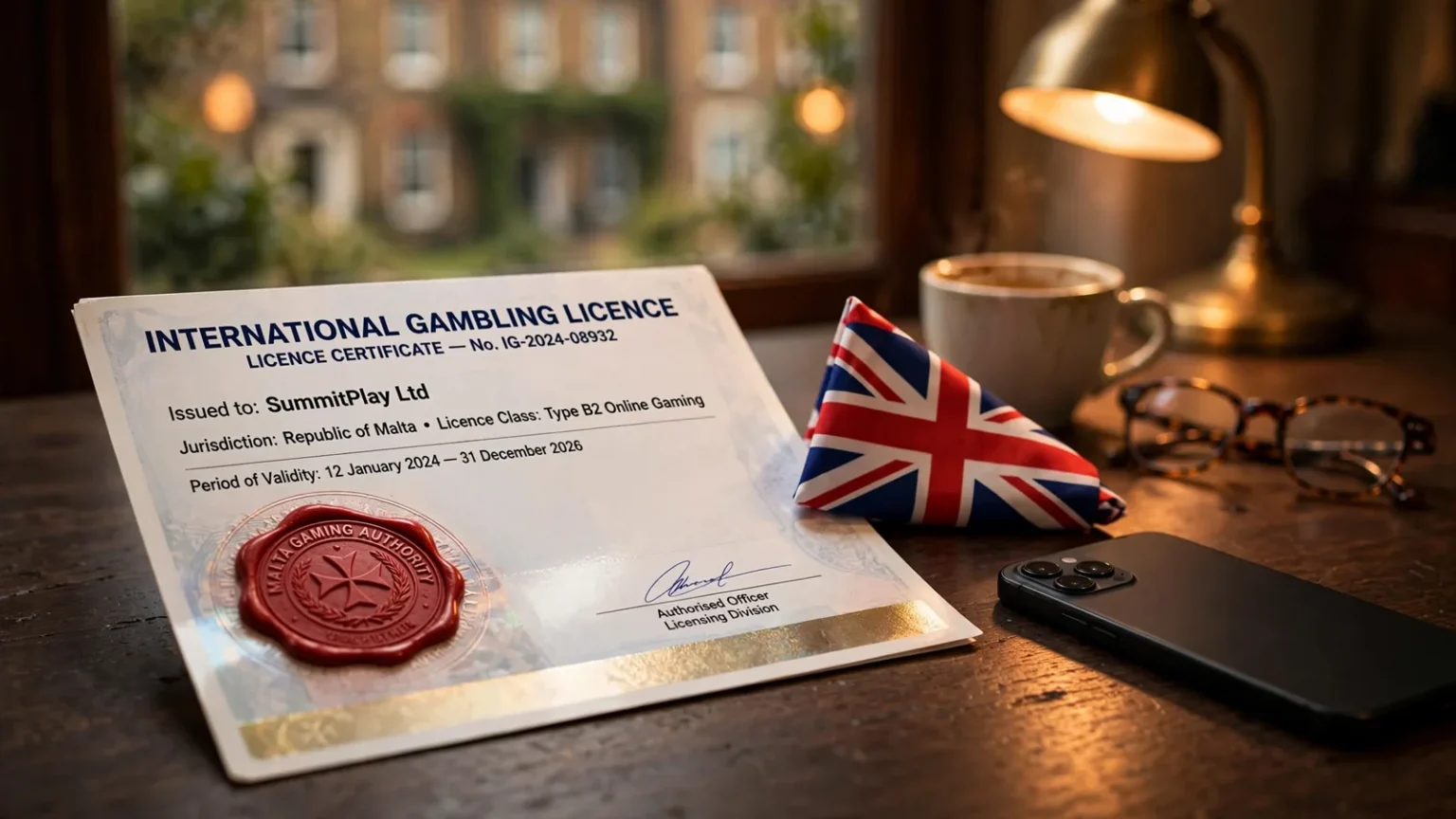
The licensing jurisdiction matters. Non-UK-regulated casinos may claim oversight from Malta, Curaçao, Gibraltar or Anjouan, but those are different regulators and frameworks. The word “licensed” alone tells you neither which authority is involved nor what markets the licence covers. In particular, an Anjouan casino licence should not be read as permission to operate in the United Kingdom: it does not authorise UK operation or service in other restricted markets.
That distinction matters when you are weighing up a casino outside GamStop. A licence claim and a site’s relationship to self-exclusion are separate things; neither one proves the other. A Curaçao casino not registered with GamStop still needs its own licence details checked, and the badge should lead you to a verifiable register entry rather than end the investigation.
If the register cannot confirm the operator, the name does not line up, or the expiry information is unclear, pause. Don’t rely on a “trusted” label or a confident support reply to bridge the gap. I’d rather walk away from a claim I can’t verify than assume a foreign licence covers more than it does. Check the record first. Then decide what it actually says.
GamStop and Gamban Are Not the Same Question
I used to treat “not on GamStop” as if it answered every question about whether I could reach a casino or keep myself away from it. It doesn’t. The phrase has a narrower meaning: a casino not on GamStop is outside the UK Gambling Commission’s self-exclusion scheme. That tells you about GamStop, not about Gamban.
Gamban is a separate name, and a casino’s registration status does not tell you whether Gamban will prevent access on your particular device. I wouldn’t assume that a site is blocked—or accessible—based only on wording such as “not registered with Gamban”. It can sound like the operator has a formal registration relationship with a service. That is not what a non-GamStop label establishes.
The distinction matters if you are trying to avoid gambling, rather than simply comparing labels. GamStop status says the casino is not part of that UK scheme. It does not establish what other tools you have enabled, what they cover, or whether they will affect a particular site. Check the information from the service you use and the settings on your own devices; don’t rely on a casino’s marketing description to answer those questions.
GamStop is the UK Gambling Commission’s self-exclusion scheme, whereas Gamban is a separate service. A site’s status regarding one does not determine whether the other will block access.
There is a further limit: the wording “UK casino not registered with Gamban” can blur two separate things. A site may be aimed at UK visitors without being part of GamStop. That still says nothing reliable about Gamban access. Nor does a casino’s claim that it is “Gamban-friendly” prove that a blocking tool will behave a certain way. I’d treat that as a claim to verify, not a safeguard.
Anjouan-licensed casinos, for instance, are not required to integrate GAMSTOP. That makes the distinction concrete: a casino’s absence from the scheme is not a technical promise about every other service, and it is not evidence that a site has been checked by Gamban. Don’t merge the names.
If you are looking for support to stop gambling, base the decision on the self-exclusion or blocking service itself, not on a casino’s label. If you are checking a site, ask precisely what you need to know: is it part of GamStop, and separately, what does the device-level tool you use say about access? Those are different checks. Easy to mix up.
What an Anjouan Licence Does—and Doesn’t—Provide
An Anjouan casino licence can tell you that an operator claims oversight from Anjouan. It does not give that operator permission to serve every country. The licence does not authorise operation in the United Kingdom or other restricted markets, so seeing it displayed is not the same as seeing permission to operate here.
I used to treat a licence badge as a kind of safety net. It isn’t. The important question is what the licensing framework actually requires—and what it leaves outside its promise.
Player funds are one gap. Anjouan-licensed casinos do not have to guarantee that customer money is kept separate from the operator’s own funds. If the company fails, you may rank as an unsecured creditor: someone owed money without a specific pot of protected funds set aside to repay them. That does not mean every operator will fail or misuse money. It means the licence alone does not secure your balance if one does.
That is a very different level of reassurance from seeing a badge and assuming your cash is ring-fenced. Not the same thing.
Complaints have a similar limit. The Anjouan authority does not take up player complaints, mediate between you and a casino, or decide who is right. So if an argument develops over an account or a disputed balance, the authority is not an independent referee you can ask to resolve it.
The operator may still have its own complaints process, but that is not the same as an external body reviewing the dispute. I’d keep those two ideas separate: a licence may exist, while the route for challenging the operator remains limited.
For a UK player weighing up a non-UK registered casino, the Anjouan licence should therefore be read narrowly. It does not authorise UK operation, guarantee that player funds are segregated, or provide an authority-led complaint decision. Those are meaningful limits, not fine print to skim past. A badge is not a backstop.
The Safeguards You Give Up Outside the UK System
The difference I pay attention to now is not just what a casino lets me do when I sign up. It is what protection is still there if I need help, want to put a brake on my gambling, or disagree with how the operator has handled something.
By playing outside the UK system, you give up access to the UK’s Financial Ombudsman Service and the mandatory responsible-gambling protections enforced by the UKGC.
A UK-licensed casino operates under UK Gambling Commission requirements. At a non-UK-regulated casino, responsible-gambling rules and data-protection standards may be less stringent. That can mean fewer safeguards in practice, so don’t assume that tools you expect from a UK-registered casino will be available on the same terms. In particular, do not count on mandatory responsible-gambling tools, such as deposit limits or self-exclusion, being there for you. Check the controls the operator actually offers before putting money in.
That distinction matters most when you are already trying to step back. A tool that is missing, hard to find, or not available in the way you need is not much of a safety net. I used to treat a page full of responsible-gambling wording as reassuring. It isn’t the same thing as having protections you can rely on. Not close.
There is also a difference in where you can take a complaint. Playing outside the UK system means giving up access to the UK’s Financial Ombudsman Service and to UK regulator complaint routes for that casino. The operator may have its own process, but that is not the same as independent UK recourse if you and the casino cannot agree.
So I would not read “international” or “licensed” as shorthand for equivalent protection. A licence from elsewhere does not, by itself, give you the UK safeguards or complaint options attached to a UK-licensed operator. If terms change or a dispute arises, you may have fewer useful routes to pursue it.
Before you open an account, look for the operator’s actual limits, time-out and self-exclusion options, privacy information, and complaint process. If any of those are unclear, treat that uncertainty as part of the risk—not as a detail to sort out after a problem starts.
Read the Bonus Terms Before You Count the Winnings
A bonus can look generous until you work out what the terms ask you to do before you can withdraw anything. I used to notice the headline offer and skim the conditions. That was the wrong order.
Specialist reviews have reported offshore welcome bonuses with wagering requirements of 35x or more. The multiplier is only part of the calculation: check whether it applies to the bonus, your deposit as well, or another combination. Offers can define that basis differently. A 40x requirement, for instance, may apply to the bonus and deposit together, to the bonus alone, or to the bonus and free spins. Same number, very different workload.
Free spins need their own check. Specialist reviews have cited requirements of 30–50 times the resulting winnings, alongside withdrawal caps of £5–£50. Those are reported examples, not terms you can assume every casino uses. If a cap applies, winnings above it may not be withdrawable under that offer’s rules. Read the definition of eligible winnings and the cap before treating a spin prize as cash in your account.
Expiry matters too. Specialist reviews have described free-spin packages that expire within 24–72 hours. The clock may start when the package is credited, so a bonus you cannot use promptly may be worth less than the banner suggests. Check the expiry wording and whether unused spins or resulting winnings are treated differently.
I now read the terms before I decide whether an offer is worth anything. Look for the wagering basis, which games count towards it, any maximum cash-out, and the expiry condition. If the wording is unclear, don’t fill in the gaps with the most favourable interpretation.
“Free” is doing a lot of work there. A bonus is not the same as withdrawable money, and the rules attached to it can change the value you actually get.
What payment methods work best at non-UK-regulated casino sites?
You may find credit cards, e-wallets, bank transfers and cryptocurrencies, sometimes through alternative processors. Some sites also accept payments charged to your mobile phone bill or deducted from a prepaid balance; check the casino’s payment terms for available methods and withdrawal conditions.
What is the biggest risk of playing at a non-UK-regulated casino?
You have fewer protections if something goes wrong: Anjouan-licensed casinos do not provide a comparable independent dispute-resolution route, and player funds are not guaranteed to be segregated. If the operator fails, you may be an unsecured creditor.
Can UK players legally play at casinos licensed in Anjouan?
Yes, UK law does not explicitly prohibit British citizens from using gambling services licensed abroad, and players do not commit a criminal offence simply by gambling on a site without a UK licence. However, an Anjouan licence does not authorise the operator to serve the UK market.
Are Anjouan casinos connected to the GamStop self-exclusion scheme?
No. Anjouan-licensed casinos are not required to integrate GAMSTOP, the UK self-exclusion scheme.
What happens if I have a dispute with an Anjouan-licensed casino as a UK player?
The operator must respond to your complaint within 30 calendar days, but Anjouan’s authority does not handle or decide player complaints. You also do not have an independent dispute-resolution route comparable to UKGC-approved ADR services.
Material created by the team Basswin UK Guide