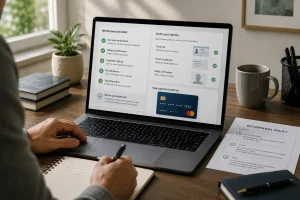


Jackpot types use different prize and trigger setups, while licensing, payment rules and bonus terms shape how real-money play works.
Four Kinds of Jackpot, Four Different Setups
I used to treat “jackpot” as if it described one thing: a big prize attached to a slot. It doesn’t. The word covers four different setups — progressive, fixed, daily or must-drop, and networked — and the difference is mainly about how the prize is set or how the trigger works. If you don’t separate those ideas, the headline figure can tell you less than you think.
Progressive jackpots
A progressive jackpot changes as play feeds into it. Rather than staying at one preset prize, the displayed amount can grow over time. That is what people generally mean when they talk about a jackpot that “keeps climbing”.
The useful distinction is between the prize pool and the event that awards it. The pool may increase as eligible play contributes to it, while the jackpot itself is awarded when the game’s trigger occurs. Seeing a growing total does not tell you when that will happen. The prize can look more striking as it rises, but the number on the screen is not a timetable.
Progressive jackpots can be attached to one game or built across a wider arrangement. That wider arrangement may involve play beyond a single slot, which is where the networked category becomes relevant. The labels can overlap in everyday descriptions, but they point to different features: “progressive” describes a prize that grows, while “networked” describes a jackpot shared across participating games or operators.
That distinction matters when you compare jackpot slot games. A large progressive amount may sound like the main feature, yet it doesn’t explain how broad the pool is or what event awards it. Those are separate questions. I’d read the game information for the structure, not assume that every rising prize works the same way.
Fixed jackpots
A fixed jackpot has a prize set in advance rather than a total that grows as play contributes to it. The amount is defined by the game or its prize structure. It can still be a major feature of a slot, but it isn’t “progressive” simply because the prize is large.
Merkur Casino Online UK: Games, Bonuses and Checks
This is the simplest distinction to keep in mind: fixed describes the prize amount; progressive describes a prize that can build. Neither label, by itself, tells you how likely a win is, what symbols or event trigger it, or whether the jackpot is available across more than one game. Those details depend on the individual game rules.
A fixed prize can be easier to understand at a glance because there is no rising total to interpret. But a fixed figure is not a promise that the game will award it on a predictable schedule. It describes the prize structure, not a countdown. I’ve learned not to read more into a bold number than the rules actually say.
Daily or must-drop jackpots
A daily or must-drop jackpot is organised around a deadline or drop condition. The defining idea is that the prize must be awarded within the stated period or by the stated point, rather than simply continuing to rise without an endpoint. “Must-drop” is the clearer term for this family: it signals that a release condition exists.
That still leaves important details to check in the game’s own explanation. A deadline-based jackpot may have rules about when the drop can occur, and the displayed prize may be connected to those rules. The label alone doesn’t tell you the exact trigger, whether the prize can be won earlier, or how the amount behaves before it is awarded. Don’t fill those gaps with assumptions based on another slot.
This type can be easy to mistake for a progressive jackpot because both may show an amount that changes. The difference is the structure behind it: one is defined by a prize that builds, while the other is defined by a must-drop condition or deadline. A rising display doesn’t make the two interchangeable. Different setup.
Progressive
A prize that grows over time as play feeds into the pool, often described as "keeping climbing".
Fixed
A prize set in advance by the game or its prize structure, rather than a total that builds.
Must-drop
A jackpot organised around a deadline or drop condition, ensuring the prize is awarded by a stated point.
Networked
A shared arrangement where the jackpot pool is accessible across participating games or operators.
Networked jackpots
A networked jackpot is shared across participating games or operators, rather than belonging only to one individual slot at one casino. That can give the pool a wider base than a jackpot limited to a single game. It is the shared arrangement that makes it networked; the word does not, on its own, say whether the prize is fixed or progressive.
This is why the categories can overlap. A network jackpot may also be progressive if its pool grows, while “networked” tells you where the pool is shared. When you see both ideas mentioned, they are not necessarily competing descriptions. One is about how the amount changes; the other is about the scope of participation.
For casino jackpot slots, then, it helps to ask what the label is actually describing. Is the prize set or growing? Is there a must-drop condition? Is the pool shared across a network? A slot might fit more than one answer. The word “jackpot” is only the starting point; the mechanics are in the game rules.
Playing for Real Money: What Happens Before a Payout
A jackpot win can feel finished the moment it appears on screen. The withdrawal is a separate step. You move from playing to asking the casino to release money, and the account may need to be checked before that happens. I used to treat the balance on the screen as cash already on its way. That was optimistic.
No Account Casinos in the UK: Checks and Licensing
The usual path is straightforward in outline: sign in, open the cashier or withdrawal area, choose an available method, enter the amount and submit the request. What happens after that depends on the operator’s process and the state of your account. A request can sit pending while checks are completed. That does not, on its own, tell you that anything has gone wrong; it means the payment has not yet been released.
Why a withdrawal can pause
Before paying out, every operator must complete KYC, meaning Know Your Customer checks, and AML checks, which are intended to address money laundering. This applies whether you are withdrawing from a large win or a smaller balance. A casino cannot skip those checks simply because the funds came from a jackpot slot.
KYC is about confirming who is using the account. If the operator needs more information to do that, it may ask you to provide it before releasing funds. AML checks look at the account and the transaction from a different angle. They may also form part of the review before payment. The practical point is simple: a withdrawal request is not necessarily the final stage.
I learned not to leave account checks until the moment I wanted to cash out. If a casino asks for information, read the request carefully and respond through the account’s own secure process. Check that the details you submitted are accurate, and look for messages or status updates in the account rather than assuming a quiet inbox means the request has disappeared. Keep a record of what you sent and when, without sharing sensitive information through an unverified channel.
Withdrawal Process
Submit Request
Sign in, open the cashier or withdrawal area, choose a method, enter the amount and submit.
Identity Verification
Complete KYC (Know Your Customer) and AML (Anti-Money Laundering) checks by providing requested information.
Payment Release
Wait for the operator to complete the review and release the funds from pending status to your account.
Before you press withdraw
Take a moment to check the casino’s cashier instructions and the terms attached to withdrawals. Make sure you understand which methods are available to you, whether the account has any outstanding verification request, and what the displayed status of the request means. I’ve found it easier to deal with a payout when I know what step it is at, rather than repeatedly submitting the same request and hoping that changes something.
If the casino asks for clarification, respond to that specific request instead of sending unrelated material. If the status does not make sense, contact support and ask what remains outstanding and whether they need anything from you. Keep the wording factual: include the withdrawal reference if one is shown, describe the status you can see, and ask for an explanation of the hold. Save the reply.
A jackpot balance can make it tempting to rush. Don’t. Repeatedly changing the request or opening several support conversations can make it harder to follow the thread. One clear question and a record of the answer give you something concrete to refer back to.
What a pending status does—and doesn’t—tell you
“Processing” sounds reassuring, but it is not the same as money arriving. “Pending” can simply mean the operator has not completed its review or released the payment. The label alone does not explain why. Ask the operator for the current step, rather than guessing that the delay is a banking issue or assuming the casino has refused the withdrawal.
Likewise, seeing a winning balance does not mean the payout checks have already been completed. That distinction matters for casino jackpot slots played for real money: the game result and the account review are separate parts of the experience. I now treat the screen balance as a request I may be able to make, not as cash I can count on before the withdrawal is cleared.
If you play jackpot slots online, keep the process boring: know where to find the withdrawal instructions, check for account messages, and answer verification requests carefully. The checks can interrupt the celebratory bit. They are still part of getting from a win to a released payment. No shortcut.
£1 Minimum Deposit Casinos in the UK: What to Check
UK Jackpot Casinos and Who Regulates Them
When I see a casino site leaning hard on jackpot language, I try to separate the prize from the business offering it. A large advertised jackpot tells you nothing by itself about who oversees the operator. For online play in Great Britain, that question leads to the UK Gambling Commission.
The Commission regulates gambling activity in the United Kingdom, including online casinos. For remote gambling offered to consumers in Great Britain, its reach does not depend on where the operator keeps the equipment that runs the service. A business cannot avoid the relevant British rules simply by hosting its systems elsewhere.
That matters whether a site promotes a progressive jackpot, a live casino prize or free spins linked to a jackpot. The marketing may make the product sound unusual; the basic regulatory question remains whether the business offering it holds the necessary operating licence. A jackpot is not a separate route around the rules.
What the Commission licences
The UK Gambling Commission issues operating licences to businesses and personal licences to individuals working in relevant roles. Those are different responsibilities: the business licence concerns the company offering gambling, while personal licensing concerns individuals involved in operating it.
I used to treat a licence badge as a box-ticking detail. It is more useful to understand what it represents. A legitimate online casino serving Great Britain sits within a system overseen by the Commission, rather than simply claiming that it is “regulated” without saying by whom. The wording on a site is not the same thing as the underlying permission.
The Commission is the sole regulator for commercial gambling in Great Britain. That gives readers a clear reference point when assessing claims about a UK-facing casino: the relevant regulator is not whichever authority the operator chooses to mention most prominently. If a site serves British customers remotely, the location of its servers does not change the Commission’s role.
There is a geographic distinction worth keeping in view. Great Britain means England, Scotland and Wales; the United Kingdom also includes Northern Ireland. The Commission’s stated remit for remote gambling in this context concerns consumers in Great Britain. So avoid treating “UK” and “Great Britain” as interchangeable in every licensing sentence. Small distinction. Important one.
£2 Minimum Deposit Casinos in the UK: What to Check
What a licence does—and does not—tell you
A UKGC operating licence is a regulatory status, not a promise that every session will go well or that a jackpot will be won. Nor does the presence of a jackpot feature turn a casino into a special category outside ordinary gambling oversight. Online jackpot casinos remain online gambling businesses, and their commercial activity falls within the regulatory framework.
I would be wary of relying on a dramatic banner, a familiar-sounding name or a claim that a platform is “trusted” as a substitute for understanding its regulatory position. Those are promotional signals. The useful distinction is whether the business has the operating permission required to offer gambling to consumers in Great Britain, and whether any people in relevant operating roles hold the appropriate personal licences.
This is a framework, not a league table. It does not tell you which casino has the largest prize, which has the most appealing games, or whether an individual offer suits you. It tells you who regulates commercial gambling in Great Britain and how business and personal licensing fit into that system. For a jackpot casino, that is the foundation beneath the advertising—not the jackpot headline itself.
A Network Jackpot Isn’t One Casino’s Prize Pool
I used to picture a jackpot as money sitting behind the doors of the casino where I was playing. A network jackpot works differently: the pool is shared across participating operators. The casino on your screen is one point of access to it, not necessarily the only place where its value is being built.
Once the pool has reached its starting floor, every spin across every operator contributing to that network adds a slice to it. So the total can grow through play taking place elsewhere, not just through spins made at the site you happen to be using. That shared structure is the useful answer to “what is a casino jackpot?” when the jackpot is networked.
It also changes what a displayed amount means. You are looking at a pool connected to activity across a network, rather than a pot that belongs exclusively to one jackpot casino. A figure on one operator’s page does not, by itself, tell you how much play has taken place there or how the pool is divided behind the scenes.
£3 Minimum Deposit Casinos in the UK: What to Know
That distinction matters if you are comparing real-money jackpot casinos. A familiar-looking jackpot title or a prominent prize display does not establish that every operator offers the same arrangement. The relevant question is whether the game or jackpot is connected to a shared network, and which operators contribute to that network. Don’t infer the structure from the word “jackpot” alone.
Nor does “networked” mean that one casino controls the whole pool. Participating operators feed it through spins, while the jackpot is shared across that participation. The contribution is a slice, not the entire stake. The exact size of that slice is not something to assume from the prize display; what matters here is the pooled mechanism.
For a mobile jackpot casino, the same basic idea applies as it does on a desktop: the device you use does not turn a shared pool into a site-specific one. Your phone is simply where you access the participating operator’s game. The pool’s wider structure still comes from contributions across the network.
I’d be wary of treating a large displayed total as proof that one uk jackpot casino is more generous than another. The number describes the shared prize pool, not a complete comparison of operators, games or your chance of winning. A big figure can catch the eye. It doesn’t explain the terms.
So when a jackpot casino mobile page features a network prize, read it as a shared pool built from spins across participating operators after the pool’s starting floor. That is a more grounded way to understand the headline than assuming the casino showing it has accumulated the whole amount itself. Shared pool, not house pot.
Real-Money Play, Withdrawals and Payment Rules
When real money is involved, I pay attention to the route funds take in and out, not just the number displayed beside a jackpot. A payment method can look familiar and still be unsuitable for gambling. Credit cards are banned for gambling payments in Great Britain, so a casino should not accept one as a way to fund play. That restriction also matters when a payment service or wallet sits between your card and the casino: routing the payment through another service does not make credit-card gambling payments acceptable.
Credit Card Ban
Credit cards are banned for gambling payments in Great Britain; routing payments through another service to use one is not acceptable.
Before depositing, check the payment options shown in your account and read the operator’s rules for withdrawals. Make sure the method you intend to use is permitted for both directions, and keep a record of the transaction and any confirmation. If a payment is declined or a withdrawal status is unclear, contact the operator through its stated support channel and ask for a specific explanation. Save the reply. It is much easier to describe a problem later when you can point to dates, amounts and messages rather than trying to reconstruct the sequence from memory.
A jackpot casino withdrawal time is not something I’d treat as a promise just because an estimate appears on a page. Read the operator’s published payment information, then keep an eye on the transaction status in your account. If the withdrawal does not progress as described, ask the operator what is holding it up and what action, if any, is needed from you. That keeps the conversation focused on the payment rather than on assumptions about what the casino is doing.
If the operator’s own complaints process does not resolve the matter, you can take the complaint to IBAS. The important sequence is to use the operator’s internal procedure first and escalate only after you have exhausted it. Keep copies of your original complaint, the operator’s response and any later correspondence, so the dispute can be followed without relying on a hazy memory of a support chat.
IBAS decisions are binding on the licensed operator. That gives the escalation route real weight; it is not simply another customer-service conversation. Still, be clear and factual when you explain the issue. State what happened, what you asked the operator to do, and why its response did not settle the complaint. Avoid folding unrelated frustrations into the same case. A focused record is easier to assess.
£4 Minimum Deposit Casinos in the UK: What to Check
A “quick cashout” label is advertising, not a substitute for checking the payment rules or keeping evidence. Read the terms before you move money, use an allowed payment route, and save the trail. Boring, but useful.
Read the Bonus Terms Before You Deposit
A welcome offer can look generous until you find out what it actually lets you do. I’ve learned to treat words like “bonus” as a label, not a promise: the useful information is in the terms beside it. Read those before you deposit, while you can still decide that the offer is more hassle than it’s worth.
Check what action qualifies, whether the offer is tied to a particular deposit method, and which games count towards any playthrough conditions. The terms should explain how bonus funds and any resulting winnings can be used, along with any restrictions or expiry conditions. Don’t assume a jackpot slot qualifies just because it appears in the casino. Progressive jackpot slots are excluded from bonus wagering requirements, so a promotion may not help you build progress on one.
The same care applies to a no-deposit offer. “No deposit” describes how the offer starts; it does not tell you what conditions apply before you can use or withdraw anything associated with it. Read the eligibility rules and restrictions in full. If the wording is unclear, ask the operator to explain it before accepting. I wouldn’t deposit on the strength of a headline and hope to sort out the conditions later.
Do
- Read bonus terms before depositing
- Set a financial limit before funding
- Review limit controls every six months
- Check game-specific wagering rules
Don’t
- Deposit based on a headline alone
- Assume all slots count for wagering
- Ignore account security messages
- Set limits after a session starts
Before the first deposit, a remote gambling business must prompt a new customer to set a financial limit and make limit controls accessible. Set yours before funding the account, not after a session has already changed how you think about spending. Check where the controls are and how to change them. Make a point of reviewing your financial limit every six months; a figure that fitted your circumstances before may not fit them now.
A bonus should not distract you from the account controls around it. Look for the financial limit, self-exclusion options, and reality checks and session reminders. If you can’t find the controls or don’t understand how they work, pause before depositing. That’s not overthinking it. It’s basic housekeeping.
I also separate an offer from the way I intend to play. If I’m interested in a jackpot in a casino, I don’t assume the bonus makes the jackpot easier to reach or that every spin will count towards its conditions. Read the rules for the promotion and the game separately. For offers connected to a particular payment method, confirm that the method is eligible rather than guessing from the banner.
The boring part matters most. Know what you are accepting, set your financial limit, and only then decide whether the offer is worth taking. A flashy label can wait.
How to Assess a Jackpot Casino Site
I’d start with the basics, not the jackpot banner. A glossy page can make a site feel established, but presentation tells you little about who runs it or what happens when you want to use your account. When I’m checking a casino, I look for information I can verify and terms I can actually understand. If those are hard to find, I don’t take the site’s claims on trust.
£5 Minimum Deposit Casinos in the UK: What to Know
For a UK-facing casino, check whether the business holds a current operating licence from the UK Gambling Commission. A site serving players in Great Britain must be licensed by the Commission, wherever its key equipment is located. The operator’s legal name matters: the brand on the home page and the company responsible for the service may not be the same. Make sure you can identify the business behind the site and match it to the licence information, rather than relying on a badge or a reassuring phrase.
Then look at the account requirements before you try to play. Great Britain rules require age and identity checks before online gambling. A genuine operator should explain that clearly and tell you what information it needs. If a site suggests you can skip those checks, or makes the process sound optional, that is a reason to stop and verify its claims.
I also read the practical pages, not just the headline offer. Can you find the rules for withdrawals, the complaints process and the responsible-gambling tools? Are key conditions written plainly, or buried under vague language? I’ve made the mistake of treating a confident promise as a useful explanation. It isn’t. Clear terms matter more than a row of flashing jackpot figures.
For a jackpot casino site, check that the game’s own information explains how its prize works and what conditions apply. Don’t assume every jackpot has the same setup, or that the largest number on screen tells you what you need to know. If the rules are missing or unclear, you cannot make a fair comparison.
There is no honest universal “best” site for every player. Your shortlist should be based on verifiable licensing, clear account requirements and rules you can follow—not a ranking that gives no reason for its verdict. I’d rather close a tab than guess.
Casino without a Swedish licence: UK guide
A quick check is useful, but it is not a guarantee about how a site will treat you. Keep your own notes of the terms you relied on, and reassess if the operator changes them. That takes a little patience. Better than guessing.
Recommended online casinos
- x3betBonus: Welcome Pack 100% Up to £1.000 + 200 Free Spins · Payout speed: 1-3 business days
- EvoSpinBonus: 125% up to €2500 + 125 Free Spins · Payout speed: 1-3 business days
- NightLuckBonus: Welcome Pack + 805% Up To 6400€ + 280 FS · Payout speed: 1-3 business days
- BeOnBetBonus: 100% up to €500 + 100 FS · Payout speed: 1-3 business days
- DieselwinBonus: Welcome Pack 250% up to £4000 + 200 FS · Payout speed: 1-3 business days
- JetsetspinsBonus: 200% Bonus + 100 Free Spins + Free Royal Wheel · Payout speed: 1-3 business days
- ZombillionBonus: Welcome Pack 250% up to £4000 + 200 FS · Payout speed: 1-3 business days
- AmunbetBonus: Join now and get 450% up to 2,700 GBP + 450 FS · Payout speed: 1-3 business days
- SpinFormulaBonus: 550% Up To £15,000 + 550 FS · Payout speed: 1-3 business days
- BritsinoBonus: Welcome Package – Get your £2,200 + 2,000 FS · Payout speed: 1-3 business days
Jackpot Games on a Phone: What Mobile Changes
A specialist review reports that 80% of UK casino sessions take place on a mobile device. That is a snapshot from one source, not a promise that every player prefers a phone. Still, it explains why mobile access matters when you want to browse jackpot games away from a desktop.
The main change is the way you interact with the site. On a smaller screen, menus may be tucked behind icons, text can be harder to scan, and controls sit closer together. I’ve learned not to tap through a game in a hurry: a thumb can land on the wrong control, especially when the page is crowded. Take a moment to check what each button does before you play.
A phone can also make interruptions more likely. A message, a call or a weak connection can pull you out of a session. Before opening a game, I check that the page has loaded properly and that I can see the important controls without repeatedly zooming in. If the display feels cramped or confusing, switching to a browser view with a larger screen is a sensible option. No need to force it.
A “dedicated app” sounds like a separate, polished experience, but the label alone tells you little. Some services may be accessed through a mobile browser; others may offer an app. Don’t assume that a casino has one, or that an app automatically works better than its website. Check what is actually available through the operator’s own channels, and read the permissions requested before installing anything. If you would rather not install software, see whether the browser version gives you the controls you need.
The jackpot itself does not become a different kind of prize because you are using a phone. What changes is the screen, the navigation and how easily you can keep track of what you are doing. I’d look for readable terms, clear stake controls and an easy route back to the account area before starting. If those details are buried, that is a practical warning sign, not a reason to tap faster.
For a progressive jackpot casino in the UK, mobile access is only one part of the experience. The same caution applies whether you open a page in a browser or use an app: know where you are tapping, keep the session deliberate, and stop if the interface makes that difficult. Small screen. Same money.
Crypto Jackpot Casinos: Check the Licence, Not the Pitch
Crypto can make a casino’s marketing sound modern; it does not tell you whether the operator is authorised to serve you in Britain. I’d separate the payment method from the licence claim. A jackpot label and a wallet option are not proof of regulatory status.
For customers in Great Britain, an operator offering remote gambling must hold the relevant UK Gambling Commission licence, wherever its equipment is based. A licence issued elsewhere is not a substitute. That distinction matters when a site presents an overseas registration as if it settled the question for UK players.
A specialist review checking the Curaçao Gaming Authority’s register reported that Usoftgaming N.V. appeared there with an active business-to-consumer licence, numbered CGA/2025/1353/1345. The same review reported that it found no entry for Hustles Casino. Those are specific register-check findings, not a recommendation of either business—and they do not establish that a casino has permission to serve customers in Britain.
Curacao Casino Licence in the UK: What It Means
I would verify the exact legal company name against the regulator’s own records, then check whether the operator holds a UKGC licence for the activity it offers. A brand name on a homepage may not match the company name on a register, so look for the legal entity rather than relying on a badge or a claim about “global” licensing. The regulator’s register can also change; treat a past check as a snapshot, not a permanent guarantee.
If a crypto casino jackpot pitch leans on big promises but stays vague about the company behind the site, that is a reason to pause. I’ve learned that impressive wording is easy to publish. A verifiable licence is a much more useful starting point—and for the British market, the relevant check is the UKGC one.
Can You Make a Slot Jackpot Happen?
There is no button sequence, betting pattern or patient streak that guarantees a progressive jackpot. It can trigger at random on any spin, so a player cannot make it happen by timing a spin or waiting for a particular point in a session. I used to look for a pattern in a run of near misses. That was wishful thinking, not a method.
The trigger does not depend on how much you stake. On the same progressive jackpot, the chance to trigger is the same on a £0.10 spin as on a £5 spin. A larger stake may change the amount you spend per spin, but it does not give you a better shot at making this jackpot trigger. More money at risk is not a shortcut.
So how often does a slot hit its jackpot? Random triggering does not provide a schedule. It could happen on any spin, but that does not mean it is due after a long stretch without a win. Nor does a recent jackpot tell you that another is more or less likely on the next spin. There is no guaranteed interval to wait for.
That also means there is no general odds figure that can tell you when you will win across all progressive slots. The useful point for a player is simpler: you cannot predict or force the trigger. If you play, treat each stake as money you may lose, rather than as a way to buy certainty. I learnt that the hard way.
A jackpot headline can make a win feel close, especially when the displayed prize keeps growing. But the size of the prize does not turn a random trigger into a promise. Set your expectations accordingly—and don’t chase it.
Material created by the team Basswin UK Guide