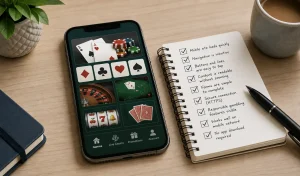


No-account play can simplify entry, but licensing, verification and the route for withdrawing money still need careful scrutiny.
The licence question comes before the “no account” promise
I used to hear “no account” and think the main question was how little effort stood between me and a game. That is the wrong place to start. For anyone looking at no account casinos in Great Britain, the first thing to establish is whether the business is allowed to offer gambling to people here. A slick page or a short sign-up pitch does not answer that.
The regulator to know is the UK Gambling Commission. It oversees gambling across the United Kingdom, including online casino activity. For remote gambling offered to consumers in Great Britain, its reach does not depend on where the operator’s servers or other key equipment are located. A business cannot sidestep the relevant rules simply by putting its technical operation somewhere else.
That distinction matters because a casino can be based abroad while still targeting people in Britain. The relevant question is not only where the company says it is based; it is whether it holds the licence required to serve this market. In Great Britain, the Gambling Commission is the sole regulator for commercial gambling. That gives you a clear starting point when a site describes itself as international, offshore, or available to British players.
Non-UK Licence Casinos: What the Regulation Means
I have made the mistake of letting a familiar-looking brand and a polished website do too much persuading. They tell you how a business presents itself, not whether it has the authority to offer gambling here. “Trusted” is a claim. A licence is a regulatory status. Keep those separate.
What the licence covers
The Commission issues operating licences to businesses and personal licences to individuals who operate within the industry. The operating licence is the one most directly relevant when you are assessing an online casino: it concerns the business offering gambling. Personal licences relate to individuals in specified roles. These are different permissions, not two ways of saying the same thing.
For a player, this is a practical distinction rather than paperwork for its own sake. A site selling online casino play to consumers in Great Britain needs the appropriate operating licence. The location of its key equipment does not remove that requirement. So if a page leans heavily on the idea that the company is based elsewhere, treat that as background, not as an answer to the licensing question.
Non-UK-Regulated Casinos: What UK Players Should Know
The phrase “no account” does not create a separate regulatory category. Whether a service promotes a quick entry route, a streamlined experience, or something else, it is still online gambling when it offers casino games for real money. The label does not replace the operator’s responsibility to hold the relevant licence. Nor does it make a site part of the regulated market merely because it accepts British visitors.
This is why I would not begin with a ranking of the best no account casinos or a top-sites list. A ranking can help compare services only after the basic question has been settled. If a site is not properly authorised for Great Britain, its place in a list does not make it suitable for the market. A reassuring badge on a page is not the same as the regulator’s record.
When you check a casino, look for the operator’s legal identity and its licence information, then compare those details against the UK Gambling Commission’s public register. Do not rely on a logo alone, and do not assume that a licence mentioned in general terms necessarily covers the business you are viewing. The name attached to the site should make sense alongside the licensed entity. If you cannot establish that connection, pause rather than filling the gap with a guess.
That check is not the same as deciding whether you like the site or whether its “no account” wording is accurate. Those are separate questions. The licence question comes first because it tells you whether the operator belongs within Great Britain’s commercial gambling system at all.
I still find new sites worth examining; curiosity has not gone away. But I no longer treat a convenient-sounding promise as the first test. For no account casino sites aimed at people in Great Britain, start with the operator and its regulatory standing. Then judge the pitch. Less guesswork.
Attention: A reassuring badge on a page is not the same as the regulator’s record. Always verify the operator’s licence against the UK Gambling Commission’s public register.
Playing online doesn’t mean skipping the checks
The phrase “no account” can sound like a promise that nothing will get in the way between a deposit and a withdrawal. I used to read it that way: less admin going in must mean less admin coming out. That is a risky assumption. A question about who you are, or whether a payment method belongs to you, can still arise before a withdrawal.
That matters at the point when the money is no longer just a balance on a screen. You may have played, requested a cash-out and then found that the operator wants something clarified before it can proceed. The request does not, by itself, tell you what the outcome will be. It does mean you should not treat “no account” as “no questions”.
A withdrawal can be a checkpoint
I think about a withdrawal as a point where the operator may need to resolve an identity or payment-ownership question. The important word is may: it is not a claim that every withdrawal triggers a query, or that every operator asks for the same thing. It is simply a possibility that belongs in your expectations before you put money in.
The question might concern whether the person requesting the withdrawal is the person associated with the play, or whether the payment method used is theirs. I would not assume that a quick-looking route into a game guarantees an equally uncomplicated route back out. The two moments involve different decisions, and the second can require clarification.
Non-Gamban Casinos in the UK: What the Label Means
That is where I once got the basic point backwards. I treated the wording on the front of a site as if it settled what would happen later. It does not. A short sign-up process, or one that is described as account-free, cannot tell you in advance that nobody will ask about identity or ownership when you request your money.
What to do when a question appears
If a withdrawal is held while something is checked, read the message carefully and keep the exchange in one place. Work out what the operator is asking you to clarify rather than guessing and sending unrelated information. If the request is unclear, ask what point needs resolving and what information they need from you. That is more useful than firing off a string of messages while annoyed.
I would also keep the details of the payment method and the withdrawal request to hand. Not because that guarantees a particular result, but because it helps you describe the issue clearly. If the payment method is not yours, or you are unsure what ownership question is being raised, do not improvise an explanation. Ask the operator to specify the concern.
A pause is frustrating. I know the temptation to read it immediately as a refusal or a sign that the balance has vanished. But a question before withdrawal is not, on its own, proof of either. Equally, do not assume that a request will resolve itself if you ignore it. Find out what is being asked, respond through the operator’s stated contact route, and keep a record of what you sent.
No magic shortcut.
Do
- Read withdrawal messages carefully
- Keep records of all communication
- Ask the operator to specify concerns
Don’t
- Assume “no account” means no questions
- Send unrelated information
- Improvise explanations for payment methods
Don’t let the label do the thinking
When I see “instant”, “simple” or “no account” in promotional wording, I now separate the promise from the money question. What happens when I ask to withdraw? Could identity or payment ownership need clarifying first? Those are more useful questions than whether the first screen looks effortless.
This is not about expecting every operator to create a problem. It is about allowing for a check without being surprised by its existence. The possibility is enough to change how I read the offer: I do not treat a smooth start as evidence that a later withdrawal is automatic.
Before playing, make sure you can access the details connected with your payment and contact the operator if its withdrawal process is unclear. If a query does arise, respond to the actual point raised rather than relying on the “no account” label as an argument that no check should happen. The label describes a promise about the experience; it cannot answer an identity or payment-ownership question for you.
The practical takeaway is plain: money can be available to play while a later withdrawal still needs clarification. I would rather know that before I start than discover it only after I have pressed the cash-out button. No drama, just a better expectation.
What “no account” actually changes
The phrase sounds more sweeping than the practical difference often is. I used to read “no account” as a promise that the casino had removed the whole account system. It is safer to take it more narrowly: the operator may be describing a way to start playing without going through a conventional sign-up screen first.
UK Online Casinos Without Registration: What It Means
That can change the front door, not necessarily the service behind it. A site might let you begin through a payment-led flow, or keep the initial steps shorter than a standard registration form. The exact arrangement depends on the operator. The label alone does not tell you what information the site stores, what steps follow, or whether the experience will feel account-free once you return.
Think of it as a description of the route in, rather than proof that no account exists anywhere in the process. There may still be a player profile or a record associated with your activity, even if you never choose a username and password in the familiar way. The wording can be useful, but it is not a technical definition shared by every casino.
That distinction matters when you compare a no-account casino with one that asks you to register before showing its games. The visible difference may be the number or order of screens. One site may put the first decision in front of you quickly; another may ask you to complete more steps before reaching the same point. Neither layout, by itself, tells you whether the operator is trustworthy or whether the service is suitable for you.
It also does not mean that the operator sits outside the rules. If a remote casino offers gambling to people in Great Britain, it must hold the relevant licence from the Gambling Commission. A shorter sign-up flow does not change that requirement. I would not treat “no account” as a separate category of gambling business with different ground rules; it is a label for how access is presented.
"No account" typically describes a streamlined route to start playing, such as a payment-led flow, rather than the complete absence of an account system or player profile.
The same goes for an app. Calling something a no-account casino app may describe the app’s sign-in or start-up experience, but the words do not establish what the app does behind the screen. It might simply open the operator’s mobile site, or it might provide a dedicated interface. The label alone cannot settle that. What counts is the actual service and the operator offering it, not the name attached to a button in an app store or a banner.
There is a small but useful test I now apply: replace the slogan with a plain description. “Start without filling in a conventional registration form” is a claim you can compare with the steps you actually see. “No account” is broader and leaves more room for interpretation. If the page does not explain what the phrase means, I treat it as advertising shorthand, not as a promise about every part of the experience.
That is not the same as saying the label is meaningless. If you dislike lengthy registration screens, a flow that lets you begin with fewer visible steps may genuinely suit you better. The point is to separate that convenience from everything the phrase does not establish. It does not, by itself, identify the company behind the casino, explain the operator’s status, or guarantee that using the service will remain as simple as the first screen suggests.
A new no-account casino can therefore be new in the sense that its site or sign-up route has recently appeared, without the phrase telling you anything dependable about how established the business is. “New” is another word that can create a feeling of momentum. I have clicked through on that feeling before. The interface looked fresh; that was all I had learned.
Non-GamStop Curacao Casino Sites: What to Check
So read the promise at its smallest defensible size. It may mean fewer conventional registration steps at the start. It does not mean that the operator has no relationship with you, that its service is exempt from the rules, or that the label explains the entire customer journey. Less form-filling, perhaps. Nothing more guaranteed.
Read a no-account review with your eyes open
A no-account casino review can be useful, but I treat it as a set of claims to check, not proof that a site will behave exactly as described. “Instant” may mean a short sign-up form rather than no registration at all. “Easy withdrawals” may describe the reviewer’s experience, not a promise that every player will have the same route or face no questions.
I used to read the bold verdict first and the conditions, if any, afterwards. That is a good way to remember the sales pitch and miss the part that matters. Now I look for the exact claim behind each label. Does the review explain what it means by no account needed? Does it say what the operator requires before play, and what could happen when a player asks to withdraw? A confident adjective is not an answer.
Then I compare the review with the operator’s own terms. Those terms are where you should look for the rules that apply to the service, including conditions attached to an offer or to withdrawing funds. A reviewer can summarise them, but a summary is not a substitute for the wording the operator publishes. If the review says a bonus is “free” or a cash-out is “simple”, I want to see what the actual terms say before I give that wording much weight.
Casino No ID Verification in the UK: What It Means
That matters even when a site presents play as frictionless. Questions about identity or who owns a payment method can arise before a withdrawal. A review that leaves this out may still describe one person’s experience accurately; it just has not established that your own cash-out will be the same. I wouldn’t treat a smooth account of someone else’s session as a guarantee. Not the same thing.
I also check whether the piece separates what it has tested from what it has merely repeated. “We tried the cashier” is a claim about a particular test. “Withdrawals are always quick” is much broader. If there is no explanation of what was tested, how the claim was reached, or which terms support it, I keep my expectations low. That is not cynicism for its own sake. It is a way to avoid turning a reviewer’s confident phrasing into my own assumption.
A review may earn money if a reader follows its links or signs up. That does not automatically make its information wrong, but it is a reason to notice how the article is written. Does it discuss drawbacks as well as selling points? Does it distinguish an operator’s statement from something the reviewer independently checked? Does every section steer you towards a glowing verdict? When the answer is no, I read it as promotion with useful details mixed in, not as a neutral inspection.
No Minimum Deposit Casino UK: What the Claim Means
The same caution applies to no-account casino bonuses. A review can describe an offer, but the live promotion and its terms are what you should consult before accepting it. Check that the offer is actually available and read the conditions attached to it, rather than relying on a headline or an old summary. If the review does not show where its claims come from, it has not done that checking for you.
For a no-account casino guide, I want a trail from claim to evidence: the operator’s wording for service conditions, and official records for questions that belong in public records. Those sources answer different questions, so one cannot stand in for the other. A review is a starting point. Useful, sometimes. Final word, no.
A site name is not proof of a sister-site link
A page promising a ready-made list of no-account casinos can look like a shortcut. The awkward bit is that a shared style, similar wording or matching payment options does not establish that two sites belong to the same company. “Sister sites” sounds like a useful label; without evidence behind it, it is just a claim.
I’ve been tempted by those lists myself. A row of familiar names makes the decision feel half done, especially when the page suggests that one good experience tells you something about the rest. It doesn’t. A brand family is a relationship between businesses, not a visual impression. You need something that connects the operator behind one site with the operator behind another, rather than an article simply placing their names next to each other.
Do not treat a shared visual style or a list of names as proof of a sister-site connection or corporate ownership.
That matters when a list is tied to an offer or presented as a route to a no-account casino bonus. The list may be out of date, may mix unrelated operators, or may repeat claims from another page. A bonus mentioned beside a site name is not proof that the offer is live, either. Treat the list as a starting point for checking, not as confirmation of ownership or an endorsement.
There is a specific reason to be cautious with LuckyPays claims. In a check of the UK Gambling Commission’s public register recorded on 26 September 2026, I could not find a LuckyPays listing under that brand or the stated domain, including luckypays.io. That is a statement about what the register showed on that date, not a timeless description of every company relationship or a guarantee about what a later register may show. The detail is worth keeping exact: a register entry, a trading name and a claimed sister-site connection are not interchangeable things.
If someone says LuckyPays is linked to another casino, ask what supports that particular link. Is the operator named in official terms? Do the sites identify the same business? Is the claim merely repeated across affiliate pages? Those are different kinds of evidence. A shared logo or a confident sentence is not enough on its own. Nor does the absence of a brand entry settle every question about who operates a site; it tells you to avoid treating a list as proof.
The same standard applies to any list of no-account casino sites. Look for the legal operator behind each name and assess each site separately. Do not assume a connection carries over from one brand to another, or that a list remains accurate just because it is still online. If the page gives no basis for its sister-site claim, keep that uncertainty in view.
Anjouan Casino Licence in the UK: What It Means
Not a shortcut. A claim to verify.
Mobile deposits, real money and the route back out
Pay by mobile can make a deposit feel as if it has barely happened: you approve the charge on your phone, and it appears on your mobile bill or is taken from prepaid credit. But that only describes money going in. It does not create a route for winnings to come back out.
I learned to separate those two sides before treating a payment option as useful. A phone bill is not a bank account, and a casino cannot send a withdrawal to it. Pay by mobile is deposit-only. If you fund a real-money balance this way, decide in advance how you would receive any withdrawal.
For UKGC-licensed sites, withdrawals have to be processed through another method, such as a bank transfer, debit card or regulated e-wallet. The available choices depend on the operator, so check its cashier information before depositing. A method shown beside the deposit button is not automatically available for withdrawals. That small distinction can matter more than how quickly a deposit is approved.
There are also limits to what a mobile payment can fund. A specialist review reports a £30 single-transaction limit for Boku deposits and a £240 monthly ceiling for carrier billing. Treat those as reported figures, not a promise that every network, payment provider or casino applies the same limits. The amount accepted at checkout is the practical one to confirm before you authorise a charge.
Attention: Pay by mobile is a deposit-only method. You cannot use your mobile bill or prepaid credit to receive winnings; a separate withdrawal method is required.
A phone-funded deposit is still a real-money deposit, not a free credit or a separate kind of play. Keep track of what is being charged and where it will appear: a mobile bill can make gambling spend less visible than a debit-card statement. I have made that mistake myself. Easy to miss.
If you are looking for a no-account casino on mobile, keep the payment route and the account setup as separate questions. A site may let you start through a mobile-friendly cashier, but that does not tell you how a later withdrawal works. Before depositing, find the withdrawal options in the operator’s own payment information and make sure you can use one. The phone can be the way in. It cannot be the way back out.
A bonus can look generous and still come with strings
I used to read the headline and mentally spend the bonus before I’d opened the terms. That was backwards. With a no-account casino deposit bonus, the important detail is not the label but what you must do before any bonus value can become withdrawable.
A specialist gambling review describes no-deposit credit bonuses as commonly worth £2–£10, with wagering requirements of 30–60 times the bonus. Treat those figures as the review’s snapshot, not as a current offer or a reliable guide to what a Great Britain-facing casino may now require. UKGC rules applying from 19 January 2026 limit wagering on bonus funds to 10 times the bonus. So older examples above that ceiling should not be read as acceptable current terms for an incentive offered to customers in Great Britain.
There is another boundary worth checking: one incentive cannot bundle different gambling product types together. A promotion tied to casino play, for instance, cannot also make another type of gambling part of that same offer. The wording matters; don’t assume that a broad “all games” claim tells you what qualifies.
Before accepting a no-account casino UK no-deposit bonus, open the operator’s own promotion terms. Check which games count, whether any winnings are capped, when the offer expires, how free spins are treated, and what conditions apply before winnings can be withdrawn. The maximum win cap and wagering terms must be visible within one click of the offer. If the headline and terms seem to describe different deals, trust the terms—not the banner.
A “free” offer can still ask for a lot of play. I learned that the irritating way. Read first. Then decide.
“Without an account” is not the same as “without verification”
I used to read “casino without an account” as a promise that the operator would know almost nothing about me. That was a careless leap. The phrase may describe how a site presents the way you start playing; it does not promise anonymity or mean that nobody will ask who you are.
The point tends to become obvious when you want to withdraw. An operator may ask questions about your identity or whether the payment method belongs to you before releasing money. So a smooth-looking start does not settle what will happen later. I learned not to treat the first screen as the whole deal.
No-ID Verification Casino Withdrawals in the UK
There’s a difference between not creating a familiar username-and-password profile at the outset and having no checks at all. The first is a description of the sign-up experience. The second is a much bigger claim, and the label alone cannot support it. If I see wording that makes the process sound entirely anonymous, I look for what the operator says about withdrawals and verification rather than relying on the headline.
That is not a reason to assume every withdrawal will be delayed or challenged. It is a reason to avoid treating “no account” as “no questions”. If you cannot find a clear explanation of what may be requested before a payout, pause before depositing. I have skipped that step before and then felt surprised by a condition that was never really hidden; I simply had not looked for it.
Convenient wording. Different promise.
Trustly and no-account play: check the withdrawal route
Seeing Trustly beside a deposit button tells you how you may be able to put money in; it does not settle how you can get winnings out. I’ve made that mistake before: I treated a familiar payment logo as if it described the whole journey. It doesn’t.
With a no-account offer, the wording can make the process sound like one seamless payment. In practice, check the operator’s own cashier and terms for both directions. Is Trustly listed for deposits, withdrawals, or both? Are the withdrawal options available to you the same ones shown before you deposit? A method being mentioned on a review page is not confirmation that the casino supports it.
For a UKGC-licensed casino, withdrawals must be processed through an alternative method, such as a bank transfer, debit card or regulated e-wallet. So even if Trustly is available for funding, you may need to choose another route to receive a payout. That is a practical detail, not a small-print technicality.
Before playing, look for a clear withdrawal route in the operator’s own information. If the page only celebrates “instant” deposits and leaves the cash-out method vague, pause and check the terms or ask the operator. I wouldn’t rely on a payment logo, a search snippet or a no-account label to fill in the gap.
Trustly may suit the way you want to deposit, but don’t assume it is offered by any particular casino—or that it will be the way your winnings return. Deposit and withdrawal availability are separate questions. Check both before you send money.
Recommended online casinos
- x3betBonus: Welcome Pack 100% Up to £1.000 + 200 Free Spins · Payout speed: 1-3 business days
- EvoSpinBonus: 125% up to €2500 + 125 Free Spins · Payout speed: 1-3 business days
- NightLuckBonus: Welcome Pack + 805% Up To 6400€ + 280 FS · Payout speed: 1-3 business days
- BeOnBetBonus: 100% up to €500 + 100 FS · Payout speed: 1-3 business days
- DieselwinBonus: Welcome Pack 250% up to £4000 + 200 FS · Payout speed: 1-3 business days
- JetsetspinsBonus: 200% Bonus + 100 Free Spins + Free Royal Wheel · Payout speed: 1-3 business days
- ZombillionBonus: Welcome Pack 250% up to £4000 + 200 FS · Payout speed: 1-3 business days
- AmunbetBonus: Join now and get 450% up to 2,700 GBP + 450 FS · Payout speed: 1-3 business days
- SpinFormulaBonus: 550% Up To £15,000 + 550 FS · Payout speed: 1-3 business days
- BritsinoBonus: Welcome Package – Get your £2,200 + 2,000 FS · Payout speed: 1-3 business days
Paysafecard deposits don’t settle the cash-out question
Paysafecard can look like a neat fit if you want to fund a no-account casino visit without entering card details at the payment stage. But a deposit option only answers how money might go in. It does not tell you how winnings can come back out, or even whether that casino accepts Paysafecard in the first place.
I used to treat the payment logo as the whole story. It isn’t. Before depositing, look for the operator’s own cashier information and terms, and check whether they explain withdrawals separately. If the page only talks about deposits, you still don’t know the route back out.
For UKGC-licensed sites, withdrawals have to be processed through another method, such as a bank transfer, debit card or regulated e-wallet. That means Paysafecard should not be assumed to work as a withdrawal route just because it appears beside deposit options. The cashier may ask you to choose a different method for a payout.
That distinction matters particularly when the attraction is playing without a conventional account. A payment method does not remove the operator’s withdrawal process, and a deposit label is not proof that cash-out will follow the same path. Check the available withdrawal methods before you put money in; if the terms are unclear, ask the operator rather than relying on a review snippet or a payment badge.
A Paysafecard deposit may suit the way you want to fund play. It does not settle the cash-out question. Read both sides of the cashier first. Small check, fewer surprises.
Material created by the team Basswin UK Guide