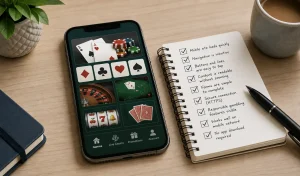

A low cashier minimum gets you started, but payment options, bonus terms and withdrawal rules determine what happens next.
What a £3 Minimum Actually Gets You
A £3 minimum deposit is a low entry point, not a special kind of casino account. You add the amount to your balance, and the cashier accepts it because it meets that operator’s minimum for the option you selected. That is the practical meaning of the label. It does not, by itself, tell you what games are available, whether an offer applies, or how easily you can later withdraw.
I used to read a small minimum as a sign that a site was built for cautious players. It may simply mean the cashier allows a small first transaction. Once the money is in the account, it is still real money, subject to the casino’s rules. The deposit figure is a door, not a promise about what is on the other side.
£3 sits between the rare £1 floor and higher thresholds
Some UK casinos accept a deposit of just £1, but that is a narrower option than a £3 entry point. A specialist review identified six UK Gambling Commission-licensed casinos as accepting genuine £1 minimum deposits; in that review’s list, NetBet was the only UKGC-listed casino with a £1 cashier minimum. Treat that as a snapshot from a review, not a permanent market directory. Cashier settings can change.
A £3 minimum is therefore not the absolute floor. It is a middle ground: more accessible than a cashier that insists on a larger opening deposit, but not as low as the rare £1 option. Other operators set a higher minimum, so the same amount in your account does not mean you can use it everywhere. You have to look at the minimum shown by the individual cashier, rather than assume a figure advertised elsewhere applies across the site.
That distinction is easy to miss. A page might describe an account as “low deposit”, which sounds like a clear promise; what it really means is that the operator has chosen a lower threshold than some alternatives. The exact threshold still matters. If the cashier says the minimum is above your budget, the account is not a £3 option for you, regardless of how the site is described.
Non-UKGC Licensed Casinos: What the Label Means
A small deposit is still a normal account balance
After a £3 deposit is accepted, you are not receiving a separate trial balance or a protected pot. It is simply the amount added to your casino account. The cashier minimum governs whether you can fund the account at that level; the operator’s terms govern what happens after that. Keeping those two ideas separate makes the headline easier to judge.
I have made the mistake of treating “minimum deposit” as shorthand for “minimum cost to try the whole site”. It is not. It tells you the smallest amount the cashier will accept under the conditions shown there. It does not establish that every feature or promotion is available at that amount, and it does not mean an operator will let you make every later transaction at the same threshold.
There is also a difference between a site saying it accepts a £3 deposit and a specific cashier screen actually offering that amount. A minimum can be attached to an account, but the amount presented at the point of payment is the one you need to check before confirming. That is not a reason to deposit more just to get past a screen. If the amount you intended to spend is not accepted, stopping is a perfectly sensible response.
What to check before treating £3 as the entry price
First, make sure the figure is the cashier minimum for the account you are opening, rather than a general claim in a headline. Then read the terms attached to the account and the transaction. A low figure can be accurate while still leaving other conditions that matter to you. The point is not to hunt for a catch in every line; it is to avoid confusing one narrow fact with a wider promise.
Also confirm that the casino is licensed to serve players in Great Britain. Online gambling is legal for adults aged 18 and over at sites holding the relevant UK Gambling Commission licence. A tiny minimum does not prove anything about a site’s licensing or oversight. The deposit amount and the operator’s status are separate checks.
Before you deposit
- Confirm the £3 figure is the actual cashier minimum for your account
- Read the terms attached to the account and transaction
- Verify the casino holds a UK Gambling Commission licence
- Ensure you are 18 years or older
For me, the useful question is not whether £3 sounds impressively small. It is whether that is genuinely the amount I am willing to put into the account, and whether the cashier and terms match what I thought I was signing up for. The rare £1 floor may sound even more tempting, while a higher threshold may rule an operator out altogether. But none of those labels changes the basic deal: a minimum deposit is only the entry condition for funding the account.
That is the baseline. A £3 cashier minimum can make a first deposit possible without asking for a larger opening amount, but it cannot tell you how far the balance will go or what else you will qualify for. Check the displayed minimum, check who operates the site, and read the terms before you decide. No magic in the number.
Slots on a Small Balance: How Long Can £3 Last?
A £3 balance can look more substantial on the screen than it feels once the spins start. The useful question is not how long you might play in minutes, but how many spins the balance can cover at the stake you choose. At common slot stakes of 10p to 20p per spin, the starting balance works out to between 15 and 30 spins if you make no return along the way.
That is the clean arithmetic. At 10p per spin, £3 covers 30 spins; at 20p, it covers 15. Those totals assume every spin loses its stake and that you keep playing at the same amount. A win can add funds back to the balance and stretch the session, while a run of losing spins can bring it to an end sooner than you expect. Neither outcome is something you can plan on.
£4 Minimum Deposit Casinos in the UK: What to Check
The stake changes the pace
When I first played with a small balance, I focused on the game and barely noticed the stake setting. That was backwards. The stake determines how quickly each spin uses up the money you brought, so it is worth checking before you start and whenever you change games.
A lower stake gives the balance more chances to be played through. That does not mean more chances to win in any dependable sense; it means the same starting amount is divided into more individual spins. Raising the stake does the opposite. You get fewer spins from the same balance, and any loss takes a larger bite out of what remains.
It is easy to mistake a longer session for better value. It is only a longer sequence of play. A small stake cannot make a slot predictable, and a larger stake cannot make a win more certain. The balance may rise, fall or disappear, and the arithmetic only describes what happens if you keep staking the same amount without winning anything back.
Work it out before pressing spin
I now check the cost per spin first, then compare it with the balance I have chosen to use. If the stake is 10p, I know the initial £3 would cover 30 losing spins. If it is 20p, it would cover 15. That gives me a practical picture of the pace without pretending to forecast the result.
Calculating your spins
Step 1: Identify your balance
Start with your deposited amount, for example, £3.
Step 2: Check the stake
Find the cost per spin for your chosen game (e.g., 10p or 20p).
Step 3: Divide the balance
Divide £3 by the stake to find the total spins (30 spins at 10p, or 15 spins at 20p).
The number of spins is not a timer. A quick sequence of losing spins can use the balance in moments; a win may keep the session going, but it can also tempt you to carry on after you had planned to stop. I have made that mistake: seeing the balance move back up and treating it as if it were separate money. It is still part of the same session.
Some games may let you choose a stake within the common range, while others present different settings. Check what the selected stake actually costs per spin, rather than assuming the game opens at the lowest option. Also look at the total stake shown before playing; a game can have more than one selectable element, and the displayed total is what matters to your balance.
Keep the maths modest
The calculation is simple, but it is not a strategy for making £3 last indefinitely. There is no stake that guarantees a particular number of spins, because wins change the balance and losses reduce it. The only firm comparison is the starting balance divided by the amount staked each spin.
If you are deciding whether to play, set a financial limit before your first deposit and treat the £3 as money you could lose in full. That is less exciting than imagining a long session, but it is a better basis for a decision. Don’t chase it.
£2 Minimum Deposit Casinos in the UK: What to Check
I would also avoid judging a slot by a short run. A few spins tell you little about what might happen next, and changing the stake after a loss does not recover what has gone. If the balance drops, the arithmetic changes with it: at the same stake, fewer remaining pounds mean fewer possible spins. When the money is gone, stop rather than adding more to try to recreate the session you pictured.
So, for online slots where bets fall in the 10p-to-20p range, £3 represents 15 to 30 spins before any winnings are put back into play. That is a useful way to picture the opening balance—not a promise of session length, entertainment or return. Choose a stake you can accept losing, check it before each game, and let the simple division set your expectations.
The 2026 Bonus Rule Changes the Small-Deposit Maths
A £3 deposit and a bonus are separate pots in the terms, even when an offer makes them look like one deal. Paying £3 into your account does not, by itself, mean you have a bonus or that the deposit qualifies for one. If a promotion is available, its own rules decide whether you can claim it and what happens to any bonus funds.
The important change for 2026 is the wagering cap. From 19 January 2026, the UK Gambling Commission’s rules limit wagering requirements on bonus funds to 10 times the bonus amount. That sets a ceiling on how much wagering a promotion can demand; it does not make every offer attractive, guarantee that one is available with a small deposit, or turn your deposit into bonus money.
2026 Wagering Cap
From 19 January 2026, the UK Gambling Commission will limit wagering requirements on bonus funds to a maximum of 10 times the bonus amount.
I would separate the decision into two questions: what money goes into the account, and what conditions attach to promotional funds. They are easy to blur when a banner says “bonus” in large type and leaves the terms in smaller print. The smaller print is where the useful detail lives.
The multiplier applies to the bonus
Wagering is the amount of play required before bonus funds, or winnings connected to them, can be treated as withdrawable under the promotion’s rules. The key point is what the multiplier is applied to. The wagering requirement is calculated from the bonus amount, not from the payment method you used to fund the account.
That means a debit-card payment, direct banking, or an eligible e-wallet does not make the bonus wagering shorter or longer. Nor does choosing a small deposit change the multiplier. The promotion’s terms govern the bonus; the cashier route is a separate part of the transaction.
It is worth checking exactly what the offer calls the “bonus amount”. A promotion might describe bonus funds separately from the money you deposited, and the wagering rule then attaches to those funds. Don’t assume that a small deposit makes every requirement small too. Read the calculation in the terms before opting in, rather than relying on the headline or the amount shown beside the deposit button.
No Minimum Deposit Casino UK: What the Claim Means
A cap is not the same as an easy offer
A maximum requirement of 10 times the bonus amount is a limit on the operator’s terms, not a promise that you can clear the requirement quickly or keep any resulting winnings. Games can be treated differently under bonus rules, and restrictions or maximum withdrawal caps may also apply to the bonus amount. Those conditions do not change with your deposit method.
So I would look beyond the multiplier. Check which games count, whether particular games are excluded or contribute differently, and whether a cap applies to withdrawals connected with the offer. These details affect what the bonus can realistically do for you. The advertised value alone does not tell the whole story.
There is also a difference between accepting an offer and being able to use it on your own terms. Bonus funds are subject to the promotion’s conditions while they remain bonus funds. If you would rather play without those conditions, check whether the offer can be declined before you deposit or before you opt in. Don’t assume that you can simply ignore an attached promotion after it has been activated.
Small deposit, separate rules.
What I check before opting in
I read the bonus terms as a set of conditions, not as a promise of extra cash. First I look for the qualifying deposit rule: does the offer accept the amount I intend to pay, or does it require something different? Then I check what funds the wagering applies to, which games count, and whether a maximum withdrawal condition is attached. The 2026 cap only answers one part of that picture.
Stake Limits
In Britain, bonus wagering must not involve stakes above £5 per spin, regardless of the wagering multiplier.
If bonus funds are involved, keep each spin within the applicable limit. In Britain, bonus wagering must not involve stakes above £5 per spin. That is a separate restriction from the wagering multiplier: staying within the stake limit does not remove the wagering requirement, and meeting the requirement does not override the stake limit.
The most misleading reading of a “£3 minimum deposit” offer is that the figure tells you what you will receive or what you will be able to withdraw. It tells you only what the cashier accepts as a deposit. Whether that payment activates a promotion, and what conditions apply to any bonus, are determined by the offer terms.
I’d treat the £3 as money you are choosing to put in, not as a shortcut to promotional value. If the offer’s rules are unclear, leave it alone until they make sense. A bonus is optional; understanding the conditions is not.
Online Deposits: Why the Cashier Minimum Can Vary
A cashier minimum is set by the casino, but the payment option you choose can affect the amount it will accept. That is why an online casino with a £3 minimum deposit may show one threshold for a card and another for direct banking. The figure on the cashier page is the useful one: a headline minimum does not necessarily apply to every route.
At some UK operators, the minimum is the same whichever payment method you select. Others set a higher threshold for direct banking than for cards or e-wallets. It is a cashier rule, not a sign that one route is automatically better. I’ve learned not to assume that the first amount I see on a site applies to every option in the list.
Online casinos with no sister sites in the UK
What direct banking can mean for the minimum
Direct banking lets you deposit from a bank account rather than using a card or wallet. The payment route may be presented differently in the cashier, but the practical check is simple: select it and read the minimum shown before confirming. If the cashier will not accept £3 on that route, choosing a different permitted option may show another threshold.
A specialist review reports £10 as a common direct-banking minimum among UK casinos it examined, while also noting operators with thresholds of £5 or £20. Those figures are not a promise about any particular casino. The operator’s cashier is the place to verify its current rule, and the threshold can depend on the payment option selected.
That difference matters if you have arrived expecting to fund an account with exactly £3. A site may advertise or display a small minimum somewhere, but the direct-banking screen can ask for more. Don’t submit a payment just to find out whether it works: check the amount displayed before you approve anything.
Why the cashier can show different amounts
The casino’s cashier has to handle each payment route according to the rules it has configured for that operator and option. The operator may use one minimum across its available methods, or set a separate floor for a particular route. A higher direct-banking minimum is one documented example of that variation.
The page may also present the options in a way that makes the distinction easy to miss. You might see a general minimum first, then find a different amount after choosing a payment method. Treat the amount beside the selected route as the operative one, rather than relying on a banner or a previous screen.
Do
- Check the minimum shown for your specific payment route
- Use a debit card or bank account for deposits
- Verify the amount on the final confirmation screen
Don’t
- Assume the headline minimum applies to all payment methods
- Use credit cards or credit-funded wallets
- Submit a payment just to test if it works
There’s no universal rule that every casino must accept the same amount through every method. So if an online casino minimum deposit of £3 is important to you, check the cashier itself before creating your plan around it. The operator may accept that amount through one option and not another—or may not offer it at all.
Keep the payment route compliant
For real-money gambling in the UK, use an allowed source of funds: a debit card, an e-wallet funded by debit, or a bank account. UK-licensed casinos cannot take credit cards for gambling deposits, including credit-card funds routed through a money service business. A wallet also cannot be used where it allows credit-card funds to be used for gambling.
That restriction is easy to overlook when a cashier lists several ways to pay. The method name alone does not tell you whether the underlying funds are compliant. If you use a wallet, make sure the funds come from debit rather than credit; if you use direct banking, the deposit should come from your bank account.
I don’t treat a payment logo as proof that the route will accept a small amount, either. The cashier minimum and the funding rules are separate checks: one tells you how much that option accepts, the other whether the source of funds is allowed.
A quick check before you pay
Open the cashier, select the route you intend to use, and read the minimum shown for that selection. If it is above £3, don’t assume switching to direct banking will lower it; in some cases that route has the higher threshold. If the operator applies the same minimum across methods, changing options will not help.
Anjouan Casino Licence in the UK: What It Means
Then check that the payment comes from a permitted source and that the amount is one you meant to deposit. The screen can change the answer, but it cannot make an unsuitable funding source acceptable. Small distinction. Big difference.
A genuine £3 cashier minimum is therefore about the combination of the operator’s rule and the payment option, not simply the casino’s name or the payment method’s availability. Verify the amount on the selected route each time you use a new cashier. That is the least glamorous part of making a small deposit—and the part that saves you from an avoidable surprise.
Recommended online casinos
- x3betBonus: Welcome Pack 100% Up to £1.000 + 200 Free Spins · Payout speed: 1-3 business days
- EvoSpinBonus: 125% up to €2500 + 125 Free Spins · Payout speed: 1-3 business days
- NightLuckBonus: Welcome Pack + 805% Up To 6400€ + 280 FS · Payout speed: 1-3 business days
- BeOnBetBonus: 100% up to €500 + 100 FS · Payout speed: 1-3 business days
- DieselwinBonus: Welcome Pack 250% up to £4000 + 200 FS · Payout speed: 1-3 business days
- JetsetspinsBonus: 200% Bonus + 100 Free Spins + Free Royal Wheel · Payout speed: 1-3 business days
- ZombillionBonus: Welcome Pack 250% up to £4000 + 200 FS · Payout speed: 1-3 business days
- AmunbetBonus: Join now and get 450% up to 2,700 GBP + 450 FS · Payout speed: 1-3 business days
- SpinFormulaBonus: 550% Up To £15,000 + 550 FS · Payout speed: 1-3 business days
- BritsinoBonus: Welcome Package – Get your £2,200 + 2,000 FS · Payout speed: 1-3 business days
Real-Money Play on £3—and the Limit I’d Set First
A £3 deposit is real money in your casino account, not a token that automatically unlocks a promotion. If you’re looking for a real-money casino with a £3 minimum deposit in the UK, separate those two things in your head: the cashier may accept the amount, while the offer may have its own qualifying-deposit rule.
I’ve made the mistake of treating a deposit button and a “welcome offer” as one deal. They aren’t. One specialist review reported welcome offers with qualifying deposits of £5 to £10. That is a snapshot, not a promise that every operator follows the same terms. Read the promotion itself before you fund the account; if its minimum is higher than £3, your deposit can still be available for play without activating that offer.
Set limits first
Establish a financial limit you can afford to lose and apply account controls before making your first deposit.
The same applies on a mobile casino. Using a phone doesn’t turn a £3 balance into bonus money or change what the account has been credited with. Check the cashier and the account balance after depositing, then decide whether you still want to play. I wouldn’t deposit more just because an offer is sitting on the screen. “Exclusive” can mean nothing more than a promotion with conditions you haven’t checked yet.
Before depositing, set a financial limit you can afford to lose and use the casino’s account controls to put it in place. Do that first, not after a run of wins or losses has started to affect your judgement. A £3 deposit can feel small enough to dismiss, but it is still money spent on gambling; don’t let the low entry point become a reason to keep adding funds.
I’d also make the decision before opening a game: if £3 is your limit, stop when it is gone. Don’t treat a further deposit as a way to “get back” the first one. That thought has cost me more than the original amount. Keep the limit firm.
For a legal online casino serving players in Great Britain, the operator must hold a UK Gambling Commission licence. You must be at least 18 to gamble, and the operator must verify your age before allowing a deposit. A small cashier minimum doesn’t change either requirement.
So, a £3 minimum deposit online can be enough to fund real-money play, but it doesn’t guarantee a bonus, a particular outcome or a reason to deposit again. Check the offer separately, set your financial limit before the first deposit, and keep the amount you choose genuinely manageable.
“Not on GamStop” Is a Separate Question from the Deposit
A £3 cashier minimum tells you what an account may accept; it tells you nothing about whether the operator is part of GamStop or legally able to serve you in Great Britain. I used to treat labels like “not on GamStop” as if they were just another cashier feature. They aren’t.
GamStop is a self-exclusion service. A casino’s claim that it is “not on GamStop” does not prove that it is a suitable or lawful choice for a UK player, and a small minimum deposit proves nothing about its status. If you have chosen to self-exclude, don’t use a site outside that system to get around the decision. That defeats the protection you put in place.
For a casino offering real-money gambling to customers in Great Britain, the relevant question is whether it holds the required UK Gambling Commission licence. This applies whether the operator is based in the UK or elsewhere. Online gambling is legal in the UK only through licensed and regulated sites, and players must be at least 18.
I’d check the operator against the UK Gambling Commission’s own register rather than relying on a badge, a search result or wording on the casino’s page. Make sure the licence relates to the operator and gambling service you’re actually considering. Then read the site’s terms to confirm that you’re eligible to open an account and use it from the UK. A low entry point is not a substitute for either check.
Licensing Check
Verify the operator against the UK Gambling Commission’s own register rather than relying on badges or site wording.
Keep the two questions separate: “Can I deposit £3?” and “Is this operator licensed and am I eligible to use it?” A site might advertise a £3 minimum deposit and still fail the checks that matter. Conversely, being included in GamStop is not something you can infer from the size of a deposit.
No shortcut here. If a site leans hard on “not on GamStop” while making its licence difficult to verify, I’d stop there rather than treating the small deposit as reassurance.
Can You Pay £3 with PayPal?
Possibly, but PayPal being available does not mean a £3 payment will go through. The casino’s cashier sets the minimum it accepts, and that can apply across payment methods. Some operators do set a higher minimum for direct banking than for cards or e-wallets, so check the PayPal option itself rather than relying on a general minimum-deposit claim.
I’ve made the mistake of seeing a payment logo and assuming the amount would be accepted. It’s the cashier screen that matters: select PayPal, enter £3, and read the displayed minimum before confirming anything. If the cashier rejects that amount, using PayPal instead of a card will not necessarily get around the limit.
There’s also a funding rule to keep in mind. UK gambling deposits cannot be made with a credit card. PayPal is only a compliant route when the money used for gambling comes from an allowed source, such as a debit card or bank account—not a credit card linked to the wallet. A wallet does not make prohibited credit-card funds acceptable.
That distinction matters even when the deposit is small. The UK ban on credit-card gambling took effect in 2020, and it covers gambling payments routed through an e-wallet as well as payments made directly by card. Check how your PayPal balance is funded before depositing.
So, can you pay £3 with PayPal at a UK casino? Only if that operator accepts PayPal and its cashier minimum permits a £3 deposit. The wallet does not set the casino’s threshold. Check both points before you authorise the payment.
The Difference Between a £3 Deposit and a £3 Spend
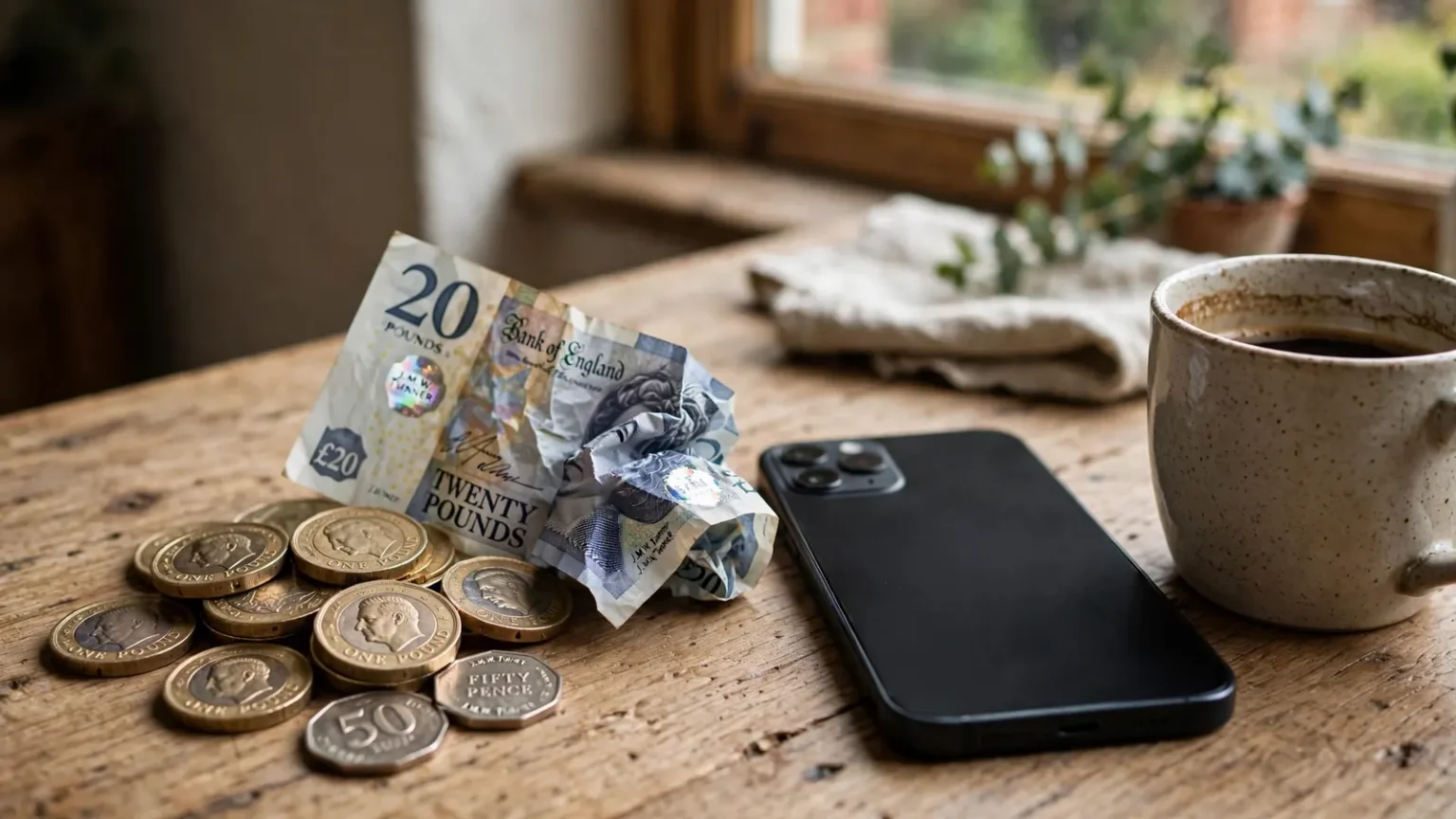
A £3 deposit is the amount you put into the account, not necessarily an amount you can later take straight back out. I learned to separate those two ideas the hard way: a balance can be yours on screen while still being too small to withdraw under the cashier’s rules.
A specialist review reports minimum withdrawal thresholds of £10 to £20 at many UK casinos. Treat that as a reported range, not a rule for every operator. If your balance sits below the threshold shown in the site’s terms, you may have to leave it there until it reaches the required amount. That changes what a small deposit means in practice: it can be available to play, but not immediately available to cash out.
Withdrawal Thresholds
Your balance may be available for play but too small to withdraw if it falls below the casino’s minimum withdrawal threshold (often £10 to £20).
Fees can make the gap more noticeable. A specialist review reports that some payment providers charge a flat transaction fee of £1 to £3. On a £3 transaction, a fee in that range would take a substantial share of the amount, if it applied to your payment. Check the fee information before sending money, and check whether the casino or payment provider charges it.
I now look at the full route in both directions: what leaves my account, what reaches the casino balance, and what conditions apply when I try to withdraw. The cashier’s minimum is only one part of that picture.
So a 3 pounds minimum deposit casino may accept a small payment without making that same amount easy to retrieve. Read the withdrawal rules before you treat the figure on the deposit button as the full cost or the full value. A small balance has strings.
When a Casino’s £3 Minimum Doesn’t Qualify for Its Bonus
A cashier accepting £3 tells you only that you can fund the account with that amount. It does not mean a welcome offer will be added. I learnt to separate those two checks after treating the deposit button as if it were the whole deal. It isn’t.
The promotion has its own qualifying-deposit rules. A specialist review has reported that some UK casinos exclude their lowest deposit bracket from welcome promotions. So a £3 payment may land in your cash balance while the bonus remains unavailable. No error; just two different conditions.
The same mismatch can apply above £3. A specialist review has also noted bonuses requiring a £10 qualifying deposit even where the cashier accepts £5. That is why the headline minimum deposit can be technically true and still tell you little about eligibility.
Before paying in, open the offer’s terms and look for the minimum qualifying deposit, whether you must opt in, and which deposits count. Check the wording for the specific promotion you intend to claim, not just a general page about bonuses. If it says the offer needs a higher deposit than you plan to make, assume the smaller payment will not qualify unless the terms clearly say otherwise.
I used to think “bonus available” meant ready to trigger. What it really meant was that I still had conditions to read. Keep the £3 deposit decision separate from the bonus decision; if the terms do not match your intended amount, treat it as a cash deposit, not a promotion entry. No guesswork.
SMS and Mobile Billing: Check the Actual Minimum
Paying through your mobile account can look like a simple way to make a small casino deposit: the charge is added to your phone bill or taken from prepaid mobile credit. But “pay by SMS” does not mean every casino accepts the same amount, or that sending a text automatically puts money into your balance. The cashier’s available option and its minimum still decide what you can deposit.
A specialist review of UK payment options identifies £1 as the lowest deposit tier, with that level rare and associated with specific mobile-billing routes such as Boku or Payforit. That is a useful signpost, not a promise that either service will be available at a particular casino today. If you are looking to deposit £3, check the amount shown in the cashier itself rather than assuming mobile billing will accept it.
I’ve learned not to confuse the payment route with the operator’s rules. A casino may list a mobile option but show a higher minimum, or the option may not appear for your account. Read the confirmation screen before approving anything, and check that the charge is a gambling deposit you intended to make—not simply a message sent in response to an unclear prompt.
There is one more basic check: real-money casino play in the UK must be with an operator holding a current UK Gambling Commission licence, and you must be at least 18. Mobile billing is only a way to fund an account; it does not tell you whether the casino is properly licensed. Check both. No guesswork.
Why do online casinos accept a minimum deposit of £1?
A £1 minimum lets you fund an account with a small amount, and debit cards and some e-wallets can support £1 transactions. It is simply the cashier’s funding threshold, not a special type of account.
Can I use a £1 deposit to claim all welcome bonuses?
No. Welcome offers typically require a £5 to £10 deposit, and some casinos exclude the lowest deposit bracket from promotions.
Can I use a credit card at 333 Casino in Great Britain?
No. Credit card gambling is banned in the UK, so deposits must come from a debit card, an e-wallet funded by debit, or a bank account.
Why are there so few £1 deposit casinos?
The £1 deposit tier is rare and is often limited to particular payment methods. Many casinos also exclude the lowest deposit bracket from welcome offers or set higher cashier minimums.
What is the minimum deposit at UK casinos accepting direct banking?
It is typically £10, although some operators set it at £5 or £20. Check the cashier, as some casinos set a higher minimum for bank transfers than for cards or e-wallets.
Do direct banking deposits qualify for welcome bonuses at UK-licensed casinos?
Yes. Direct banking deposits qualify on the same basis as card or e-wallet deposits, with the same bonus terms regardless of payment method.
Are there no-minimum-deposit casinos?
No. The lowest deposit tier is £1, and it is rare; a casino accepting £1 still has a minimum deposit.
Material created by the team Basswin UK Guide