
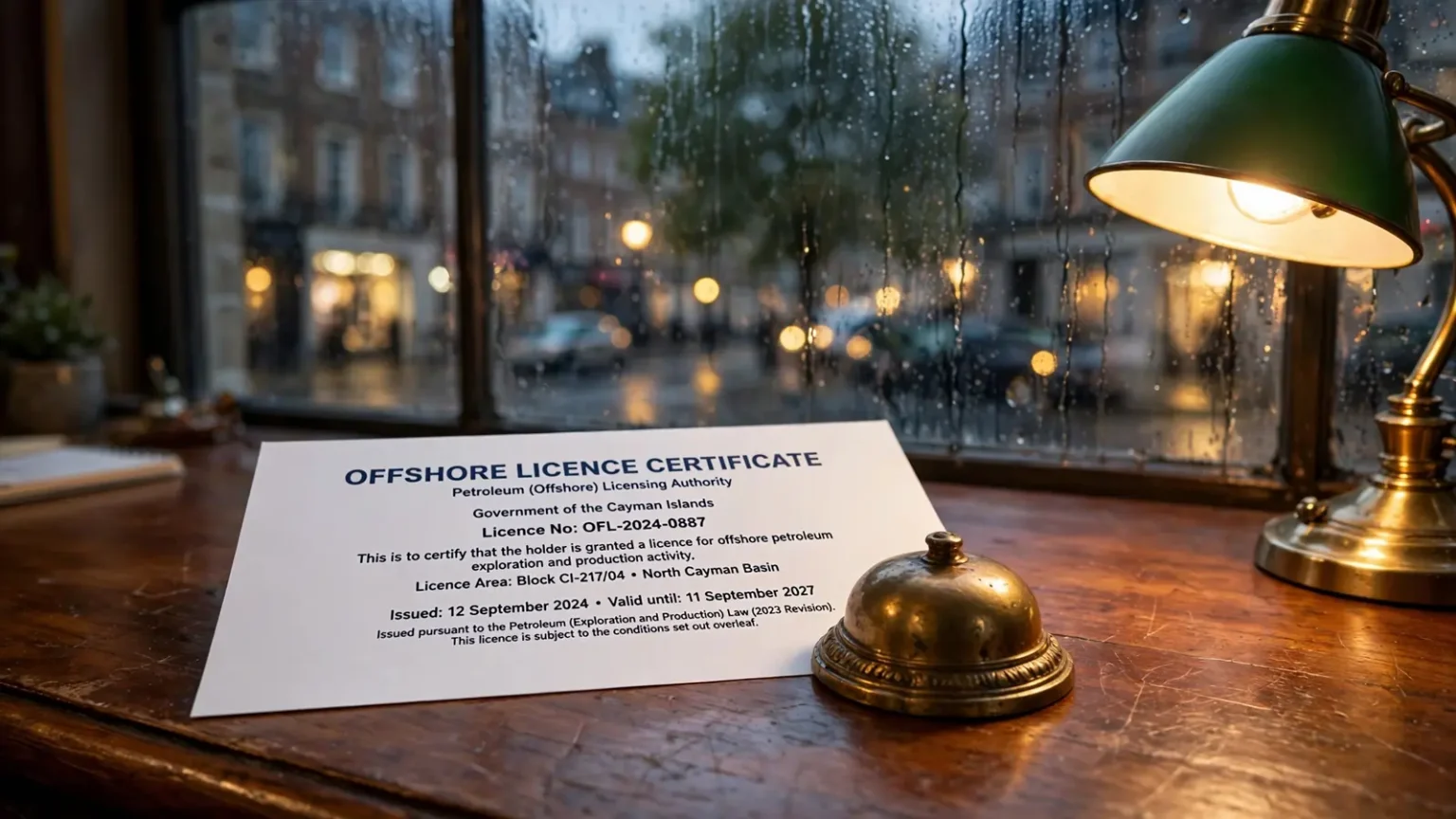
An Anjouan licence identifies a foreign licensing framework, not UK Gambling Commission oversight or a guarantee of safety.
What “Anjouan Casino” Actually Means
“Anjouan casino” sounds like a type of casino, but it is really a label for an online gambling site associated with an Anjouan licence. It does not mean the site is a casino regulated by the UK Gambling Commission. That distinction is easy to miss when a website uses familiar casino language and presents itself as if it were simply another option for British players.
I used to read a licence label as a general stamp of approval. It isn’t. The name tells you which jurisdiction’s licensing framework the operator says it falls under; it does not, by itself, tell you that the UK regulator oversees the site. Anjouan-licensed casinos sit within the wider category of non-UK-regulated casinos: online gambling sites operating without oversight from the UK Gambling Commission.
That category is not limited to Anjouan. Non-UK-regulated casinos may be licensed in places such as Malta, Curaçao or Gibraltar instead. The key point here is not that those jurisdictions are interchangeable, or that their rules are identical. It is that a foreign licence and a UK Gambling Commission licence are different things. A casino can have one without having the other.
Curacao Casino Licence in the UK: What It Means
The label is about regulation, not the casino games
An online casino may offer familiar games and still be regulated outside the UK. The games themselves do not tell you which regulator is responsible for the operator. Nor does the word “casino” on a website establish that it is part of the UK regulatory system.
The licence label is about the operator’s regulatory connection. So when you see a site described as an Anjouan casino, read that as a claim about its licensing jurisdiction, not as shorthand for “UK-regulated casino” or “approved by the UK Gambling Commission”. Those are different descriptions.
That matters because the same site can look much like one you have seen elsewhere. It may have casino branding, an account area and a range of games. Familiar presentation can make the distinction feel technical, almost like a detail buried in the footer. It is not. The regulator named in a licence claim is part of what the label means.
“Anjouan-licensed” is not the same as “UK-licensed”
Phrases such as “Anjouan-licensed casino” and “casino with an Anjouan licence” point to the same basic idea: the site is presenting itself as licensed under Anjouan’s framework. Neither phrase means that the UK Gambling Commission regulates it.
I would keep those two questions separate when reading a casino’s description:
- Which jurisdiction does the operator say issued its licence?
- Is the operator regulated by the UK Gambling Commission?
The first answer may be Anjouan. That does not supply the second answer. A foreign licence should not be mentally translated into a UK licence just because the site is visible to a British reader or uses language aimed at an English-speaking audience.
This is also why labels like “new Anjouan casino” or “Anjouan online casino” can be misleading if you read too much into them. “New” describes how the site is being presented, not who regulates it. “Online casino” describes the service, not the regulator. The licensing term is the part that identifies the claimed jurisdiction.
Be precise about what you are looking at
You may also come across the phrase “Anjouan crypto casino”. That describes a site being discussed in connection with both cryptocurrency and an Anjouan licence. It does not change what the licence label means: the site is still being identified by a non-UK licensing connection, not by UK Gambling Commission oversight.
Likewise, a page calling certain sites the “best Anjouan casinos” is using a ranking-style description. The word “best” does not alter a site’s regulatory status. It is worth separating promotional language from the plain meaning of the licence claim. A polished review or confident badge can make a site appear more established, but presentation is not the same thing as UK regulation.
I’m not saying every site with an Anjouan label is identical. The useful starting point is narrower: understand what the label does and does not tell you. It points to a non-UK licensing connection. It does not mean the operator is overseen by the UK Gambling Commission.
An Anjouan license is a non-UK regulatory label and does not mean the casino is approved by or overseen by the UK Gambling Commission.
That’s the distinction to keep in view. Anjouan is the licensing label; UK regulation is a separate status. Once those are no longer blurred together, the rest of the site’s claims are easier to read without treating a foreign licence as a UK one.
Recommended online casinos
- x3betBonus: Welcome Pack 100% Up to £1.000 + 200 Free Spins · Payout speed: 1-3 business days
- EvoSpinBonus: 125% up to €2500 + 125 Free Spins · Payout speed: 1-3 business days
- NightLuckBonus: Welcome Pack + 805% Up To 6400€ + 280 FS · Payout speed: 1-3 business days
- BeOnBetBonus: 100% up to €500 + 100 FS · Payout speed: 1-3 business days
- DieselwinBonus: Welcome Pack 250% up to £4000 + 200 FS · Payout speed: 1-3 business days
- JetsetspinsBonus: 200% Bonus + 100 Free Spins + Free Royal Wheel · Payout speed: 1-3 business days
- ZombillionBonus: Welcome Pack 250% up to £4000 + 200 FS · Payout speed: 1-3 business days
- AmunbetBonus: Join now and get 450% up to 2,700 GBP + 450 FS · Payout speed: 1-3 business days
- SpinFormulaBonus: 550% Up To £15,000 + 550 FS · Payout speed: 1-3 business days
- BritsinoBonus: Welcome Package – Get your £2,200 + 2,000 FS · Payout speed: 1-3 business days
The UK Legal Position: The Operator’s Licence Matters
When I first saw the phrase “Anjouan casino licence UK 2026”, I read it as if the licence itself settled whether a site could legally serve people here. It does not. The key question under British gambling law is not simply where a casino is based, or what licence it displays, but whether its operator is supplying gambling services to customers in Great Britain.
The Gambling Act 2005 places the relevant duty on operators serving that market. A company cannot avoid the requirement for a UK Gambling Commission licence merely by running its website from another country. If it offers gambling to customers in Great Britain, it needs the appropriate UKGC authorisation. The operator’s location does not switch that obligation off.
That distinction matters because a licence issued elsewhere and permission to serve the British market are not the same thing. A site might describe itself as licensed, and the licence might relate to its activities in another jurisdiction. Neither fact, on its own, establishes that it is authorised to offer gambling to people in Great Britain. I would not read a foreign licence as a substitute for a UKGC licence.
Best Casino App UK: What to Check Before Playing
The operator’s duty is not the player’s offence
The law’s focus is on the business supplying the gambling service, not on making an individual player a criminal for placing a bet on a site without a UK licence. The Gambling Act targets operators who provide services into the UK market. A player who uses an unlicensed site does not commit a criminal offence under UK law simply by gambling there.
That point can be easy to blur. Saying that an operator may be acting outside the UK licensing system is not the same as saying that every customer using the site has committed a crime. The legal responsibility described here sits with the operator. British law also does not specifically forbid citizens from using gambling services that are licensed in other countries.
But do not stretch that into “it must be legal for the casino to take my custom”. The fact that a player is not criminally liable does not give an operator permission to serve the British market without the required UKGC licence. Those are separate questions, and collapsing them is how a lot of licensing language becomes misleading.
What “available” does and does not tell you
You may be able to reach an online casino website from Britain. That is a practical observation, not proof that the operator is authorised to serve British customers. A page loading in your browser does not confirm which licence applies, whether the operator holds a UKGC licence, or whether its offer complies with British requirements.
The reverse distinction matters too: a person’s ability to access a site does not automatically make that person’s use a criminal offence. It is possible for the operator’s position and the player’s position to be different under the same set of circumstances. I find that less tidy than the advertising makes it sound. Still true.
While a player does not commit a criminal offence under UK law simply by gambling on an unlicensed site, this does not grant the operator permission to serve the British market.
So, when considering online casinos licensed in Anjouan, treat the licence claim and the UK legal question as two different things. The claim may tell you what authorisation the operator says it holds elsewhere. It does not answer whether the operator has permission to serve customers in Great Britain. That answer depends on the UKGC requirement for operators supplying the British market.
Keep the wording precise
“Licensed” is not a complete description unless you know which regulator issued the licence and what market the operator is authorised to serve. In this context, the important distinction is between an operator’s foreign licence and the UK licence required to serve Great Britain. One does not automatically stand in for the other.
Nor should the player-side point be turned into reassurance that there is no meaningful risk in using an unlicensed service. The narrow legal fact is that a player does not commit a criminal offence under UK law merely by gambling on an unlicensed site. It does not change the operator’s licensing obligation, and it does not make a foreign licence equivalent to UK authorisation.
For me, the clearest way to read an Anjouan online casino licence claim is to ask two separate questions: what licence does the operator say it has, and does it hold the UKGC licence needed to serve customers in Great Britain? If the second answer is no, the first answer does not cure that gap. Keep the distinction firmly in view.
Anjouan Alongside Other Offshore Licensing Jurisdictions
When I first saw a casino describe itself as licensed offshore, I treated that as if it answered the important question: where can it take customers? It doesn’t. A licence identifies a regulator or jurisdiction connected with the operator; it is not a passport granting access to every country.
Malta, Curaçao, Gibraltar and Anjouan all appear among the jurisdictions that license non-UK-regulated casinos. That puts Anjouan in a wider offshore market, rather than making it a special category of permission. The names may look interchangeable in a casino’s footer, but the key point is simpler: none of them should be read as a UK licence.
Gibraltar Casino Licence in the UK: What It Means
An Anjouan casino licence does not authorise an operator to serve the United Kingdom. Nor does it automatically allow service in other restricted markets. The operator has to consider the rules in each country it wants to enter; permission associated with one jurisdiction does not erase restrictions elsewhere.
That distinction gets blurred in marketing. “International” can sound like a company has been cleared to operate everywhere. “Licensed” can sound like a regulator has approved every market the site lists. Neither word tells you that. I’ve made the same lazy leap myself: I saw a licence badge and stopped asking what territory it covered. Wrong question.
One label, different jurisdictions
The names of licensing jurisdictions are useful context, but they are not a league table. Seeing Anjouan alongside Malta, Curaçao or Gibraltar does not establish that their rules are identical, that their regulators offer the same oversight, or that a licence from one can substitute for a licence from another. The fact that casinos may be licensed in any of these places only tells you that the wider market has more than one licensing base.
Malta, Curaçao, Gibraltar
Other jurisdictions that license non-UK-regulated casinos.
Anjouan
An offshore licensing jurisdiction for non-UK-regulated casinos.
UK Gambling Commission
The regulator required for operators legally supplying gambling services to customers in Great Britain.
So if you are comparing Anjouan-licensed online casinos with casinos licensed elsewhere, keep the comparison narrow. Ask which jurisdiction is named, and do not infer that the answer settles where the operator may legally offer gambling. A label can identify a connection; it cannot, by itself, establish permission in every country where a website can be opened.
This is where the phrase “offshore licence” can do too much work. It groups together operators connected to different jurisdictions, while hiding the fact that market access is a separate issue. An Anjouan gaming licence is not a UK authorisation with a different name. Equally, seeing another jurisdiction named on a casino site does not prove that the operator may serve British customers.
The same caution applies to claims about “global” availability. A site may be visible from a country without being authorised to operate there. Access and authorisation are not the same thing, and the name of the licensing jurisdiction does not settle the difference. That is the part I now look for before taking a badge at face value.
What the Anjouan label can—and cannot—tell you
At a broad level, the label places a casino within the offshore licensing market and points to Anjouan as its named licensing jurisdiction. It does not tell you that the casino is regulated by the UK Gambling Commission, or that it has permission to operate in the UK. Those are different claims, and one should not be smuggled in behind the other.
Nor does comparing jurisdiction names alone tell you whether a particular casino is trustworthy. That needs more than a country or regulator name in a footer. For now, the useful takeaway is limited: Anjouan is one of several jurisdictions associated with non-UK-regulated casinos, and its licence does not open the UK market to its holder.
Casino without a Swedish licence: UK guide
I would not read more into the label than that. A jurisdiction name is context, not a universal green light.
What the Anjouan Licence Requires—and What It Doesn’t
An Anjouan gaming licence can sound like a neat stamp of approval. I’ve learned to look past the label and ask what the framework actually requires of an operator. In this case, the answer is narrower than the word “licensed” might suggest.
One stated requirement concerns complaints: operators must respond within 30 calendar days. That gives a player a deadline for receiving a response, not a promise that the complaint will be resolved in their favour. Nor does it mean the authority itself will investigate the case or decide who is right. Those are different things, and the distinction matters when you are trying to work out what a licence can do for you.
The framework also leaves important technical checks outside its mandatory requirements. It does not require random number generator testing, independent audits, or the segregation of player funds. Those omissions do not prove that every casino is dishonest or that every game is unfair. They mean the licence, on its own, does not establish that those checks have been carried out or that those protections are in place.
That is the part I would not let an operator blur with general language about “oversight”. The word can suggest a whole system of routine checks, when the specific requirements may be limited. A licence is only meaningful as a safeguard to the extent that its rules say what the operator has to do, and what happens if it does not.
What the Anjouan framework does not mandate
The licensing framework does not require independent audits, random number generator testing, or the segregation of player funds.
It helps to separate the written framework from an individual casino’s promises. A site might say that its games are tested or that it uses a particular process for handling funds. Those claims should not be treated as requirements of the Anjouan framework unless the framework itself makes them mandatory. Equally, the absence of a mandate is not evidence that a particular operator has skipped every voluntary check. It simply leaves the player with less assurance from the licence alone.
There is a practical difference between “the operator says it does this” and “the licence requires it”. I used to read the badge and move on. That was too easy. Now I would look for a clear explanation of the specific process being claimed, rather than letting the licence label stand in for details it does not supply.
The complaint-response deadline has a similar limit. A response can acknowledge your message, ask for more information, or set out the operator’s position; it is not the same as an independent decision or a guaranteed remedy. So the deadline is useful to know, but it should not be mistaken for a full complaints system.
In short, casinos with an Anjouan gaming licence operate under a framework with some stated obligations, including a response deadline, but it does not mandate several checks players may assume come with a licence. Read the requirement, not just the badge.
Using an Anjouan Online Casino: Access and Safeguards
The practical gap is easy to miss when you first land on an Anjouan-licensed site. It may look familiar, with account controls and help pages, but that does not make UK safeguards apply. In particular, these casinos are not required to connect to GAMSTOP, the UK Gambling Commission’s self-exclusion scheme, or to offer an independent dispute resolution service comparable to those approved for UK-licensed operators.
That matters if you have used GAMSTOP to stop yourself gambling. The scheme does not cover casinos outside it, so registering with GAMSTOP should not be treated as a barrier between you and every gambling site. I used to read “self-exclusion” as a switch that would shut the door everywhere. It isn’t. Access may still be possible elsewhere, and you need to account for that before opening another gambling account.
Non-GamStop European Casinos: UK Rules Explained
The difference is practical, not just paperwork. If a disagreement develops with an Anjouan casino, you cannot assume there is an independent UK-style service ready to review the operator’s decision. A customer-support team may answer, but that is not the same as an external adjudicator. Nor does the licence require the site to join GAMSTOP. The protections you may associate with a UK account are not automatically carried over.
I would check the account settings and responsible-gambling information before depositing, but I would not mistake a page labelled “safer gambling” for equivalent safeguards. Look for whether the site lets you restrict or close your account, and read how those controls work. Their presence does not mean they are backed by the UK scheme or an independent complaints route.
If you are trying to avoid gambling, do not rely on GAMSTOP alone to block an Anjouan online casino. Put distance between yourself and the account in ways you control, and consider speaking to a support service if gambling is becoming difficult to manage. That is not a judgement; I have learned that good intentions are a weak barrier when access remains easy.
GAMSTOP Limitations
Anjouan casinos are not required to connect to GAMSTOP, meaning self-exclusion through the UK scheme will not block access to these sites.
The short version: familiar screens, different protections. Don’t assume otherwise.
An Anjouan Casino Licence Is Not a Safety Guarantee
A licence can tell you something about the operator’s regulatory status. It does not tell you that your balance is sitting untouched in a separate account, ready to be returned if the business collapses. That distinction is easy to miss when a casino uses reassuring language about “player protection”. The phrase sounds solid; it is not proof that your money is ring-fenced.
Anjouan-licensed casinos are not required to keep player funds segregated. If an operator fails, customers are unsecured creditors. In plain English, you would be owed money, but your balance would not have the status of funds held separately for you. You may have to pursue a claim alongside other creditors, and there is no guarantee you will recover what the account showed.
That is the part I would want in front of me before depositing, not buried behind a badge or a polished cashier page. A number on screen can feel like money already in your hands. It is still a claim against the operator until it reaches your own account.
The practical risk is not limited to a dramatic announcement that a casino has shut down. A business can become unable or unwilling to pay, and a player may find that a balance is difficult to access precisely when the operator’s finances are under strain. The licence does not create a separate pot to cover that balance. No safety net.
Malta-Licensed Online Casinos and UK Rules
I used to treat a licence logo as if it answered every question about getting paid. It doesn’t. The key issue here is narrower and more basic: whether customer funds are protected from the operator’s own financial problems. Under this framework, segregation is not guaranteed.
So if you are weighing up whether to leave money in an account, treat the displayed balance as exposed to the operator’s failure. Do not assume that a licence means deposits are protected, or that a claim will be paid in full if the company cannot meet its obligations. That is not a prediction that every operator will fail. It is the difference between a promise of oversight and an actual guarantee for your funds.
Checking an Anjouan Casino Listing Before You Trust It
A casino name on a directory is a starting point, not proof that the business behind the site holds a current Anjouan casino licence. I’ve learned not to let a polished badge or a confident “licensed” claim do the checking for me. The useful question is whether the operator’s details line up with the public register.
Start with the casino’s legal company name, not just its trading name. A site might use one brand while its terms identify a company with a different name. Find the company named in the site’s terms and compare it with the entry in Anjouan’s public register. If the names do not match, or the site gives no clear legal entity, you cannot confidently connect that casino to the register entry.
Verifying a Licence
Identify the Legal Entity
Find the actual company name in the casino’s terms and conditions rather than using the trading brand.
Check the Public Register
Compare the legal company name against the entries in Anjouan’s public register.
Confirm Validity
Verify that the license is current by checking the expiry date on the register.
Then check the expiry date. A listing that once existed is not the same as a current licence. Make sure the register shows a valid entry rather than relying on an old screenshot, a copied badge or a directory page that may not have been updated. If the information is hard to locate or unclear, treat the claim as unverified. Don’t fill the gaps with guesswork.
The same care applies when several sites appear under similar names. A licence belongs to the entity shown in the register; it does not automatically cover every brand that uses related wording. Compare the casino’s own legal details against the registered company, character by character where needed. Small differences can matter.
I also separate a licence check from a quality check. A matching entry can support the claim that the named company is listed, but it does not tell you everything about how the casino is run. Anjouan’s framework does not require RNG testing, audits or the segregation of player funds. That is a real limit, not a technicality.
If you are considering recommending a casino, don’t do it on the strength of a name in a list. Confirm the public entry, expiry date and company name first. If any one of those cannot be matched, say so plainly—or leave the recommendation out. A badge is easy to display. Verification takes a little more work. Worth doing.
Bonuses, Deposits and the Withdrawal Catch
A welcome bonus can look like extra money until you read what has to happen before it can be withdrawn. I’ve learned not to judge an offer by the headline: the wagering terms decide whether it is useful, and the wording can be less straightforward than the banner.
Non-UK-Registered Casinos: Rules, Risks and Licences
A specialist review reports that some offshore welcome offers carry wagering requirements of 35x or more. That is a reported condition, not a rule for every Anjouan casino bonus. The multiplier is only part of it, too. A specialist review describes an offer with a 40x requirement that can apply to the bonus and deposit together, to the bonus alone, or to the bonus and free spins as a package. Those versions can leave you with very different amounts to play through. Read the actual terms attached to the offer before opting in.
Check what counts towards wagering, whether the bonus expires, and whether taking it changes the withdrawal conditions. If those details are hard to find or the wording is unclear, I would treat the offer as a cost, not a gift. The important number is not the size of the banner; it is the amount you may have to wager and what you can withdraw once the conditions are met.
The withdrawal picture is less tidy than a quick payout claim suggests. Reports disagree: one account gives a range from 24 hours to five business days, while another says a withdrawal can take three or four weeks. Those are not interchangeable promises. Payment method and the operator’s processing can affect timing, and there is no regulatory clock enforcing a payout deadline at a non-UK-regulated casino.
That uncertainty matters most after a win, when you may be waiting while the operator reviews a request. Make sure you understand any verification steps and withdrawal terms before depositing, not after you have money tied up. A supported deposit method does not automatically mean the same route will be available for withdrawals.
Do
- Read the actual wagering terms before opting into a bonus
- Verify withdrawal conditions and processing times
- Use written communication for all casino disputes
Don’t
- Judge a bonus by the headline banner
- Assume a “fast cashout” claim is a guarantee
- Rely on a license badge as proof of payment security
“Fast cashout” is marketing until you have read the conditions. And even then, it is not a guarantee.
Reading Anjouan Casino Reviews with Your Eyes Open
I used to treat a page full of positive reviews as a kind of safety net. It isn’t. A review can tell you what one person says happened; it cannot decide your complaint, make a casino answer you, or secure a particular outcome.
That distinction matters when a withdrawal or account dispute turns personal. Under Anjouan’s framework, the authority does not handle, mediate or adjudicate player complaints. And an Anjouan-licensed casino does not offer an independent dispute-resolution route comparable to the approved ADR services associated with UK regulation. So a review site may publish your account, but that is not the same as an independent body examining the evidence and issuing a decision.
“Reviewed” sounds reassuring. Read it as “someone has written about this operator”. Check what the page actually says: is it describing a first-hand experience, repeating the casino’s claims, or summarising other reviews? Does it explain how a complaint was handled, or just say the issue was “resolved” without showing what that means? Those details tell you more than a star score.
I’d also separate a complaint review from a general rating. A player may be happy with the games and still have no useful answer about what happens when a dispute arises. Another account may sound convincing but leave out the operator’s response. Neither one gives you a binding ruling. Keep that in mind before treating a string of favourable comments as proof that you’ll have recourse if something goes wrong.
If you do decide to contact a casino, keep the conversation in writing and save copies of what you send and receive. Be precise about the issue and the outcome you’re asking for. That won’t create an independent appeal route, but it can help you keep your own account clear if you later describe the dispute publicly.
My old mistake was confusing visibility with protection. Reviews can help you spot questions worth asking; they cannot replace an adjudicator. With an Anjouan casino, the important limitation is not whether complaints appear online, but who has authority to decide one. Here, that route is absent.
What “Best” Can Mean When UK Protections Are Missing
When I see a casino described as “best”, I try to look past the label. With an Anjouan casino, the useful question is not which site sounds most polished, but what you would be relying on if something went wrong.
The safeguards can be thinner than those required of a UK Gambling Commission-licensed operator. Responsible-gambling measures and data handling may not meet the same standard, so a reassuring logo or a confident promise on a homepage is not a substitute for protections you can actually use. I’ve been taken in by tidy design before. It proves very little.
There is a practical cost, too: if you play at a non UK regulated casino, you lose access to the UK’s Financial Ombudsman Service and to mandatory responsible-gambling tools. That changes what “best” can mean. A site might look appealing, but the usual UK routes for help and redress are not there to fall back on.
So I would judge any recommendation by the risks it makes clear, not by how often it calls itself safe. Can you understand what personal information you are handing over? Are the safer-gambling options explained plainly? Does the site make it easy to stop, or does it mostly push you towards continuing? If the answers are hard to find, that matters more than a glossy ranking.
I would also keep the decision modest. No review can restore UK protections that do not apply to the service, and no “best” label can remove the added uncertainty around privacy or responsible gambling. If those gaps make you uneasy, walking away is a sound choice. That’s not being fussy. It’s knowing the trade-off before you make it.
Is it legal for a UK player to gamble at an Anjouan-licensed casino?
Yes, UK law does not explicitly prohibit you from using gambling services licensed abroad, and players do not commit a criminal offence by gambling on an unlicensed site. The operator still needs a UK Gambling Commission licence to legally serve customers in Great Britain.
Are sites that are not on GamStop legal for players in the UK to access?
Yes, you do not commit a criminal offence by using one. However, a site serving customers in Great Britain needs a UK Gambling Commission licence, and casinos not on GamStop are not part of the UK scheme.
Can UK players legally play at casinos licensed in Anjouan?
Yes, UK law does not explicitly prohibit you from gambling with an overseas-licensed service. But an Anjouan licence does not authorise an operator to serve customers in Great Britain; it needs a UK Gambling Commission licence for that.
What happens if I have a dispute with an Anjouan-licensed casino as a UK player?
You can complain to the operator, which must respond within 30 calendar days. Anjouan does not mediate or decide player complaints, and these casinos do not provide an independent dispute-resolution route comparable to UK-approved ADR.
What Are Non UK Regulated Casinos?
They are online gambling sites that operate without oversight from the UK Gambling Commission. They may hold licences from other jurisdictions, including Anjouan, Malta, Curaçao or Gibraltar.
Material created by the team Basswin UK Guide