

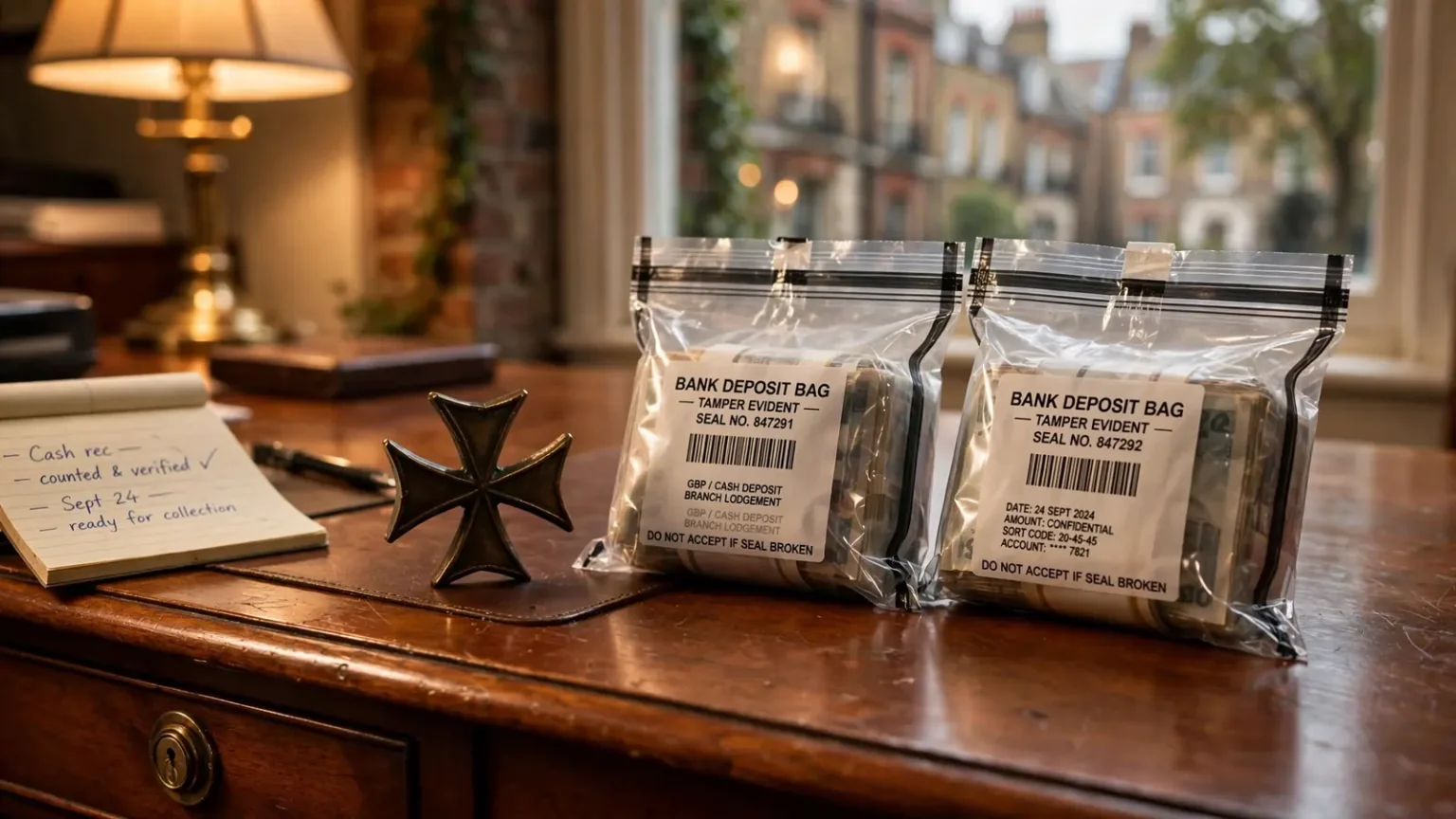
A Malta licence requires player funds to be held separately at an approved financial institution, but it does not guarantee every balance or outcome.
What a Malta Casino Licence Does—and Doesn’t—Tell You
A Malta licence can tell you something specific about how a casino must hold player money. It cannot, by itself, tell you everything you may want to know before trusting a site with a deposit.
The Malta Gaming Authority (MGA) requires its licensees to keep player funds in segregated accounts at an approved financial institution. In plain terms, the money players hold with the casino is kept apart from the operator’s own funds. That is a concrete safeguard, not just a badge in a website footer.
But I would not stretch that fact into a promise that every balance is guaranteed or that a player will automatically recover money if a business runs into trouble. Segregation describes how funds must be held; it does not turn a Malta online casino licence into a blanket guarantee about every possible outcome. The wording matters. “Protected” can sound absolute in a sales pitch. The actual point is narrower: player funds must be held separately in approved accounts.
That distinction is easy to miss when a site presents its Malta casino licence as proof that it is safe in every sense. A licence is evidence of oversight within that regulator’s remit. It is not a universal approval that follows the operator into every country where its website can be opened. Nor does it establish that the site has the right to serve customers in Great Britain.
This is where the phrase “MGA licensed” can do too much work. It may describe the operator’s relationship with the Malta Gaming Authority, but it does not answer whether the operator is authorised for the British market. The UK Gambling Commission does not approve licences issued by overseas regulators, has no reciprocal arrangements with them, and will not handle complaints about operators licensed outside the UK. So I treat a Malta licence and UK authorisation as separate questions, not two ways of saying the same thing.
UK Online Casinos Without Registration: What It Means
The practical check is to work out who issued the licence and what that licence actually establishes. A logo alone is not much to go on. Look for the named operator and licensing details, then compare them with information from the regulator rather than relying on the casino’s own wording. If the site is vague about which company is running it, that is a reason to pause, not a reason to assume the missing detail is harmless.
I have learned to be wary of broad labels such as “trusted” or “fully protected”. They may be marketing shorthand, but they are not a description of the account arrangement. The useful detail is that MGA licensees must hold player funds separately at an approved financial institution. Anything beyond that needs its own evidence.
So, what does a Malta licence tell you? It points to a specific regulatory framework and a defined player-funds requirement. What does it not tell you? Whether the site is authorised to serve Great Britain, whether every claim on its homepage is accurate, or what outcome you would get in a dispute. Keep those questions separate. It’s less glamorous, but clearer.
Recommended online casinos
- x3betBonus: Welcome Pack 100% Up to £1.000 + 200 Free Spins · Payout speed: 1-3 business days
- EvoSpinBonus: 125% up to €2500 + 125 Free Spins · Payout speed: 1-3 business days
- NightLuckBonus: Welcome Pack + 805% Up To 6400€ + 280 FS · Payout speed: 1-3 business days
- BeOnBetBonus: 100% up to €500 + 100 FS · Payout speed: 1-3 business days
- DieselwinBonus: Welcome Pack 250% up to £4000 + 200 FS · Payout speed: 1-3 business days
- JetsetspinsBonus: 200% Bonus + 100 Free Spins + Free Royal Wheel · Payout speed: 1-3 business days
- ZombillionBonus: Welcome Pack 250% up to £4000 + 200 FS · Payout speed: 1-3 business days
- AmunbetBonus: Join now and get 450% up to 2,700 GBP + 450 FS · Payout speed: 1-3 business days
- SpinFormulaBonus: 550% Up To £15,000 + 550 FS · Payout speed: 1-3 business days
- BritsinoBonus: Welcome Package – Get your £2,200 + 2,000 FS · Payout speed: 1-3 business days
Malta Casinos and the UK Market: Where the Legal Line Falls
A casino can be based in Malta, hold a Maltese operating licence and still lack permission to offer online gambling to people in Great Britain. Those are separate questions. The address on a company page, the regulator named in its terms and the market it is authorised to serve do not automatically match.
I used to treat a foreign licence as a kind of all-purpose passport. It isn’t. A licence from Malta may tell you something about the operator’s status under Maltese rules; it does not, by itself, establish that the operator can legally take customers in Great Britain. The practical distinction is between where a business is established or licensed and whether it holds the UKGC licence required for the British market.
That distinction matters whether a site calls itself a Malta online casino, advertises real-money games or appears in a list of supposedly top-rated Malta casinos. Those labels describe how a site presents itself, not whether it has the required permission here. Nor does a polished website, a familiar payment method or a claim that the casino accepts British customers settle the question.
Illegal Gambling
It is illegal for an operator to offer gambling services to UK consumers without a UKGC licence, regardless of whether they hold a Malta licence.
A foreign licence is not British market access
The UKGC’s rules apply to operators that provide remote gambling to consumers in Great Britain, even when the operator is physically based elsewhere. So a company does not avoid the requirement by running its site from Malta, registering there or holding an operating licence issued there. If it is offering remote gambling to people in Great Britain, the relevant UK authorisation still matters.
Put another way, “licensed in Malta” and “licensed to serve Great Britain” are not interchangeable descriptions. A business may have one status without having the other. Treating the Maltese licence as proof of British permission is the mistake I would watch for first.
The legal line is not drawn by the casino’s branding. “International”, “European” or “available to UK players” are marketing descriptions; none replaces the UKGC licence. A site’s own statement that it is regulated somewhere should not be read as confirmation that it is authorised for this market.
There is a straightforward consequence. It is illegal for an operator to offer gambling services to UK consumers without a UKGC licence. That is about the operator’s permission to provide the service; it is not a reason to infer that a Malta licence fills the gap. If the site’s claims leave you unsure which authorisation it actually has, do not let the foreign licence wording answer a different question.
Gibraltar Casino Licence in the UK: What It Means
What to check before taking the label at face value
When I see a casino described as one of the best Malta online casinos, I separate the sales pitch from the basic market-access question. Is the site claiming a Maltese licence, a UKGC licence, or both? Those claims refer to different authorities and should not be blurred into one reassuring badge. The phrase “Malta licensed casinos” is not enough on its own to tell you whether any particular operator may serve customers in Great Britain.
The same applies to new sites. A fresh launch, a Malta address or a new name in a comparison page does not change the rule. Novelty is not authorisation. A list calling its picks “top” or “best” may help you discover brands, but the ranking itself cannot grant a casino permission to operate here.
Be wary of wording that nudges you to treat access as proof. A site might load in your browser, display prices in pounds or allow you to create an account. None of those things establishes that it holds the British operating licence. Availability and authorisation are separate matters.
I would also avoid reading “MGA” as shorthand for “approved for UK customers”. It identifies a Maltese regulatory connection, not a UKGC licence. That is the point worth keeping in view when two different badges appear on a page, or when a review talks about a casino’s country of origin but says little about its status in Great Britain.
No badge by itself. The jurisdiction matters.
Do
- Compare named operators with regulator information
- Verify the presence of a UKGC licence for British market access
- Check for explicit naming of regions within the UK
Don’t
- Assume an MGA licence grants permission to serve Great Britain
- Trust broad labels like “trusted” or “fully protected”
- Use a site’s technical availability as proof of authorisation
So, if you are comparing Malta-based casinos while living in Great Britain, don’t stop at the question of where the operator is located or which foreign regulator it names. The decisive market-access issue is whether it holds the UKGC licence required to provide remote gambling here. A Maltese licence and British authorisation are not substitutes, and a site’s confident wording cannot make them so.
Can You Use a Malta Casino as a UK Player?
“UK player” sounds like a clear label, but it hides a geographical distinction that matters. Great Britain and Northern Ireland are not covered by the same gambling arrangements. I used to read “UK” as one neat box on a website form; the law does not treat it quite that way.
For the Gambling Act 2005, Great Britain means England, Scotland and Wales. The UK Gambling Commission’s jurisdiction under that Act covers those three nations. Northern Ireland has a separate regulatory regime, and the Commission does not regulate remote gambling there in the same way.
That distinction is easy to miss when a Malta-based site describes itself as serving UK customers. The phrase might be used broadly, but it does not tell you which parts of the UK the operator means, or what rules apply where you live. A country selector, a “UK players welcome” banner or a page about Malta online casinos cannot settle that question by itself.
Great Britain and Northern Ireland are not interchangeable
If you live in England, Scotland or Wales, you are within the Great Britain framework. If you live in Northern Ireland, you are not within that framework in the same way. That is the practical geographical point: a single description such as “for UK players” can gloss over two different regulatory settings.
This is not just a matter of different names on a map. The UKGC’s remit under the Gambling Act 2005 is specifically Great Britain, while Northern Ireland’s gambling regulation follows its own arrangements. So when you see a Malta casino described as available to UK customers, you should not assume that the description has the same legal meaning for someone in Belfast as it does for someone in Bristol.
Online casinos with no sister sites in the UK
I would not treat this as a loophole or a shortcut. The fact that Northern Ireland is regulated separately does not turn a site’s marketing language into proof that it is suitable or authorised for you. It simply means you need to read claims about “UK players” with the geography in mind rather than taking the phrase literally.
What Malta’s location does not answer
A casino being based in Malta describes the operator’s location, not your own. It does not tell you whether the operator’s description covers England, Scotland, Wales, Northern Ireland, or some narrower group of customers. Likewise, seeing “MGA casino” or “Malta casino online” does not answer the question of which local rules apply to you.
That distinction matters whether the site calls itself an online casino in Malta, a Malta casino for UK players, or simply an international casino. Those are descriptions, not a map of regulatory responsibility. You still need to identify where you are physically located and which jurisdiction’s arrangements apply there.
I have learned not to let a familiar flag or a country name do the thinking for me. A page can use “UK” as a convenient label while leaving the important detail unstated. If its wording does not distinguish Great Britain from Northern Ireland, it has not made that distinction clear for you.
Read the location wording carefully
Look for whether the site explicitly names the countries or regions it means by “UK”. Does it refer to Great Britain, or does it include Northern Ireland too? Is the wording on the casino’s own information page precise, or is “UK” only used in a headline or promotional banner? These checks do not resolve every legal question, but they stop you from assuming that one broad label covers everyone in the same way.
Be especially cautious with phrases such as “available to UK players”. Availability can mean that a web page loads or that a registration form accepts a location; it does not, on its own, explain the regulatory position for a person in each part of the UK. Do not confuse a site’s technical reach with the rules that govern gambling where you live.
That applies to free-play pages too. A Malta casino offering a demo or free-play mode may use the same broad country wording as its real-money pages, but the label still does not explain the local regulatory arrangements. The words on the page are not a substitute for identifying whether you are in Great Britain or Northern Ireland.
Anjouan Casino Licence in the UK: What It Means
A simple way to keep the distinction straight
If you are in England, Scotland or Wales, think “Great Britain” when you read about the UKGC’s jurisdiction under the Gambling Act 2005. If you are in Northern Ireland, remember that its regulatory regime is separate and that the UKGC does not oversee remote gambling there in the same way.
That is narrower than a general claim that every Malta casino is or is not usable by every UK resident. The country name alone cannot give you that answer. Start with your location, then check what the site actually says about the people it serves and the regulatory arrangements it identifies. “UK” is not always precise enough.
How to Judge “Best” Without Trusting a Casino’s Sales Pitch
“Best” is a tidy word for a messy decision. I used to treat it as a verdict: if a site looked polished and its games had familiar names, I assumed somebody had already checked the important parts. That was lazy thinking. A good-looking lobby can tell you what a casino wants you to notice, not how its games have been assessed.
If you’re comparing Malta-based casinos for use in Great Britain, start with what can be verified about the operator and its games, rather than a ranking that bundles everything into one glowing score. The word “Malta” may describe where a company is licensed or based; it does not, by itself, tell you whether a game has been tested to the standard required for a UKGC-licensed operator.
There is one useful check here: UKGC licensees must use games that have been tested and certified by approved testing houses. That gives you a concrete question to ask when you’re looking through an online slots or roulette lobby: is the casino operating under a UKGC licence, and does the information it provides let you understand the status of its games? It is a more grounded starting point than trusting a banner calling the site the best online casino in Malta.
This is not a magic stamp on every part of the experience. Game testing is one assessment point, not a guarantee that you’ll win, a promise that every game suits you, or proof that a casino’s customer service and other practices are excellent. I’ve made the mistake of letting one reassuring detail stand in for a full judgement. It doesn’t.
Online Slots Not on GamStop: What to Check
The same caution applies to lists of MGA casinos and claims about the best MGA casino. A list can be useful as a place to begin checking, but the label itself is not evidence that every entry is right for a player in Great Britain. If a review says a particular site is “top-rated”, look for the substance underneath the phrase: what was actually checked, and does it relate to the games, the operator, or just the reviewer’s overall impression?
Promotions can muddy the comparison further. A “best Malta casino bonus” may look generous in a headline while saying little about whether the games you want to play are appropriate or how the site’s claims have been verified. Bonus terms deserve their own careful read; they should not distract you from checking the operator and its game-testing arrangements.
For slots, roulette, or a site advertising Bitcoin payments, resist the urge to let the product label do the work. A Malta casino with a big slots selection is not automatically better than one with fewer games, and a payment method does not establish anything about game testing. I’d rather have a modest claim I can check than a grand one I can’t.
So when a casino calls itself “the best”, translate that into a checklist, not a conclusion. Look for verifiable information about its UKGC status and whether its games meet the testing and certification requirement for UKGC licensees. Then treat the rest of the sales language as just that: sales language. No crown required.
Before You Trust a Malta Casino Site, Check the Complaint Route
A casino’s Malta connection tells you little about what happens when a complaint goes nowhere. The useful question is whether the operator serving you has a route you can actually follow. For a UKGC-licensed operator, that includes access to an approved Alternative Dispute Resolution provider, or ADR.
I’d check this before depositing, not after a disputed withdrawal or a bonus argument. A polished page about “fair play” is easy to publish; a clear complaints route is more concrete. Find the operator’s complaints information and note which ADR provider it names. If you cannot work out where a complaint starts or who may review it later, that is worth pausing over.
Complaint Process
Step 1: Operator Contact
First raise the issue directly with the casino using its internal complaints process.
Step 2: ADR Provider
If the matter remains unresolved, take the complaint to the operator’s approved Alternative Dispute Resolution (ADR) provider.
Step 3: Gambling Commission
If the dispute is still not settled after the ADR process, the route continues to the Gambling Commission.
The order matters. You first raise the issue with the operator and use its complaints process. If it remains unresolved, the complaint can then go to the operator’s approved ADR provider. If it is still unresolved after that, the route continues to the Gambling Commission. So you do not skip straight from a frustrating support chat to the regulator.
Keep a record as you go: what happened, what you asked the operator to do, and the replies you received. Save relevant messages and screenshots while you can still access them. That is not a magic way to win a dispute; it simply makes it easier to explain the problem consistently when you move from one stage to the next.
This is especially useful when comparing Malta casino sites. “MGA” in a footer, or a claim that a site is among the best casino sites in Malta, does not tell you which complaint route applies to your account. The thing to verify is the operating arrangement behind the site and whether the operator is UKGC-licensed. A Malta-facing brand name is not itself an ADR provider, and a Malta licence should not be mistaken for access to the UKGC complaints route.
If the operator is UKGC-licensed, it must work with an approved ADR provider for player complaints. The complaint should first be raised with the operator, then taken to that provider if it has not been resolved; the Gambling Commission comes later if the matter remains unresolved. That gives you a sequence to follow, rather than a vague promise that “support will help.”
Don’t assume that every site described as a Malta online casino offers the same recourse. In particular, a site’s own claims about its licence or customer service do not establish that it is covered by UKGC requirements. Check the operator’s status and the complaint information independently before treating the route as available to you.
I’ve learned not to confuse a responsive chat agent with a proper complaints path. Chat can be useful for sorting out a simple question, but keep the formal complaint and its replies in a form you can refer back to. If the issue is not resolved, you will need to know what you have already raised and what answer you received.
Curacao Casino Licence in the UK: What It Means
The “safest” claim is not the point here. A workable route is. Check who handles complaints, follow the operator-to-ADR order, and understand that the Gambling Commission is the later step if the dispute remains unresolved. For a UKGC-licensed operator, that is the recourse to look for—not a badge or a sales line.
Malta Licensing, UKGC Approval and the 2026 Search
A Malta licence and a UKGC licence answer different questions. The Malta Gaming Authority’s approval is not the same as authorisation from the UK Gambling Commission, and it does not take the place of a UKGC licence for serving customers in Great Britain.
The practical test is where the operator is offering real-money gambling. If it accepts customers in England, Scotland or Wales, it must hold a UKGC licence. That requirement applies whether the company is based in Britain, Malta or somewhere else. A company’s address does not change which regulator oversees its gambling offer to people in Great Britain.
I used to read a foreign licence badge as a kind of all-purpose clearance. It isn’t. A site can describe itself as a Malta-licensed casino, but that label alone does not establish that it is authorised to offer real-money play to customers here. The UKGC is the regulator that licenses and oversees gambling in Great Britain.
So when you see “MGA approved” beside a casino, treat it as information about that Malta authorisation—not as proof of UK approval. If the site is offering real-money gambling to customers in England, Scotland or Wales, the relevant question is whether the operator also holds a UKGC licence. Keep those checks separate.
That distinction matters whether you found the site through a recommendation, an advert or a page calling it one of the top online casinos with an MGA licence. A ranking can tell you how a writer presents the site; it cannot turn a Malta licence into British authorisation. The licence that matters for serving customers in Great Britain is the UKGC licence.
I now read the licence claim and the market claim as two separate things. “Licensed in Malta” says one thing. Permission to serve Great Britain is another. The second is not implied by the first.
For the 2026 question, the answer is direct: a Malta licence by itself is not the authorisation needed to provide real-money remote gambling to customers in England, Scotland and Wales. The UKGC licenses and oversees gambling in Great Britain, and operators serving those customers need a UKGC licence, regardless of where they are located.
Casino without a Swedish licence: UK guide
Two licences, two roles.
What “Malta Gaming Authority” Means for Your Funds
When I see a Malta Gaming Authority reference on a casino site, I try not to let the badge do all the thinking for me. The useful question is narrower: what does the licence require about customer money?
For MGA licensees, player funds must be kept in segregated accounts at an approved financial institution. In plain English, that means the money players hold with the operator is meant to be kept apart from the business’s own funds. It is a specific safeguard, not a general promise that every part of the casino is reliable.
That distinction matters. “Protected” can sound like a blanket guarantee; segregation describes how funds must be held. It does not, by itself, tell you that a particular withdrawal will be quick, that a bonus is good value, or that the operator will never have a dispute with a customer. I’ve learned to read licensing language as a set of defined requirements, not as a recommendation to trust a brand.
If a site claims to be one of the Malta Gaming Authority’s licensed online casinos, look for details that let you assess the claim rather than relying on a logo. The wording on a homepage is the operator’s own statement. A Malta casino list or directory can help you identify names to check, but a list is not proof that a particular site’s claim is genuine or that the account you are using belongs to the named licensee.
Keep the funds point in its lane, too. Segregated accounts at an approved financial institution are the MGA safeguard relevant here. They do not amount to the Authority endorsing a casino’s games, customer service, or commercial terms. Nor should the phrase “MGA-licensed” be treated as shorthand for every protection you might expect under a different regulator’s rules.
So, when you assess a Malta Gaming Authority casino licence, separate the concrete requirement from the sales pitch. Ask whether the operator is genuinely an MGA licensee, then understand what the funds rule actually covers: player money is to be held apart from the operator’s business money, with an approved financial institution. That is meaningful, but it is not magic.
Non-GamStop Curacao Casino Sites: What to Check
A useful check. Not a blank cheque.
Malta Casino Bonuses: Read the Wagering Maths First
A bonus can look generous on the banner and feel much smaller once you read the wagering terms. I used to focus on the amount offered; now I check what I would have to bet before any bonus balance could become withdrawable cash.
A specialist bonus review gives a clear calculation: a £20 bonus at 35x requires £700 in qualifying bets before the bonus converts to withdrawable cash. That is the total value of bets, not a £700 loss or a promise that you will finish with money left. The outcome of each bet still matters.
That 35x example should not be read as a typical or suitable offer for someone in Great Britain. UKGC rules cap wagering requirements on promotions at 10x. The arithmetic is still useful for understanding what a stated multiple means, but the applicable terms and the operator’s status matter. A Malta connection does not tell you which rules apply to an offer.
The next thing I check is which games count, and how much each bet contributes. Slots may count the full stake towards wagering, while table games can count only a fraction, such as 10% or 20%; some games contribute nothing. So a £10 table-game bet counting at 10% would add only £1 to the wagering total. Read the game-contribution table before assuming that every pound staked moves the requirement along equally.
The fine print can also limit which games qualify, how the bonus must be used, and when it expires. I don’t treat a headline amount as cash in my pocket. I treat it as a conditional balance with rules attached.
The same goes for a Malta online casino bonus advertised as “no deposit”: the label alone does not tell you whether winnings are withdrawable or what qualifying play is required. Check the full terms before accepting. Bitcoin payment options do not change the wagering maths either.
My quick check is simple: identify the multiple, calculate the required qualifying bets, then check each game’s contribution and the withdrawal conditions. If the terms are hard to find or unclear, I leave the offer alone. A bonus is not free money. It is a set of conditions.
Bonus Verification
- Identify the wagering multiple (e.g., 35x)
- Calculate the total required qualifying bets
- Check the contribution percentage for each game type
- Review the withdrawal conditions and expiration dates
Malta Casinos Outside GamStop: What That Actually Means
“Not on GamStop” describes whether a site participates in the UK’s self-exclusion scheme. It is not, by itself, a reliable label for a casino’s overall status or a reason to choose it. A Malta connection alone does not tell you whether a particular operator is part of the scheme.
The distinction that matters is participation. The UK Gambling Commission requires every operator it licenses to take part in GAMSTOP. If you register, you can exclude yourself from all UKGC-licensed gambling sites for six months, one year or five years. It is a way to block access across those licensed sites, rather than relying on each one separately.
Casinos operating offshore are outside GAMSTOP and do not participate in the UK scheme. That means a GAMSTOP exclusion does not cover them. So if you are looking at a Malta-linked site described as “outside GAMSTOP”, don’t read that as extra choice within the scheme: it means the scheme does not apply there.
I’d be wary of sales language that makes being “not on GAMSTOP” sound like a perk. If you are trying to stop gambling, a site beyond the scheme is not a workaround worth testing. GAMSTOP’s reach is across UKGC-licensed sites; it does not shut off access to every gambling website.
The practical check is to establish whether the operator is UKGC-licensed and therefore required to participate, rather than infer its status from a Malta label or promotional wording. A Malta association alone cannot tell you whether a site is included in your GAMSTOP exclusion.
That distinction is easy to miss when a casino advertises itself as flexible or unrestricted. I’d treat those words as a prompt to check what protections actually apply, not as a recommendation. If you have chosen to self-exclude, stick to the exclusion and avoid looking for sites beyond its reach. Short version: not covered means not covered.
A New Malta Casino Isn’t Proof of UK Approval
A new Malta casino can look convincing on first visit: fresh design, a launch offer and a payment logo you recognise. I used to treat that polish as a sign that someone had checked the important bits. It isn’t. A new launch, or a claim that a site is a new MGA casino, tells you nothing by itself about whether it is authorised to serve customers in Great Britain.
The distinction matters even when the site says it has a Malta Gaming Authority licence. That licence and a UKGC operating licence are not interchangeable. For real-money gambling offered to customers in Great Britain, the operator needs UKGC authorisation; a Malta connection does not supply it. “New” is a sales description, not a regulatory status.
I’d also separate a payment option from proof of approval. Seeing Neteller listed may answer how a site says you can pay, but it does not show which regulator authorises its activity in Britain. Same logo, different question.
There is one concrete protection attached to MGA licensing worth understanding: MGA licensees must keep player funds in segregated accounts at an approved financial institution. That tells you something specific about how those funds are held. It does not turn the Malta licence into UK permission, or amount to a blanket endorsement of the casino.
So if a newly launched site catches your eye, don’t let the word “new” do the checking for you. Establish whether the operator has the relevant UKGC operating licence before treating it as an option for Great Britain. Then read the Malta claim for what it is: a separate licensing detail, with a defined player-funds safeguard. Fresh branding is easy. The paperwork is the point.
How can you check whether an online casino is legal?
Check whether the named operator holds a UK Gambling Commission licence for Great Britain, and verify the details with the regulator rather than relying on a licence logo or the casino’s own claims.
Are offshore casinos legal for UK players?
An offshore operator must still hold a UK Gambling Commission licence to offer remote gambling to consumers in Great Britain; a licence from Malta or another overseas regulator does not replace it.
Are no-deposit spin offers legal in Great Britain?
You must be physically in Great Britain to claim a no-deposit offer, and real-money gambling operators serving customers there must hold a UK Gambling Commission licence.
What happens if an offshore casino refuses to pay my winnings?
The UK Gambling Commission does not handle complaints about operators licensed outside the UK. For a UKGC-licensed operator, raise the complaint with its ADR provider first; if it remains unresolved, you can take it to the Gambling Commission.
Can I still play at non-UKGC casinos if I’m based in the UK?
In Great Britain, an operator cannot legally offer remote gambling to consumers without a UK Gambling Commission licence; an overseas licence does not change that. Northern Ireland has a separate regulatory regime.
Material created by the team Basswin UK Guide