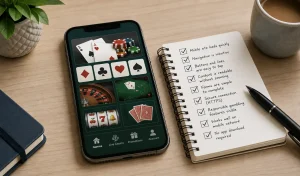


The label describes scheme participation, not a casino’s safety, suitability or legal position for customers in Great Britain.
What “Not on GamStop” Actually Means
“Not on GamStop” describes a site’s relationship with a self-exclusion scheme. It does not tell you whether the casino is safe, suitable, or legally able to serve you in Great Britain. I used to read labels like this as if they were a shortcut to a useful recommendation. They aren’t.
GamStop is Great Britain’s national online self-exclusion scheme. It lets a person exclude themselves across participating licensed gambling websites and apps, rather than having to approach each participating operator separately. The scheme’s reach is broad, but it is not universal: it covers participating licensed online services, not every gambling website someone might come across.
That distinction matters when a page describes a European casino as “not on GamStop”. The phrase may mean that the site is outside the scheme’s participating network. It does not, by itself, explain why the site is outside it, establish the site’s standing under British rules, or show that its games and services are appropriate for a UK customer. A label is not a safeguard.
For UK-licensed casinos, the position is different. Since 2020, participation in GamStop has been compulsory for operators licensed by the UK Gambling Commission. That means a regulated UK casino must block a player who is excluded through the scheme. GamStop is designed to prevent access across those covered operators, not to make a statement about every site operating elsewhere.
The word “European” can muddy the picture. It sounds like a clear category, but it does not tell you whether a particular online casino is licensed to serve people in Great Britain or participates in GamStop. A company’s location, the way a website describes itself, and its relationship with a UK self-exclusion scheme are separate matters. Don’t let one attractive-sounding label answer all three questions for you.
Foreign casinos for UK players: licensing and risks
I’ve made that mistake in the other direction too: seeing “outside GamStop” and assuming it meant a site had found some clever, harmless loophole. That assumption gives the phrase more meaning than it carries. Being outside a scheme is not evidence of better service or a safer place to gamble. It is simply not the same thing as being covered by that scheme.
It also helps to separate a casino’s branding from the protections attached to a UK-licensed service. A site may present itself as European, international, or available to British visitors. None of those descriptions tells you on its own whether it is among the licensed services that must take part in GamStop. The relevant point is the site’s regulatory position and whether it is within the scheme’s participating network—not the language used in its promotional copy.
If you are not excluded and are trying to understand a casino’s claims, treat “not on GamStop” as a narrow description, not a quality mark. It cannot establish that an operator is trustworthy or that its offer is right for you. If you are already excluded, the distinction should not be treated as a route around that decision. Looking beyond a scheme’s coverage does not make gambling a suitable next step.
I know how easy it is to focus on the apparent exception and ignore the reason a boundary exists. A fresh site name can feel like a fresh start. It may only be a different doorway.
For the purposes of understanding the phrase, keep the two parts separate: GamStop is the national online self-exclusion scheme for Great Britain, and its blocking function applies across participating licensed websites and apps. “Not on GamStop” says that the scheme does not cover that site in the same way. It does not prove anything more reassuring about the casino.
That is the limit of the label. A European casino, whether described as online or otherwise, should not be judged from those words alone; and the phrase “best European casinos” does not become meaningful just because a site is outside GamStop. The scheme’s boundaries explain what GamStop covers. They do not turn everything beyond those boundaries into a recommendation.
Attention: Being "not on GamStop" is a narrow description, not a quality mark and not evidence of a safer place to gamble.
European Roulette Online: The UK Rules Still Matter
When you look for European roulette online, the word “European” can sound like a clue about where a casino is based or which rules apply. It isn’t enough to establish either. A game’s label and the rules governing a gambling account are separate things. For someone in Great Britain, the important distinction is whether the operator holds the UK licence required to offer remote gambling to customers here.
I used to treat a polished site and familiar game wording as signs that everything behind the screen must be in order. That was a poor shortcut. A European theme or a casino’s claims about its location do not replace the question of whether it is authorised to serve British customers. The UK Gambling Commission’s rules apply to remote operators selling into the British market, wherever those operators are based. A foreign location does not, by itself, remove that requirement.
That matters when you are comparing an online casino with a roulette-themed page or looking at a list of sites described as European. A site’s accessibility is not proof that it is lawful for it to offer gambling to you in the UK. Online gambling here is legal only through licensed and regulated sites, and a legal online casino serving UK players needs a current operating licence. Offshore casinos sit outside the UKGC system; a licence from another jurisdiction is not a UK operating licence.
Non-Gamban Casinos in the UK: What the Label Means
The practical point is simple: don’t let “European” do the work of checking the operator. Nor should “best” persuade you that a recommendation has established anything about the site’s status. I would look for the UK regulatory position rather than infer it from branding, language, or a location claim. No shortcut there.
There is also a protection that applies across licensed online operators, not just to one roulette product. From 31 March 2020, online operators were required to take part in GAMSTOP. The scheme is designed to block access to participating licensed gambling websites and apps when a person has registered for self-exclusion. That makes the UK framework broader than a single casino’s own account settings. It does not turn every website that can be reached from Britain into a participating licensed operator.
If you choose to self-exclude, use the scheme or contact an individual online casino about its own process. Self-exclusion is a formal commitment, not a setting to work around. A licensed gambling business must provide the option, and it must take reasonable steps to prevent a self-excluded customer from gambling. If you are already excluded, opening another account elsewhere is not a sensible way to respond; playing at a non-GamStop casino could breach the terms of that exclusion.
Payment rules are another part of the UK safeguards. Remote gambling operators cannot accept credit-card payments for gambling, including where a credit card is used through a money service business. A wallet must not be accepted for gambling if it allows credit-card funds to be used that way. That restriction is about the source and route of funds, not a special roulette rule. It is also not a reason to assume that every payment method or every site is acceptable.
From 31 March 2020, online operators were required to take part in GAMSTOP to block access to participating licensed gambling websites and apps for registered users.
Licensed operators must provide responsible gambling tools, including self-exclusion. They must also have an internal complaints process and access to an approved Alternative Dispute Resolution service. These are meaningful protections within the UK licensing system; they are not a promise that gambling is risk-free or that every disagreement will be resolved in your favour. The regulator cannot refund money you have spent gambling.
So, if you are weighing up an online roulette option, separate the game description from the operator’s UK status and the protections attached to it. A European label does not answer those questions. The rules do.
Recommended online casinos
- x3betBonus: Welcome Pack 100% Up to £1.000 + 200 Free Spins · Payout speed: 1-3 business days
- EvoSpinBonus: 125% up to €2500 + 125 Free Spins · Payout speed: 1-3 business days
- NightLuckBonus: Welcome Pack + 805% Up To 6400€ + 280 FS · Payout speed: 1-3 business days
- BeOnBetBonus: 100% up to €500 + 100 FS · Payout speed: 1-3 business days
- DieselwinBonus: Welcome Pack 250% up to £4000 + 200 FS · Payout speed: 1-3 business days
- JetsetspinsBonus: 200% Bonus + 100 Free Spins + Free Royal Wheel · Payout speed: 1-3 business days
- ZombillionBonus: Welcome Pack 250% up to £4000 + 200 FS · Payout speed: 1-3 business days
- AmunbetBonus: Join now and get 450% up to 2,700 GBP + 450 FS · Payout speed: 1-3 business days
- SpinFormulaBonus: 550% Up To £15,000 + 550 FS · Payout speed: 1-3 business days
- BritsinoBonus: Welcome Package – Get your £2,200 + 2,000 FS · Payout speed: 1-3 business days
European Roulette Casinos: What I Can—and Can’t—Verify
If you’re trying to find a casino offering European roulette, the label is only a starting point. It doesn’t tell you which operator runs the table, what the game actually looks like, or whether the casino is suitable for someone in Britain. I’m not going to turn a familiar-sounding title into a recommendation.
I’ve learned to be wary of words like “premium” and “VIP”. They sound like proof of quality; in practice, they’re claims that need evidence behind them. Calling a site a premium European roulette casino doesn’t confirm anything about its roulette tables, service or terms. The same goes for a polished page describing a European roulette online casino game. Presentation is not verification.
What I can’t responsibly rank
People looking for the best European roulette casino in the UK usually want something concrete: a named operator and a specific table they can check. I can’t provide that kind of shortlist.
That limit matters. A list can look authoritative even when it rests on little more than repeated promotional copy. I won’t rank a casino with European roulette, label one the best online casino for European roulette, or call a table “premium” without evidence that supports the claim. A confident tone doesn’t make a recommendation reliable.
Those details can’t be inferred from the word “European” in a page title.
The UK context still applies
There is a more basic point behind any recommendation for British players. A real-money gambling operator taking customers in England, Scotland or Wales needs the relevant UK Gambling Commission licence. That requirement applies whether the business is based in Britain or elsewhere. A foreign location does not, by itself, make an operator exempt from the rules for serving the British market.
I’m not naming an operator here, and a phrase on a website is not a substitute for checking who is responsible for the service and whether it is authorised to serve British customers. Nor does a roulette label establish that a casino is licensed, safe or appropriate for you.
This is where loose language can cause real confusion. “European” might describe the game a person hopes to play, or it might appear in a business’s branding. Neither meaning tells you the operator’s regulatory position. An offshore casino may be reachable from Britain, but access alone does not make it a UK-licensed casino.
Non-UK Licence Casinos: What the Regulation Means
Be precise about what you’re choosing
If you’ve arrived looking for a European roulette casino in the UK, separate the things that are easy to blur together: the game name, the operator behind the account, and the basis on which that operator serves customers here. A European roulette casino table is a product claim; the casino’s legal status is a separate question. One does not prove the other.
I’d treat “best”, “VIP” and “premium” as marketing until there is specific, checkable information behind them. I can’t tell you which operator has the best roulette experience, which offers a European roulette table, or which deserves a VIP label. I won’t invent an answer just to make a shortlist feel complete.
So I can describe the boundary, not endorse a destination: a roulette label is not a recommendation, and availability claims should not be mistaken for proof about an operator. No named casino or table belongs in a ranking unless its details can be verified. Better an honest blank than a confident guess.
Depositing at a European Casino: The UK Restrictions to Know
A casino being based somewhere in Europe does not make its deposit rules a way around British gambling law. If an online operator offers real-money gambling to customers in Great Britain, it must hold the relevant UK Gambling Commission licence. Online gambling is legal here only through licensed and regulated sites. A “European” label is not a substitute for that.
Before you think about how to fund an account, check the basic point: is the operator licensed to serve Great Britain? A site outside the UKGC system is not made compliant by accepting British customers or displaying familiar payment options. I’ve learned not to treat a polished cashier page as proof of anything. Looks reassuring. Isn’t proof.
For a UK-licensed operator, age checks come before deposits. The operator must verify your age before allowing you to put funds into a gambling account. If a site takes a deposit first and leaves age verification until later, that is not how the rule is meant to work. Do not mistake a request to upload documents after paying for a harmless account formality.
Credit cards are another hard boundary. Remote gambling operators cannot accept credit-card payments for gambling, including where the card funds a payment routed through a money service business. UK-licensed casinos cannot accept credit cards for gambling. So a workaround that simply passes the payment through another service does not turn credit-funded gambling into an acceptable deposit.
There is a related restriction on digital wallets: an operator cannot accept a wallet payment when that wallet allows credit-card funds to be used for gambling. That does not mean every wallet payment is treated identically; the relevant point is whether credit-card funds can be used for the gambling payment. Don’t assume that changing the name of the payment method changes the source of the money.
Do
- Verify the operator is licensed to serve Great Britain
- Set a financial limit before your first deposit
- Use accessible account controls to manage spending
Don’t
- Use credit cards for gambling payments
- Use digital wallets that allow credit-card funds
- Mistake a polished cashier page for proof of legality
Account limits are part of the deposit process too. Remote operators must prompt new customers to set a financial limit before their first deposit, and they must provide accessible controls for setting limits on the account. That prompt is not a decorative pop-up to click past without reading. It is a chance to decide what you can afford before money goes in, rather than trying to make that decision after a session has started.
None of these safeguards makes an unlicensed site suitable, and none turns a deposit into a safe bet. A “top” label or the promise of a new European casino does not alter the rules for operators serving Great Britain. Nor does a claim about a no-deposit offer tell you whether the site is authorised to take British customers. Keep the questions separate: licensing first, then whether the deposit method and account controls meet the rules.
If a dispute concerns money already spent gambling, the Gambling Commission cannot refund it for you. That is worth knowing before you pay, not after. A careful check at the start beats trying to undo a deposit later.
European Casino Sites and Slots: The Limits Behind the Spin
A slot can look much the same on screen wherever a site is based, but that does not mean the rules are the same. In Britain, online slots offered by UK-licensed operators have specific restrictions on how a spin works. The word “European” on a casino page does not tell you whether those British rules apply to the site.
One important restriction is that autoplay is banned. You cannot set an online slot to run spins automatically while you sit back and watch. Each spin must be started individually. That removes one feature designed to keep play rolling without a fresh decision each time. It is a small interruption, but a deliberate one.
There is also a minimum duration: an online slot spin in Britain must last at least 2.5 seconds. A game cannot complete a spin faster than that. It does not make a slot predictable, and it is not a promise that playing will be safer for every person. It is simply a rule about the pace of the game.
I used to read polished descriptions of “fast” play as if speed were an uncomplicated perk. It isn’t. When the next spin is always ready, it is easy to lose track of how quickly you are choosing to continue. British slot rules put limits on two parts of that experience: you cannot automate spins, and the spin itself cannot be shorter than the stated minimum.
These protections relate to online slots, not every casino game. Nor does a site become compliant with British rules just because it offers slots, uses European imagery, or mentions European casinos. Remote gambling operators serving customers in Great Britain must hold a UK Gambling Commission licence; sites outside that system are not made equivalent by their branding.
UK Slot Restrictions
In Britain, UK-licensed operators must ensure that autoplay is banned (each spin must be started individually) and that each spin lasts at least 2.5 seconds.
So if you are comparing slot sites, look beyond claims about speed or convenience. The practical distinction is whether the operator is licensed to serve the British market and follows the rules that apply here. A site’s location or presentation alone does not answer that.
The restrictions do not tell you which slot is worth playing, and they do not turn a game into a safe way to make money. They set boundaries on the mechanics. No shortcut around that.
If You’re in a GamStop Exclusion, Don’t Open Another Account
If you’re looking at European casinos that take UK customers because GamStop has blocked you, pause before signing up. Playing at a non-GamStop casino while your exclusion is active could breach the terms you agreed to. Opening another account to get around it is not a workaround I’d recommend.
GamStop is designed to stop access to gambling accounts with UK operators covered by the scheme and prevent you from creating new ones with them. The exclusion applies across UK Gambling Commission-licensed platforms for the period you selected. That period may be six months, one year or five years. It is free to register.
A site describing itself as European, or welcoming UK players, does not make it part of GamStop. But that label doesn’t turn it into a safe alternative either. Remote gambling operators offering services to people in Great Britain need a UK Gambling Commission licence. An operator outside that system is not a substitute for the protections attached to a UK-licensed account.
I know the appeal of thinking, “I’ll just use a different site.” It can sound like a small detour when you’re frustrated by a block. In practice, it means acting against the boundary you set for yourself, and it can leave you without the protections you expected. Don’t open an account elsewhere to continue gambling during an exclusion.
Self-exclusion is a formal commitment, and gambling businesses are required by law to offer it. If gambling is tempting in more than one setting, consider excluding yourself from every place where you might be drawn back in, not only an online casino. For online gambling, you can use GamStop or contact an individual operator; land-based venues have their own self-exclusion arrangements.
If you have already spent money gambling, don’t count on the regulator to refund it. The Gambling Commission cannot provide refunds for money lost through gambling. That is a hard limit, not a route to getting a deposit back.
For me, the useful move is not hunting for the “best” European casino for UK players. It is keeping the exclusion intact and stepping away from account sign-up pages. If you need help sticking with that decision, GamCare offers support. The block is there for a reason. Don’t sidestep it.
No-Deposit Bonus Claims Don’t Change the Exclusion
A “free” bonus can make gambling sound separate from spending your own money. It isn’t separate from the decision to gamble. Whether a promotion is described as a no-deposit bonus, a free bonus or something else, the label does not cancel a self-exclusion.
Self-Exclusion
Opening a new account at a non-GamStop casino to get around an active exclusion may breach the terms of your commitment.
I’ve learned to distrust the word “free” in gambling ads. It draws your eye to what you might receive and away from the basic question: are you currently excluded from gambling? If you are, a promotion is not a reason to sign up, place a bet or try another site. The offer does not change the commitment you made.
Self-exclusion is a formal agreement not to gamble. You are responsible for sticking to it, and businesses are expected to refuse service to customers who have excluded themselves from their venues or websites. A site presenting a bonus does not make gambling appropriate during your exclusion. Nor should you treat a different name for the promotion, or a claim that no deposit is needed, as permission to get around that agreement.
This matters when an advert or a page presents European casinos with no-deposit bonuses as an easy way to start. Promotional language can make a fresh account feel like a small step. It still means entering a gambling environment when you have chosen to exclude yourself. Don’t open an account elsewhere to work around the exclusion, and don’t let a bonus claim talk you into testing the boundary.
If you are looking at a supposed European casino free bonus while excluded, step away from the offer rather than trying to judge whether its wording creates an exception. It doesn’t change your self-exclusion. The practical point is simple. No bonus is a workaround.
I know how quickly “just checking” can turn into an account, then a bet. That is why I would not use a promotion as a loophole or a reason to browse gambling sites while excluded. If you feel pulled towards one, close the page and get support from someone you trust or a gambling support service. The offer can wait; your agreement still stands.
The useful question is not whether a bonus sounds generous. It is whether acting on it would mean gambling despite your self-exclusion. If the answer is yes, leave it alone. A promotional claim cannot make that choice safer or erase the commitment you made.
Before You Search for a “Best” European Casino
A polished ranking can make a recommendation look settled when it isn’t. The same goes for naming the best European slots or a leading European roulette casino: a confident label is not evidence.
I’ve learned to be wary of words like “top-rated”.
If gambling has become something you’re trying to step away from, the practical option in Great Britain is self-exclusion. You can register with GamStop to exclude yourself from participating online gambling operators through one request, or contact an individual online casino to ask to be excluded there. Gambling businesses must offer self-exclusion; it is not a favour they can choose to withhold.
Once you make a self-exclusion agreement with a gambling business, it must close your account, return any funds held in it, and remove your details from its marketing databases. That gives you a concrete protection to act on, rather than a promotional promise to assess. Keep in mind that self-exclusion is a commitment not to gamble with the businesses you have excluded yourself from.
Before Choosing a Casino
- Check if the operator holds a UK Gambling Commission licence
- Verify the site’s regulatory position instead of relying on branding
- Ensure you are not currently under a self-exclusion agreement
- Confirm the available deposit methods comply with UK credit card rules
I know the pull of looking for one more recommendation before deciding what to do. But a supposed “best” label won’t make a gambling choice safer, and a list without sound comparisons won’t give you a dependable basis for choosing. If you want distance from online gambling, use the exclusion route that fits: GamStop for participating operators, or direct contact with a casino for an individual exclusion.
Less hype. More protection.
Crypto Casinos and the Wallet Catch
Crypto can make a casino account sound separate from ordinary banking, but the payment rules still matter. In Britain, remote gambling operators must hold a UK Gambling Commission licence to serve the market legally. A crypto label does not change that requirement.
I wouldn’t treat “top European crypto casino” as a recommendation. No ranking, then. Just a catchy label.
There is a specific rule about digital wallets: a remote operator cannot accept a wallet payment for gambling when that wallet lets the customer use credit-card funds. The restriction concerns that route for credit-card money. It does not mean every crypto payment is a wallet payment of this kind, or that every crypto transaction works the same way.
UK-licensed casinos cannot accept credit cards for gambling, including when the card is routed through a money service business. That is a rule about funding gambling, not a promise that another payment method is accepted or suitable. Before sending money, make sure you understand who operates the site and whether it holds the licence required to serve British players. Offshore casinos sit outside the UK regulatory system; a foreign licence is not a UK Gambling Commission licence.
I’ve learned not to let a payment method do the thinking for me. Crypto can sound like a clever workaround, but it does not turn an unlicensed casino into a legally licensed one. If you are already excluded from gambling, don’t use a crypto account or another payment route to get around that commitment. Short version: the wallet is not the safeguard.
European Casino Games: Don’t Treat a Search as a Recommendation
Searching for European casino games can turn up a jumble of pages, but a title or image doesn’t confirm what a site actually offers or whether it is suitable for you. I’ve learned not to treat polished wording as proof. “European roulette,” for instance, describes what someone may be looking for; it does not verify a particular game’s rules, availability or operator.
Researching a game is different from deciding to gamble. If you have self-excluded, don’t use a game search as a route to another account. Playing at a casino outside GamStop could breach your exclusion terms, and opening an account elsewhere to get around an exclusion is not a safe solution.
Self-exclusion is a formal step: you identify the online sites or venues you want to exclude yourself from, register, provide information to confirm your identity, choose a duration and receive confirmation. That process is practical, not just a promise to yourself. Gambling businesses must offer self-exclusion by law. Include every place where you may be tempted to gamble, rather than relying on one exclusion to cover somewhere it does not.
For online gambling, you can use GamStop for participating UK-licensed sites or contact an individual casino to exclude yourself there. For a land-based casino, ask at its customer service desk. If you are already registered with GamStop, contact the scheme directly if you want to remove yourself; don’t assume a casino can do that for you.
The distinction matters. Browsing is not a recommendation, and curiosity does not cancel an exclusion. Keep the barrier in place.
How does self-exclusion work?
You choose the gambling venues or online sites to exclude yourself from, provide information to confirm your identity, and select a period. You can use GAMSTOP for participating UK online operators or contact an individual casino; the excluded venues and websites must refuse you service.
How does GAMSTOP benefit me?
GAMSTOP lets you block access to your existing accounts and prevent yourself from opening new ones across participating UK online gambling operators, free of charge.
How do I return from self-exclusion?
You must contact GAMSTOP directly to request removal. A 24-hour cooling-off period applies, and after removal it can take operators a further 24 to 48 hours to update your status.
How long does it take for GAMSTOP to become active after sign-up?
The 24-hour cooling-off period begins after your identity has been verified, and your exclusion remains active during that period.
Can I play roulette at non-GAMSTOP casinos from the UK?
A site being outside GAMSTOP does not establish that it is authorised to offer gambling in Great Britain. UK players should use an operator with a current UK Gambling Commission licence; UK-licensed online operators must participate in GAMSTOP.
How does a non-GAMSTOP casino handle self-exclusion?
You can ask an individual gambling business to exclude you through its safer gambling service or customer support. After an exclusion agreement, the business must close your account, return any funds, remove your details from marketing lists, and take reasonable steps to prevent you from gambling there.
Material created by the team Basswin UK Guide