

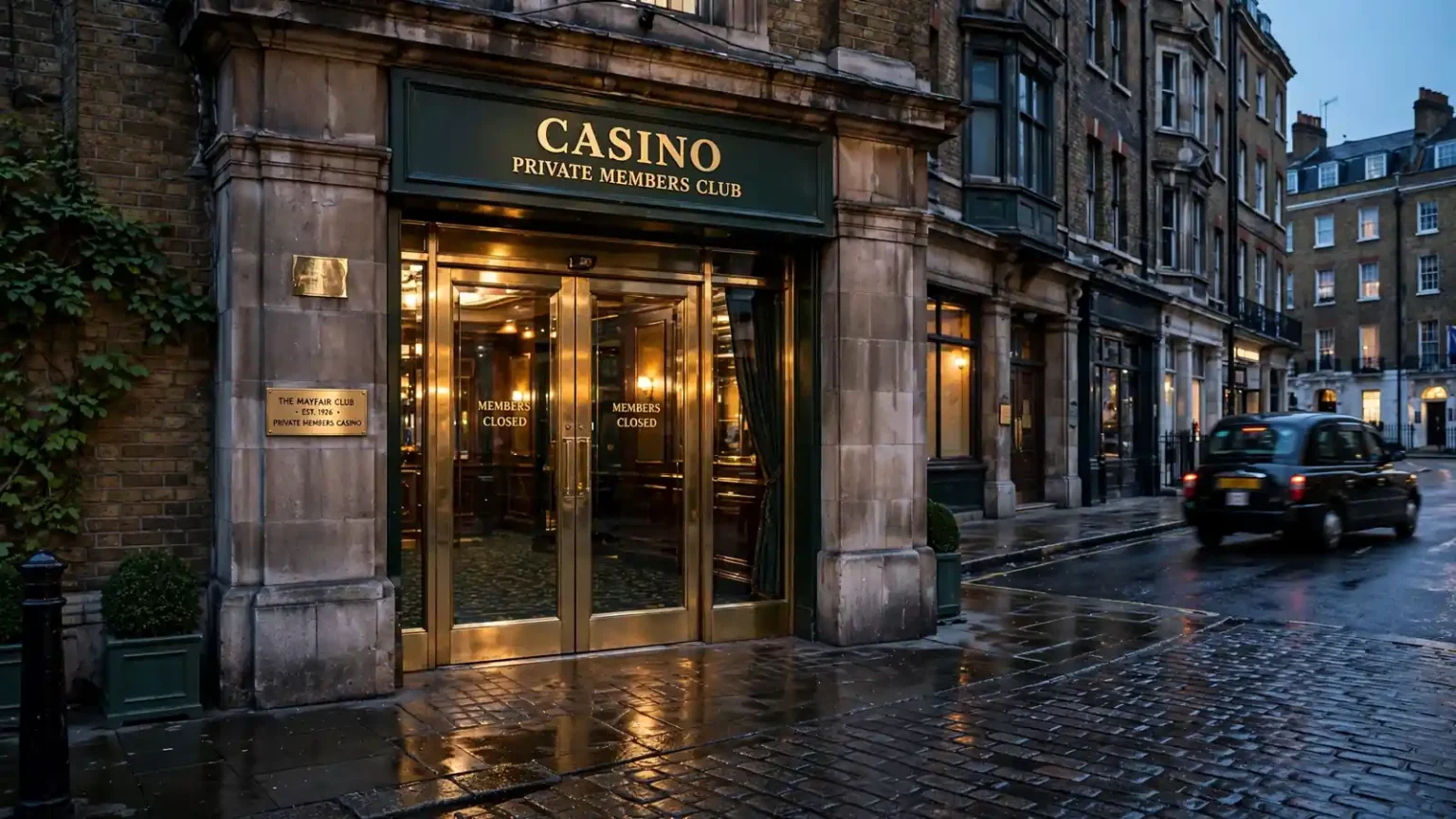
GamStop applies to participating UKGC-licensed operators, while other sites may differ in licensing, safeguards, bonus terms and withdrawal checks.
What GamStop actually blocks—and what it does not
GamStop is a self-exclusion service for people who want to stop gambling with participating operators. When you register, the restriction applies at gambling establishments licensed by the UK Gambling Commission (UKGC). UKGC-licensed operators are required to take part, so this is not an optional feature that an individual British casino can simply decide to leave switched off.
That boundary matters. GamStop is not a general switch that controls every gambling activity or every place a person might encounter gambling. It restricts registered users at establishments within the UKGC system. If you are trying to understand what the service does, keep that scope in mind rather than reading “self-exclusion” as a promise that all gambling everywhere has been made inaccessible.
I used to skim the wording and focus on the button in front of me. That was backwards. The useful question is not whether a site calls itself a British casino, a UK casino or a new online casino. It is whether the service falls within the group GamStop restricts.
The exclusion periods
GamStop offers three exclusion periods: six months, one year or five years. The period you select is not a short pause you can casually switch off when your mood changes. A GamStop exclusion cannot be shortened or cancelled before the selected period ends.
That makes the choice worth taking seriously. If you are registering because gambling has become difficult to control, it is sensible to choose the period based on the break you need, rather than on a hope that you can reverse it later. The restrictions are there to hold when your resolve is under pressure. A quick change of mind is part of the situation self-exclusion is meant to help with.
I know how easy it is to treat a decision made in a clear-headed moment as an obstacle once the urge to play returns. That is precisely when a firm boundary has value. No clever workaround. No bargaining with yourself.
Online Slots Not on GamStop: What to Check
What “blocks” means in practice
The practical meaning is limited but important: once registered, you are restricted from gambling at establishments licensed by the UKGC. The service is built around participating operators, not around a guarantee that every route to gambling has been closed. That distinction does not make the restriction pointless; it tells you what it is designed to cover.
It also means the phrase “GamStop casino” can be misleading if it makes the service sound like a badge attached to selected brands. Participation is required for UKGC-licensed operators. A site’s wording or marketing label is not a substitute for understanding that regulatory connection.
If you have already registered, do not treat a gap in the coverage as an invitation to keep gambling somewhere else. Looking for a way around an active exclusion defeats the decision you made to protect yourself. This page is not a route around it. If the restriction is active, the safest next step is to respect the period you selected and avoid trying to reopen access through another gambling account.
A boundary, not a cure-all
Self-exclusion is a practical barrier, not a complete answer to every problem connected with gambling. It can help create distance from participating UKGC-licensed establishments, but it cannot make the underlying urge disappear on its own. If you registered because gambling was causing harm, that reason still matters after the confirmation screen has gone away.
I have made the mistake of treating a barrier as if it had solved the whole problem. It had not. The boundary can give you room to step back; what you do with that room matters too. If you are tempted to find another place to play, pause before acting and talk to someone you trust or seek support rather than turning the exclusion into a puzzle to defeat.
The plain version is this: GamStop restricts registered users at UKGC-licensed gambling establishments, and those operators must participate. You can choose an exclusion lasting six months, one year or five years, and it cannot be ended early. If yours is active, honour it.
Attention: A GamStop exclusion cannot be shortened or cancelled before the selected period ends, regardless of a change of mind.
Recommended online casinos
- x3betBonus: Welcome Pack 100% Up to £1.000 + 200 Free Spins · Payout speed: 1-3 business days
- EvoSpinBonus: 125% up to €2500 + 125 Free Spins · Payout speed: 1-3 business days
- NightLuckBonus: Welcome Pack + 805% Up To 6400€ + 280 FS · Payout speed: 1-3 business days
- BeOnBetBonus: 100% up to €500 + 100 FS · Payout speed: 1-3 business days
- DieselwinBonus: Welcome Pack 250% up to £4000 + 200 FS · Payout speed: 1-3 business days
- JetsetspinsBonus: 200% Bonus + 100 Free Spins + Free Royal Wheel · Payout speed: 1-3 business days
- ZombillionBonus: Welcome Pack 250% up to £4000 + 200 FS · Payout speed: 1-3 business days
- AmunbetBonus: Join now and get 450% up to 2,700 GBP + 450 FS · Payout speed: 1-3 business days
- SpinFormulaBonus: 550% Up To £15,000 + 550 FS · Payout speed: 1-3 business days
- BritsinoBonus: Welcome Package – Get your £2,200 + 2,000 FS · Payout speed: 1-3 business days
Why a site may sit outside GamStop
“Not on GamStop” describes a regulatory boundary, not a special kind of account or a setting you can switch off. GamStop works with gambling establishments under the UK Gambling Commission’s jurisdiction. A casino outside that framework does not connect to the service, share its exclusion data or apply its registrations. That is why a search for Casinos not on GamStop can turn up sites that do not recognise a GamStop exclusion.
The distinction is about oversight, not a promise that a site is suitable for you. A website can be accessible from Britain and still operate outside the UKGC’s system. Its location, branding or the language on its homepage does not make it part of GamStop. The key point is whether it falls within the regulator’s reach.
I used to read “not on GamStop” as if it meant “the same casino, just with a different sign-in”. That is the wrong mental picture. The service cannot apply an exclusion at a site that does not participate in its system. There is no shared record for that operator to check, and no GamStop switch that can block your account there. Different framework. Different protections.
That gap can sound abstract until you consider what self-exclusion is for: creating a barrier between you and gambling. If you have registered with GamStop, treating a site outside the scheme as a workaround defeats that barrier. I’m not going to dress that up as a clever alternative. If you are trying to stop, the absence of a shared exclusion is a reason to be cautious, not an invitation to keep playing.
Casinos That Bypass GamStop: What UK Players Should Know
It also helps to separate two phrases that can get blurred together: “British online casino” and “a casino site you can open while in Britain”. The first can suggest that the operator belongs to the British regulatory system; the second says only that the page is reachable. A site’s use of British wording or pounds does not establish that it participates in GamStop or comes under UKGC oversight.
That matters because the protections attached to UKGC-regulated gambling do not automatically travel with a website address. Casinos not on GamStop operate outside that regulatory framework and may not have to provide the same mandatory responsible-gambling measures. Any tools they choose to offer are not a substitute for GamStop’s exclusion mechanism. Nor does a polished site design, familiar game imagery or reassuring “trusted” language change who regulates the operator.
I would not use a list labelled “top British online casinos” as evidence that every site in it is British-regulated. A ranking can put very different operators side by side, while the phrase “best British online casino” may tell you little about the legal framework behind the service. New British online casinos deserve the same scrutiny: “new” tells you when a site appeared in a list, not whether it is within the UKGC system. The label isn’t the licence.
There is a serious practical consequence to being outside the system. You should not assume that UK-based gambling support services can resolve a dispute with such an operator, or that UKGC protections apply if something goes wrong. Before trusting any claim about oversight, look for the regulator’s own confirmation rather than relying on a casino’s wording or a review page. A claim is not proof.
Regulatory Risk
Casinos not on GamStop operate outside the UKGC framework and may not provide mandatory responsible-gambling measures or the same consumer protections.
Most importantly, an active GamStop registration does not stop applying just because another website does not check it. The site’s lack of connection to GamStop does not cancel your choice to self-exclude, and it does not turn the site into a safe substitute. If your reason for looking is that you want to get around an exclusion, pause and seek support rather than opening another account. I have learned that the easy-sounding route can make the original problem harder to contain.
So, when you see “not on GamStop”, read it literally: that operator does not participate in the service. It does not mean GamStop has approved the casino, that your exclusion has ended, or that the protections are equivalent. That distinction is the whole point.
The licensing line is not a technicality
A licence from another country can look reassuring on a casino’s homepage. I used to treat the badge as the end of the question: someone had issued a licence, so surely the site was properly authorised for me. That skips the part that matters in Britain: which regulator has authority over the operator’s service to customers here?
A casino might claim a licence from Malta, Gibraltar or Curacao. That tells you the operator says it is licensed in that jurisdiction; it does not make the casino a UK-licensed operator. A foreign licence is not a substitute for the licence required by the UK Gambling Commission (UKGC) for an operator offering real-money gambling to people in Great Britain.
Offshore casinos for UK players: risks and checks
That distinction is easy to lose when a site uses familiar language such as “British casino” or presents its games and promotions as if it were one of the UK casino sites you already know. The design, currency and wording do not determine the licensing position. Nor does the fact that the site has a licence somewhere else.
The UKGC’s rules apply to operators selling into the British market, wherever the business itself is based. So a company cannot rely on a licence issued abroad as permission to offer gambling to UK residents without a UKGC licence. If a site is targeting customers here but lacks the required UK authorisation, the issue is not just that it sits outside GamStop. It is that the operator is acting illegally in offering that service to UK residents.
There is a separate point that can make the wording seem confusing: UK players may gamble at online casinos licensed outside Great Britain. That does not give the operator a right to market or provide its service to UK residents without the appropriate UKGC licence. A player’s ability to reach a website, and a business’s legal authority to serve customers in Britain, are not the same thing.
That is the line I would keep in view before believing a licence badge. “Licensed” is not a complete answer. The regulator and the scope of the licence matter. A licence from a foreign authority does not bring the operator under the UKGC’s rules or provide UKGC protection. And simply displaying a badge is not proof that it belongs to the site you are looking at.
Do
- Check official regulator records
- Compare legal identity and website address
- Verify if the licence is relevant to the service
Don’t
- Rely on a logo or badge on a homepage
- Trust wording supplied by the casino itself
- Assume a foreign licence is a UKGC substitute
If you are checking a claim, go to the regulator’s official records rather than relying on a logo, a review page or wording supplied by the casino itself. Compare the operator’s legal identity and the website address with what the regulator lists, and make sure the licence is relevant to the gambling service being offered. If you cannot establish that the record matches the operator and site, do not treat the claim as confirmed.
This is not me saying that a foreign regulator’s licence is automatically fictitious. It may be genuine and still not be the licence required to serve the British market. Those are different questions. A regulator elsewhere may oversee an operator under its own rules, but that does not make those rules identical to UKGC requirements or give you the same route to protection.
The same care applies to labels such as “new British casino” or “top UK casino”. They describe how a site wants to be understood, not what its licence authorises. I have learned not to let polished pages do the checking for me. A badge is a claim. The regulator’s record is where you test it.
Casinos licensed outside the UK are not required to join GamStop, either. But that fact does not settle whether they are authorised to offer gambling to people in Britain. Keep the questions separate: where is the operator licensed, does it hold the licence needed for its British-facing service, and does the official regulator’s record support what the site claims?
A foreign licence can be real. It can still be the wrong answer.
Legal for a player does not mean protected
I used to hear “not a criminal offence” and take it as a quiet stamp of approval. It isn’t. The phrase describes the player’s position; it does not turn a casino outside the UK Gambling Commission’s framework into a UK-regulated one.
Foreign casinos for UK players: licensing and risks
For a player, using a casino that is not on GamStop is not itself a criminal offence. That point matters, but it is only one part of the picture. Operators are in a different position: a casino offering online gambling to people in Britain must hold a valid UKGC licence. A site’s willingness to accept a British customer does not show that it has permission to serve the British market.
That distinction is easy to lose when a page talks about the best UK casinos, real-money play or payments in pounds sterling. Familiar currency, a British-facing website and a smooth sign-up do not establish UKGC oversight. Nor does calling a site one of the best online casinos for UK players make it equivalent to a licensed British operator. Marketing language is cheap. The regulatory protections are the point.
With a UKGC-licensed casino, the operator is subject to rules and oversight from the regulator responsible for the British market. Casinos outside that system do not provide the consumer protections associated with a UKGC licence. If something goes wrong, you should not assume that the same UK complaints and protection routes will be available. UK-based gambling support services may also not have the same access to, or role with, an operator based outside the UKGC framework.
That is the gap I would keep in view before getting distracted by claims about fast payouts, mobile play or a new casino. A site can look polished on a phone and still sit beyond the protections people often assume come with a UK-facing service. An attractive interface is not oversight. A quick promise is not recourse.
For a player, using a casino that is not on GamStop is not itself a criminal offence, but this does not certify the operator or guarantee fair treatment.
There is no useful shortcut in ranking sites as the best UK mobile casinos, top British casinos or best live casinos if the basic question is whether the operator is authorised to serve Britain. Those labels are not regulatory categories. And “live” describes a product format, not the regulator standing behind the company. A player comparing real-money casinos should not treat those phrases as evidence of protection.
I have learned to separate what a player may do from what a company may lawfully offer. They are not the same question. Saying that a player is not committing a criminal offence does not certify the operator, promise fair treatment, or guarantee that a dispute will be handled through UK channels. It certainly does not make a non-UK site a safer substitute for a UKGC-licensed casino.
So if you see a casino described as British, UK-friendly or among the best UK online casinos, read those as promotional descriptions unless the licensing position is clear. The protection question is more important than whether the site accepts British pounds or looks convenient. If it is outside the UKGC system, the protections linked to that system are not there.
No gloss on it.
Bonus maths, without the “free” gloss
A British casino bonus can look generous in the headline and still be poor value once you read the conditions. I’ve learned to treat the advertised amount as the start of the calculation, not the answer. The useful question is what you must do before any bonus-linked winnings become withdrawable.
Start with the wagering requirement. A specialist review describes requirements of around 30x to 40x as an industry average, while anything above 50x is generally considered predatory. Those figures are a rough yardstick, not a guarantee about what a particular offer means. Read the definition beside the offer: the multiplier may apply to the bonus, or to another stated figure. The terms should make that base clear. If they don’t, the headline alone tells you very little.
Then check which games count, and how much. A slot wager may contribute differently from a table-game wager; table games can count at a lower rate or not count at all. That matters because wagering the same amount on two different types of British casino games may move you towards completion by different amounts. A game being included in a promotion does not, by itself, tell you how much it contributes.
The next trap is the maximum bet while a bonus is active. Bonus terms may set a ceiling, and exceeding it can put the offer or related winnings at risk under the operator’s rules. Don’t assume the limit is obvious from the promotion banner. Find the full terms and check what counts as a bet, when the restriction applies and what the stated consequence is.
Deadlines change the maths too. Terms may require wagering to be completed within a set period. A large requirement with a short window can be harder to clear than the same requirement with more time; if the deadline passes, the offer may no longer be usable. Read the clock before you opt in, not after you have started playing.
How to calculate bonus value
Check the wagering requirement (multiplier) and the base it applies to. Verify which games contribute to the requirement, the maximum bet allowed, the deadline for completion, and any withdrawal caps on winnings.
Finally, look for a cap on withdrawals from bonus winnings. The balance shown on screen may not be the amount you can take out if a maximum cash-out applies. Check whether the cap covers winnings linked to the bonus and whether any other conditions affect withdrawal. That’s the bit the word “reward” tends to leave out.
I’d put those terms beside one another: wagering base and multiplier, game contribution, maximum bet, deadline and withdrawal cap. If any part is unclear, pause rather than trying to decode it while a bonus is running. The offer may still suit you, but only if its rules fit how you actually play.
A bonus code doesn’t make those conditions disappear. Nor does a polished page of casino reviews prove that an offer is worthwhile. I compare the written terms, not the size of the headline or the promise of “best” games and rewards. That little bit of reading has saved me from treating restricted bonus funds as money I could simply cash out.
No magic maths.
Limits and reminders may be optional
A deposit limit can look reassuring on a casino’s account page. A loss limit, session timer or reality check can look like another layer of control. But the presence of a button is not the same thing as a binding protection.
A specialist review describes some casinos not on GamStop as offering deposit and loss limits, session time limits and reminders voluntarily; the rules of the regulator overseeing a particular site may not require those tools. That distinction matters. A feature offered at the operator’s discretion is not the same as a safeguard required under the UK Gambling Commission’s framework.
I’d check how each control actually works before giving it any weight. Can you set it before depositing? Does it apply immediately, or only after a delay? Can you change or remove it yourself? The label alone does not answer those questions. If the terms are hard to find, or the explanation is vague, I would not assume the control will work in the way you expect.
The same goes for self-exclusion. A site may provide a way to close an account or block access, but that does not make its exclusion part of GamStop. Non-UK casinos operate outside the UKGC framework, do not share exclusion data with GamStop and may lack mandatory responsible-gambling tools. A voluntary option on one account does not create a system-wide block.
That is where I used to get caught by the “safer” wording. A reminder can interrupt a session; it cannot make an operator follow UK rules. And a limit you can switch off is not a firm barrier when you are already tempted to keep playing. Small difference on the screen. Big difference in practice.
There is also a support gap to keep in mind: using a casino outside the UKGC system may mean you cannot rely on the same access to UK-based support services. Do not treat an operator’s own tools as an equivalent replacement.
Attention: Voluntary tools like deposit limits or reminders on non-UK sites are not the same as safeguards required under the UKGC framework.
If you are currently self-excluded, these features are not a reason to sign up elsewhere. The point of a limit or reminder is to support control, not to provide a route around a restriction. If you look at a site’s safeguards, read the actual rules and consider whether they remain in force when you want to change them—not just how prominently they are displayed.
Free spins still come with strings
“Free” sounds simple until you try to turn a spin’s winnings into a withdrawal. With a British casino free spins bonus, the spins may cost nothing, but the winnings can still be subject to conditions. I’ve learned not to treat the headline as the offer; the terms are the offer.
Start with wagering. Check whether winnings from the spins must be played through before withdrawal, and which games count towards that requirement. A specialist review notes that table games may contribute less than slots, or not count at all. So a balance that looks ready to cash out may not be.
Then look for a deadline. If wagering has to be completed within a stated period, ask yourself whether you can meet it without chasing losses. Check any maximum bet while the bonus is active, too: exceeding it may affect whether winnings remain eligible. Terms may also set a cap on how much bonus winnings can be withdrawn. Those details can change the real value of UK casino free spins considerably.
This is where “free” gets slippery. The offer may be tied to particular slots, and a British-themed slot being available does not tell you whether it qualifies or how much it contributes. Read the promotion’s own game rules rather than assuming every slot counts equally.
There is another distinction worth keeping in view. Casinos not on GamStop operate outside the UK Gambling Commission framework, and may lack responsible-gambling tools that UK rules require. You should not assume UK-based support services will be available either. A clear-looking spins page is not proof of equivalent protection.
My check is plain: find the wagering condition, eligible games, deadline, maximum bet and withdrawal cap before activating anything. If one is buried, unclear or hard to verify, I’d leave the offer alone. No spin is worth guessing.
“Live” claims and review language need a closer look
“Live” sounds like a promise of a particular standard. It isn’t. On a UK live casino page, the word may describe a product format, but it does not tell you who regulates the operator or what protections apply. I’ve learned not to let a polished label do the checking for me.
The same goes for “reviewed” and “trusted”. A review can describe what its writer says they assessed; the word alone does not prove that a casino has been independently verified, or that its claims about licensing and player protection are accurate. Look for clear information about the operator and the regulator, then confirm any claimed licence with that regulator. A page full of confident adjectives is not evidence.
That distinction matters with Casinos not on GamStop. A site outside the UK Gambling Commission’s framework does not provide the consumer protections associated with a UKGC licence. Some non-UK sites may offer tools such as deposit limits, self-exclusion or reminders, but a specialist review has reported that these may be voluntary rather than required by the site’s regulator. Their presence does not make the arrangements equivalent to UKGC protections.
Label Verification
A "trusted" or "live" label is a promotional claim and not a substitute for verifying an operator’s license through an official regulator.
Nor should a “trusted” badge persuade you that UK-based support services will be available if something goes wrong. Check what help the operator actually provides and whether you can reach support suited to your situation. The label cannot answer that.
I treat UK casino reviews as claims to examine, not as a substitute for checking the underlying details. Who is responsible for the site? Which regulator, if any, can you verify? What protections are stated plainly, rather than implied by words such as “safe” or “live”? If those answers are hard to find, the marketing has told you less than it wants you to think.
A label is not a safeguard.
Withdrawals: check verification and the route your money takes
When reading British casino reviews and payouts claims, I look for the payment route and verification process, not just a promised speed. A specialist review reports that e-wallet withdrawals tend to move faster than card withdrawals, while casino processing for an e-wallet can take up to 24 hours. That is processing by the casino, not a guarantee of when the money will reach you; the route and provider matter.
Cards may take longer, so check the operator’s stated steps and whether the payment method used for a withdrawal must match your deposit method. Complete KYC checks early if you can. A specialist review notes that having identity verification done in advance can help prevent a withdrawal being held up while documents are requested. It does not prove that the operator will pay promptly.
Casino No ID Verification in the UK: What It Means
Crypto has a different risk. A specialist review describes crypto withdrawals as potentially fast, but the value of the funds can change with the cryptocurrency’s price. And an incorrect wallet address can mean permanent loss: crypto transfers are irreversible, so check every character before confirming. Fast is not the same as recoverable.
None of these payment details, nor glowing British casino rewards language, establishes that a particular casino is reliable. Casinos not on GamStop operate outside the UK Gambling Commission framework, and may not provide the mandatory protections of a UK-licensed operator. You may also lack access to UK-based support services. Don’t treat a smooth-looking cashier page as evidence of protection. Read the terms, understand the route, and keep records of your transaction.
No-deposit bonuses are still conditional offers
“No deposit” describes what you do not pay in to claim an offer; it does not mean any winnings are automatically yours to withdraw. I used to read the headline and skip the terms. That was the mistake.
Before claiming a British casino no-deposit bonus, check what wagering is required and which games count towards it. Slots and table games may contribute differently, and some table games may not count at all. A balance can look available while the qualifying play still has to be completed.
A specialist review gives a rough industry range of 30x to 40x for wagering requirements and describes anything above 50x as generally predatory. Treat that as a review’s assessment, not a rule or guarantee about a particular offer. The calculation itself matters: check what amount the multiplier applies to, rather than relying on the headline.
Then look for the less visible restrictions. The terms may set a maximum bet while wagering, a deadline to finish, or a cap on withdrawals from bonus winnings. Each can affect whether you can turn the displayed balance into cash. Read the full conditions before you opt in; if a key term is unclear, do not assume it will be interpreted in your favour.
The same goes for UK casino no-deposit bonuses advertised by sites outside the UKGC framework. A promotion does not bring those sites under UK rules or provide equivalent consumer protection, and responsible-gambling tools may not be mandatory there. “Free” is the sales word. The conditions are the actual offer.
Are casinos that bypass GamStop illegal for UK players to use?
No, using a non-GamStop casino is not a criminal offence for you. However, an operator offering gambling to UK residents without a valid UK Gambling Commission licence is acting illegally, and you will not have the consumer protections associated with a UKGC licence.
What are casinos not on GamStop?
They are gambling sites outside the UK Gambling Commission’s system, so they do not share GamStop registration data or apply its exclusions. They may be licensed elsewhere, such as Malta, Gibraltar or Curaçao.
Can I reverse a self-exclusion from GamStop early?
No. You cannot shorten or cancel a GamStop exclusion before the period you selected ends.
What’s the fastest way to get my winnings out?
E-wallet withdrawals are generally faster than card withdrawals, while cryptocurrency withdrawals may be fast but their value can fluctuate. Complete KYC verification early to help avoid delays; casino processing can take up to 24 hours.
What exactly does GamStop block?
GamStop restricts you from gambling at establishments licensed by the UK Gambling Commission. It does not cover every gambling site or activity outside that system.
How can players get around Gamstop?
You should not try to bypass an active exclusion: using sites outside GamStop defeats the barrier you chose to protect yourself. Your exclusion cannot be ended early, so respect the selected period and seek support if you feel tempted to gamble.
Material created by the team Basswin UK Guide