
Keno outcomes depend on selected-number matches and each game’s payout table, while licensing and bonus terms shape the wider casino choice.
How Keno Draws Work—and Why Past Numbers Don’t Help
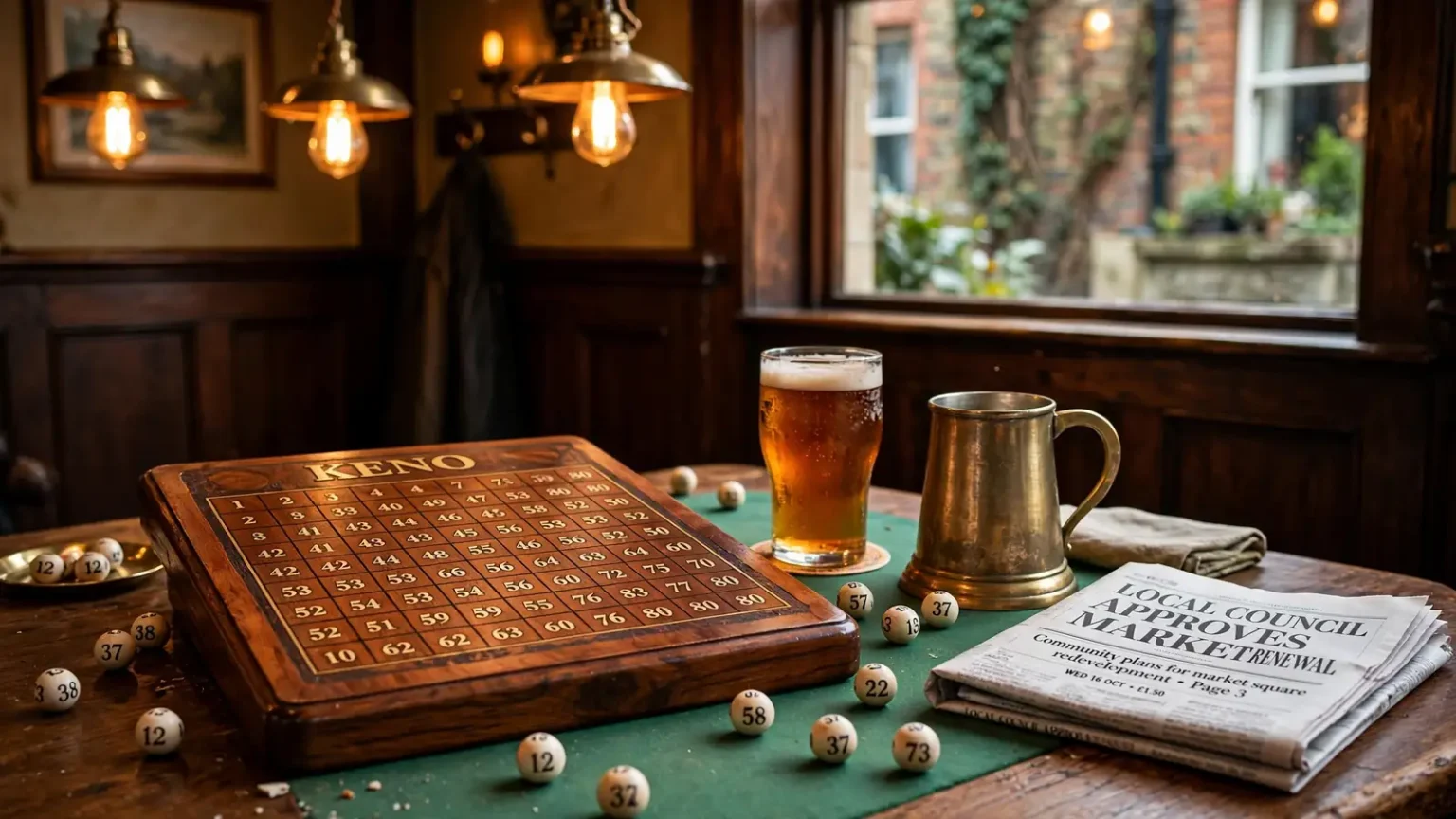
Keno is a number-draw game: you choose numbers, a draw takes place, and the result is judged by how many of your selections appear. That is the basic loop, whether you encounter it in a casino or in an online version. The screen can make it look busier than it is, but the central question stays simple: how many of your chosen numbers match the draw?
A useful way to picture it is to separate your choices from the result. Before the draw, you mark a set of numbers. Afterward, the drawn numbers are compared with your selections. A match is a number you picked that also appears in the draw; the total number of matches is often called your “hit” count. You do not need to match every selection for the game to produce an outcome, but whether a particular hit count pays depends on that game’s payout table.
That last detail matters. There is no single payout rule that can be assumed for every keno game. The amount returned depends on your stake and on how many of your selected numbers appear in the draw. The payout table sets out how those two things combine for that version of the game. So a result is not just “a win” or “a loss” in the abstract: the same number of hits can have a different value under a different table or stake.
I used to glance at the matching numbers and judge a result by whether it looked close. That is not a reliable way to read it. A draw that feels near-miss-heavy may still fall into a low or non-paying outcome, while a smaller-looking match count may be treated differently by the table. Check the actual match count and the stated payout rules, rather than trusting the visual drama of the draw. Flashy animation is not a maths lesson.
Fastest payout online casino UK: what claims mean
The stake is the amount attached to that play. If a payout is expressed in relation to the stake, changing the stake changes the amount at stake and can change the cash value of a payout. It does not make the numbers you selected more likely to appear. That distinction is easy to lose when the game displays a larger possible return beside a larger stake. Bigger figures can make the play feel more promising, but they do not improve the draw.
Your selected numbers shape what you are waiting to match, while the draw decides which numbers appear. The payout table connects the match count to the result. Keeping those parts separate makes keno easier to understand: selection, draw, matches, payout. Nothing in that sequence gives a previous result power over the next one.
That is the point many players try to argue with. If a number has appeared several times, it can feel “hot”; if it has been absent, it can feel overdue. But keno draws are independent. A past result does not influence a future draw, so a number’s recent history is not a forecast. I have caught myself treating a run of results like a clue. It was just a story I was telling myself.
You can keep a record if you find it useful for reviewing your own play, but it cannot turn earlier draws into evidence of what comes next. A streak on a results page may be interesting to look at; it does not make the following outcome more or less likely because of what came before. Each new draw stands on its own.
This also explains why picking numbers that “feel due” is not a system. Personal favourites, birthdays, patterns on the screen or numbers you have not seen lately can all be ways of making a selection. They do not change the independence of the draw. The game still compares your choices with the numbers that appear, then applies its payout table.
When you look at any keno game, start with the plain mechanics rather than a promise of a special strategy. Find where the game explains what counts as a match and how the payout table treats different outcomes. Then remember what the table can and cannot tell you: it describes the payout for a result, not which numbers will come up. No pattern-reading shortcut.
Attention: Keno draws are independent. A past result does not influence a future draw, and a number’s recent history is not a forecast.
Keno Casinos in the UK: Check the Licence Before You Play
When I look at an online casino offering keno, I start with the operator’s legal status, not the wording on its home page. A polished design or a British flag in the footer does not tell you who regulates the gambling. For a casino serving customers in Great Britain, the key question is whether the business holds the relevant UK Gambling Commission licence.
That applies to keno as well as other casino gambling. Keno offered by a licensed operator in Great Britain is within the Commission’s regulatory remit. The regulator oversees gambling activity across the United Kingdom, including online casinos, and its responsibility for remote gambling offered to people in Great Britain does not depend on where the operator’s equipment is located. A server being somewhere else does not, by itself, take a service outside the rules.
What to look for on a casino site
Before creating an account, look for the operator’s licensing information on its website or app. A UK-licensed gambling business must display details of its licence and provide a link to the relevant public register information. Follow that link rather than relying on a badge or a line of text that could simply be part of the site’s own marketing.
Then check that the register entry corresponds to the business operating the casino and the site you are visiting. A familiar brand name is not enough on its own: the point is to establish a connection between the service in front of you and the licensed business responsible for it. If you cannot work out who operates the site, or the licence information does not lead to a matching register record, I would pause before handing over personal details.
French Roulette Online Casinos in the UK: Rules and Odds
The Commission grants operating licences to businesses. It also issues personal licences to individuals who carry out certain roles in the gambling industry. Those are different kinds of licence, with different holders; seeing a person’s name or credentials is not a substitute for checking the business that runs the casino. What matters to you as a prospective customer is whether the operator serving you is covered by the appropriate permission.
The UK Gambling Commission is the authority responsible for commercial gambling regulation in Great Britain. That makes its public register the relevant place to verify a claim of UK regulation. A company referring to an overseas regulator may be describing a real licence in another jurisdiction, but that is not the same thing as showing that it is authorised to offer remote gambling to customers in Great Britain.
The same check applies to live keno
The word “live” can make a game sound like a separate service, but it does not remove the need to check who is offering it. If you are considering live keno through an online casino serving Great Britain, check the operator’s UK Gambling Commission licensing information in the same way. The regulatory question is about the remote gambling service and the business providing it, not simply whether a draw is presented as live.
I would not treat a label such as “live,” “studio” or “real-time” as evidence of regulatory status. Those words describe how a product is presented; they do not identify the licence holder. Start with the casino’s operator and its register details, then make sure the site or app you are using is connected to that licensed business.
Do
- Follow the link to the public register
- Verify the business operating the casino
- Match the site domain to the register record
Don’t
- Rely on a badge or marketing text
- Trust a brand name alone
- Use a person’s credentials as a substitute
A few more checks before signing up
A licence check is the central step, but the site should also give you clear information about how it handles an account. UK-licensed casinos must verify a customer’s age before allowing a deposit. New customers must be prompted to set a financial limit before their first deposit, and account-level limit controls must be accessible. I look for these signs before depositing, rather than assuming that a general responsible-gambling statement tells me how the account actually works.
Licensed casinos must also provide responsible-gambling tools, including self-exclusion. If a dispute arises, a UK Gambling Commission licensee must have an internal complaints process and access to an approved Alternative Dispute Resolution service. These are practical protections to notice in the site’s information, not reasons to skip the operator check.
Payment options can be another useful point to inspect. UK-licensed casinos cannot accept credit cards for gambling, including credit-card funding routed through a money service business. They also cannot accept wallet payments where the wallet allows credit-card funds to be used for gambling. If a site invites you to fund gambling with a credit card, that should make you question whether its claims about serving Great Britain under a UK licence add up.
I used to take a confident-looking badge as a shortcut. It isn’t one. The register is the check.
Keep the geography clear
People often say “UK” when they mean the whole country, but the licensing rules described here concern Great Britain: England, Scotland and Wales. Northern Ireland has a different legal framework. For remote gambling offered to consumers in Great Britain, the operator needs the relevant Gambling Commission licence even if its key equipment is based abroad.
Live Baccarat Online Casinos in the UK: What to Check
So when comparing keno casinos for British play, do not let location claims muddy the basic check. A business can be based overseas and still need the relevant British permission if it offers remote gambling to Great Britain customers. Conversely, an overseas licence does not establish that the business is authorised under the British system.
I would treat “UK regulated” as a claim to verify, not a promise to accept. Find the operator’s licence details, follow the public-register link, and make sure the record relates to the service you intend to use. Then inspect the account protections and complaint information before deciding whether to sign up. That is more useful than choosing a site because its advertising calls it a leading destination for keno.
What “Top Keno Casino” Should Mean in Practice
A “top” label is easy to print beside a Keno game. It tells you nothing by itself about whether the casino can legally offer that game to people in Great Britain. I’d treat the label as marketing, not evidence, and start with the operator behind the site.
A casino serving British players must either hold the relevant remote licence or operate through a white-label arrangement with a business that holds one. That distinction matters: a familiar brand name on the page may not be the company responsible for the gambling service. Find the licence details shown on the website or app, then check that information against the UK Gambling Commission’s public register. The register is the useful part; a badge or a confident claim is not a substitute.
With a white-label site, look for the licence holder named in the terms or licence information. If you cannot work out which licensed business is responsible, don’t fill the gap with an assumption. And if a site points to an overseas regulator instead, that does not make it lawful to offer Keno to British players without the required UK arrangement. Unlicensed sites remain illegal regardless of what they say about regulation elsewhere.
Licensing Risks
Unlicensed sites remain illegal regardless of what they say about regulation elsewhere; an overseas licence does not authorise a business to serve Great Britain.
That’s the baseline. No ranking needed.
Once the legal status is clear, you can decide whether the rest suits you. An app, a browser-based casino, or a site with several casino games can all be presented as a “best” choice, but those formats do not establish who holds the licence. Nor does the word “RTP” settle the question: a return figure is not proof of legal status, and the label alone cannot tell you whether a particular Keno game is right for you. Keep those checks separate.
The same goes for a casino advertising Keno alongside Bitcoin or other crypto payments. Payment language does not replace the licence check. If the operator is not authorised to serve the British market through the required licence arrangement, an overseas claim or a different way to pay does not fix that.
I’d also be wary of treating “top” as a promise of better odds, better service, or safer play. Those are separate claims and need separate evidence. A polished app can still leave the key question unanswered: which licensed business is responsible for the gambling offered on it? A long list of games cannot answer that either.
So when you compare Keno sites, make the first comparison a plain one: can you identify the relevant licence holder, and does the public register support the site’s claim? If yes, you can consider the game and the experience on their own merits. If not, the “top” wording is just decoration. I’ve learned not to let a neat homepage do the checking for me. Verify first. Then decide.
Low-Volatility Slots in the UK: What to Know
The LuckyPays Check: Don’t Treat a Brand Claim as Proof
A casino name can look reassuring on a page, in an advert or in a payment flow. That still does not tell you which legal business is taking your deposit. I’d separate the brand from the operator behind it: they may not be the same name, and the domain matters too. A polished site is not evidence of a licence.
An affiliate review reported that a check of the UK Gambling Commission’s register, dated 26 September 2026, found no LuckyPays entry under that brand or the stated domain, luckypays.io. That is a dated register finding, not a recommendation and not a guarantee about what the register may show later. It also does not, by itself, establish what legal entity might be behind a brand. The point is narrower: don’t accept a licensing claim just because a site makes it.
If you are considering LuckyPays for keno, treat the brand name as a starting point for checking, not as proof that the operator is authorised to serve people in Great Britain. Look for the legal company name and the exact website address shown with the claim, then compare those details with the regulator’s public register. A near-match can be misleading; the name and domain need to connect to the same licensed business you are dealing with.
A check of the UK Gambling Commission’s register, dated 26 September 2026, found no LuckyPays entry under that brand or the stated domain, luckypays.io.
I used to give far too much weight to confident wording. “Licensed” sounds like the hard part has already been checked, but it can be just a label unless the underlying details line up. That is especially easy to miss when a casino uses a trading name that differs from its company name, or when several domains appear around the same brand. Don’t fill in the gaps yourself.
If you cannot establish which registered business operates the site, pause rather than treating the uncertainty as a minor paperwork issue. A search result, a logo or a claim about regulation in another country does not replace a matching UK Gambling Commission entry. The register result is the relevant check for a brand presenting itself to British players.
This is not a verdict on every site that mentions LuckyPays, nor does it say that a brand is safe because a similarly named entry turns up. Names can resemble one another. Check that the listing belongs to the operator and address you actually intend to use, rather than a company with a vaguely related name. If the details do not match, you have not verified the claim.
The same caution applies if a site promotes keno alongside other casino games, or markets itself around cryptocurrency. A payment option or a keno page does not settle who is responsible for the service. I would not let a tempting offer or a confident brand presentation rush that check. A few minutes spent matching names is less costly than discovering later that you trusted the wrong one.
So keep the LuckyPays register finding in proportion: it is a dated warning to verify the exact brand and domain, not an endorsement and not a substitute for checking the current register yourself. If you cannot make the connection clearly, walk away. Better uncertain than sorry.
Live Blackjack Online Casinos in the UK: What to Check
How to Play Keno Online Without Guessing at the Rules
Before you choose numbers, find the game’s rules and payout table. I used to focus on picking a set that felt lucky and leave the less exciting details until later. That was backwards: the table tells you what different results can pay, while your number choices and stake determine what you are putting into play.
Set your selection before staking
Choose the numbers you want to play using the game’s controls. The exact options and layout can differ, so read the instructions on the screen rather than assuming one version works like another. Check that the numbers you intended to select are highlighted, then look at the stake shown for the round.
The number of selections matters because the payout depends partly on how many of your chosen numbers appear in the draw. It is not enough to ask whether you have selected numbers you like; check how the game’s table treats the possible hit counts for that selection. A result with some matches may pay differently from one with more, and the table is where those distinctions are set out.
No magic pattern. Just rules.
Check the stake and the potential payout
The stake is the other part of the payout calculation. Before starting, confirm the amount displayed and read the corresponding figures in the payout table. A higher stake changes the money involved in the round; it does not make a particular set of numbers more likely to appear. I find it useful to pause here, because a familiar-looking button can make it easy to move on without checking what is actually selected or staked.
Before Starting a Round
- Choose your numbers using game controls
- Confirm the selected numbers are highlighted
- Verify the stake amount displayed
- Review the payout table for your selection
If the table is unclear, or you cannot tell which stake applies to the displayed payout, do not guess. Open the game information or choose another game whose rules you can follow. You should be able to see how the selection and stake connect to the possible outcomes before committing to a round.
Keep the game type straight
A keno game and a slot-style game using keno as a theme are not automatically the same thing. If you want the draw-and-selection format, check the game description and rules to make sure that is what you have opened. A familiar label or graphic is not a substitute for understanding the actual round mechanics.
The same goes for free play: treat it as a way to get familiar with the controls, not as proof that every version follows identical rules. Read the payout information in the specific game you are using. When you later switch to another format, revisit its instructions rather than carrying assumptions across.
A simple routine keeps the decision clear: choose your numbers, verify the selection, set the stake you intend, then check the payout table before starting. Once the round is underway, the outcome depends on the draw and the game’s stated payout rules—not on how confident your picks felt.
Recommended online casinos
- x3betBonus: Welcome Pack 100% Up to £1.000 + 200 Free Spins · Payout speed: 1-3 business days
- EvoSpinBonus: 125% up to €2500 + 125 Free Spins · Payout speed: 1-3 business days
- NightLuckBonus: Welcome Pack + 805% Up To 6400€ + 280 FS · Payout speed: 1-3 business days
- BeOnBetBonus: 100% up to €500 + 100 FS · Payout speed: 1-3 business days
- DieselwinBonus: Welcome Pack 250% up to £4000 + 200 FS · Payout speed: 1-3 business days
- JetsetspinsBonus: 200% Bonus + 100 Free Spins + Free Royal Wheel · Payout speed: 1-3 business days
- ZombillionBonus: Welcome Pack 250% up to £4000 + 200 FS · Payout speed: 1-3 business days
- AmunbetBonus: Join now and get 450% up to 2,700 GBP + 450 FS · Payout speed: 1-3 business days
- SpinFormulaBonus: 550% Up To £15,000 + 550 FS · Payout speed: 1-3 business days
- BritsinoBonus: Welcome Package – Get your £2,200 + 2,000 FS · Payout speed: 1-3 business days
Free Keno Slots, RTP and the Real Cost of the Game
“Free” sounds like a clean way to try a game. It can be useful for getting familiar with a screen or seeing how number choices are presented, if a casino offers that option. But free play does not, by itself, tell you what the game costs when you stake real money. Nor does the word “slots” tell you whether a game is traditional keno presented in a slot-style interface or a different product built around keno-like features.
Bonus buy slots in the UK: features and costs
That distinction matters when you look for keno RTP. RTP, or return to player, describes the share of stakes a game is designed to return over extended play. The house edge describes the casino’s theoretical share. They are two ways of framing the same underlying balance, but neither predicts what will happen in a short session. A displayed RTP figure is only useful if it clearly applies to the exact game and configuration you are considering.
A specialist affiliate review reports that online keno house edge ranges from 5% to 25%, with the figure depending on how many spots are selected and on the casino. Treat that as a reported range, not a fixed market standard: it does not establish the edge of every keno game, and it is not a promise about any individual result. The practical point is that game settings and the operator’s version can make a material difference. “Keno” is not enough information to judge the cost.
What a free version can—and cannot—show
If free keno play is available, use it to learn the controls: where selections appear, how the stake is displayed, and how the result is presented. That can prevent a clumsy mistake when you are still working out the interface. It is a rehearsal, not proof that a real-money version has the same payout structure or settings.
Attention: Free play is a rehearsal for the interface; it is not proof that the real-money version has the same payout structure or settings.
Before treating a free version as a guide, check whether it is the same game as the one offered for real stakes. Look for the rules, the payout information and any stated return or house edge. If those details are not shown, the free round may still help you understand the layout, but it cannot settle the question of cost. No mystery solved.
The same caution applies to free keno slots online and versions that promise play without a download. Those descriptions tell you how access is presented, not what the game returns. A browser-based game can still have rules and payout conditions worth reading, while a free mode may not reproduce the real-money settings. I would not assume one tells me everything about the other.
Keno-themed slots and software labels
A keno slot machine online may borrow the look of a number draw while using a different format or payout table. The visual resemblance is not a reliable guide to the maths. Read the actual game information rather than relying on the title, artwork or the casino software label. Software identifies how a product is delivered; it does not, on its own, establish its RTP.
If the game publishes an RTP, check that the figure belongs to that specific title and version. If it only provides a payout table, use that rather than guessing from a general keno estimate. And if neither is clear, there is no sound basis for calling it a high-return option. I have been tempted by tidy labels before. They are not evidence.
“Average keno RTP” can also be a misleading target. Averages hide variation between games, spot selections and casinos, and a broad figure may not describe the option on your screen. The reported house-edge range is a reminder to compare the rules for the precise game, not to treat one number as universal. Don’t fill in the gaps with a figure from another version.
Strategy does not rewrite the price
A keno strategy can help you make deliberate choices: decide what you are willing to stake, understand the available selections, and avoid changing your approach in response to a run of results. It cannot turn a game’s stated house edge into an advantage for you. Past outcomes do not provide a dependable shortcut to better future results, and a pattern that looks persuasive on screen is not a pricing method.
For me, the useful test is plain: can I see the rules and understand what the stated return or edge refers to? If yes, I can judge the game with my eyes open. If not, free play may show me how it feels, but it cannot tell me what a real-money session is likely to cost over time. That is the part the “free” label leaves out.
Playing Keno for Real Money—and Reading Bonus Terms Carefully
A free game can make keno feel easy to move through: choose numbers, set a stake, watch a draw. Real-money play changes the decision. Now the stake comes from your balance, and any promotional wording sits beside rules that can affect whether you can withdraw. I’ve learned not to treat a bright bonus banner as the useful part of the page. The terms are where the decision actually is.
Account Safety
- Verify the operator’s UKGC licence before depositing
- Set a financial limit before your first deposit
- Check that payment methods comply with UK credit card bans
- Read all wagering and eligibility terms for bonuses
Before depositing, check who is providing the game. Remote operators serving customers in Great Britain must hold the relevant UK Gambling Commission licence. A name on a website or a claim about regulation elsewhere is not a substitute for checking the operator’s licence details on the Commission’s public register. The licence should match the business behind the site, not just a familiar-sounding brand.
That check comes first. Then the money decisions.
Before you deposit
A keno demo can help you understand the interface without staking money. It may let you see how number selection and the stake controls work, but it does not tell you whether a real-money game or an offer is right for you. I used to mistake familiarity with the screen for having thought through the cost. Not the same thing.
If you decide to move from a demo to real-money play, pause over the stake control. Keno payouts depend on the stake and on how many of your selected numbers appear in the draw; changing the stake changes the money at risk as well as any potential return. Odds are not a promise about what will happen in a particular draw. A run of results you like does not make the next result due.
Operators must verify a customer’s age before allowing a deposit. They must also prompt new customers to set a financial limit before their first deposit and make account-level limit controls accessible. Take that prompt seriously rather than clicking through to reach the game. A limit is useful only if it reflects what you can afford to lose, not what you hope to win back.
Payment options deserve a separate look. UK-licensed casinos cannot accept credit cards for gambling, including credit-card funding routed through a money service business; wallets that allow credit-card funds to be used for gambling are also barred. And a deposit method may not be available for withdrawals. Check the payment rules before money goes in, not when you are trying to take a balance out.
Fast-Payout Online Casinos in the UK: What to Check
Read the bonus conditions, not just the headline
Searching for a keno bonus, a no-deposit offer or a package described as a bonus for casino play does not mean an offer is available to you. Promotions can change, and I would not plan a deposit around a headline alone. If an offer appears on the operator’s site, read its terms before opting in or depositing.
Look specifically at eligibility, wagering requirements, excluded games, payment-method restrictions and expiry conditions. Each can affect whether bonus funds—or winnings connected to them—can be withdrawn. Make sure you understand which games count and what actions could make you ineligible. If a condition is unclear, ask the operator before accepting the offer; don’t assume the most generous interpretation will apply.
This matters with keno because a bonus balance can come with rules that differ from the ordinary cash balance. The wording may distinguish between deposits, bonus funds and winnings. Keep those distinctions clear, and do not count promotional funds as money you can freely withdraw. “Free” can be a costly word when the conditions are doing the real work.
I also would not assume that a bonus applies to every game labelled keno, or that a slot-style keno title is treated like a draw-based game. Check the eligible-games wording itself. If you cannot tell whether the game you intend to play qualifies, leave the offer alone until the operator clarifies it.
Keep control after signing up
Depositing is not an obligation to keep playing. Use account controls to review or change your limits, and stop if the session is taking you beyond what you intended. UK-licensed casinos must provide responsible-gambling tools, including self-exclusion. Those tools are there to be used, not saved for some imagined later point when things have become worse.
If a dispute arises, UKGC licensees must provide an internal complaints process and access to an approved Alternative Dispute Resolution service. Keep the relevant terms and any messages from the operator so you can refer to what was actually stated.
The sensible order is plain: verify the operator, understand the payment and account rules, decide what you can afford, then consider whether to play. A bonus is optional. Your deposit is real.
Material created by the team Basswin UK Guide