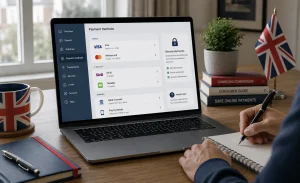


A licence check can establish an operator’s regulatory standing, but it cannot verify a cashier experience or guarantee a particular game return.
Start With the Licence, Not the Payout Promise
When I look at an online casino, I start by checking who is legally responsible for offering it in Great Britain. A polished site and confident claims can make a business look established; neither tells you whether it is authorised to provide gambling to customers here. Before depositing, find the operator’s licence details and check the licence number against the UK Gambling Commission’s public register.
That check is a basic filter, not a verdict on every part of the service. It helps establish whether the business has the relevant regulatory standing. It does not turn a marketing claim into a fact, and a licence should not be read as proof of a particular experience at the cashier. Keep the questions separate.
What the regulator does
The UK Gambling Commission regulates gambling activity in the UK, including online casinos. In Great Britain, it is the sole regulator for commercial gambling. Its remit over remote gambling offered to consumers in Great Britain applies even when the operator’s key equipment is located somewhere else. A company cannot avoid that requirement simply by running its systems from abroad.
The Commission issues operating licences to businesses and personal licences to individuals carrying out specified roles in the industry. Those are different things: the operating licence concerns the business providing gambling, while a personal licence applies to an individual. For a player deciding whether a casino is authorised, the operator’s status is the central point to check.
I used to treat the logo and a licence number printed in a footer as enough. It is a small habit that can save you from relying on a detail the operator itself supplied without checking it independently. Find the register entry and compare the information with the site you intend to use. Look for the operator or business named as responsible, and make sure the entry relates to the casino or website in front of you. A similar name is not automatically the same company.
French Roulette Online Casinos in the UK: Rules and Odds
Check the entry, not just the badge
A licence badge is easy to display. The register gives you a way to check the claim rather than taking the site’s word for it. Start from the UK Gambling Commission’s public register, search for the operator, and compare the result with the licence details shown on the casino’s own website. If the site provides a link to its register information, follow it and confirm that it leads to the relevant entry.
Pay attention to the identity of the business, not merely the brand name used in advertisements. The name on the register may differ from the name on the homepage, so check whether the site’s own licensing information connects the brand to the listed operator. If you cannot make that connection, pause before creating an account or sending money. A vague statement that a casino is “regulated” is not a substitute for identifying the relevant licence.
This is especially worth doing when a site presents itself as a new option or leans hard on a “fast payout” label. The phrase may catch your eye, but it does not answer the prior question: is the operator authorised to serve customers in Great Britain? Check that first. A promise about speed cannot do the regulator’s job for you.
The register is a practical starting point, but use it for the question it can answer: whether the operator has the relevant licence. Do not treat a listing as a personal recommendation or as a guarantee about every feature of the casino. I have learned to distrust the leap from “licensed” to “everything will be straightforward.” It is a sensible check, not a blank cheque.
Make the check before depositing
Do the verification before you deposit, while walking away is still simple. Locate the licence information on the casino’s site, note the business name and licence number, then check the public register independently. If the details do not line up, or the operator cannot be clearly identified, do not guess your way through the mismatch. Leave the deposit for another day.
Verify Operator Licence
Step 1: Find licence details
Locate the licence number and the name of the business responsible for the casino on the website’s own pages.
Step 2: Access the public register
Go to the UK Gambling Commission’s public register independently.
Step 3: Compare information
Search for the operator and confirm that the register entry matches the business name and licence number provided by the casino.
Step 4: Confirm the connection
Ensure the register entry specifically relates to the casino or website you intend to use, as similar names are not always the same company.
The point is not to turn a quick search into a full investigation. It is to establish the legal baseline before you make a decision based on presentation or promotion. In Great Britain, the Gambling Commission regulates commercial gambling, including remote gambling offered to consumers here regardless of where the key equipment sits. That is why the operator’s status matters more than the appearance of a badge.
I still notice the payout language; that is often what brought me to a casino in the first place. But now I check the licence before giving that language any weight. Verify the operator in the UK Gambling Commission register, make sure the entry matches the site, and only then consider what the casino is claiming. First, the licence.
What “Fast Payout” Can—and Can’t—Tell You
“Fast payout” sounds like a promise about money arriving quickly. It is not, by itself, proof of how long a withdrawal takes. I would not treat phrases such as “instant cash-outs” or “same-day payouts” as established performance figures unless there is reliable, specific evidence behind them. A confident label is still just a label.
That matters if you are comparing online casinos advertised as having the fastest payouts in the UK. Without checked payment-time information, there is no sound basis for ranking operators by speed or naming one as the quickest. The same applies to claims that a casino pays out instantly: the wording does not show that every withdrawal is completed immediately, or that the claim has been independently confirmed.
Live Baccarat Online Casinos in the UK: What to Check
A withdrawal also has more than one step. A casino may need to process a request, while the payment method has its own part to play in getting funds to you. The time a site advertises may not describe every stage, and the words used in an advert do not tell you what happened in a particular customer’s case. That does not prove a claim is false. It does mean I would avoid reading more into it than the wording supports.
The site’s withdrawal terms deserve a proper look, too. Bonus eligibility, wagering requirements, excluded games, payment-method restrictions and expiry conditions can affect whether a withdrawal is available or how it is handled. A deposit method may not be offered as a withdrawal method. Those details are separate from a headline about speed, but they can matter when you are trying to understand what you can actually withdraw.
I used to read promotional wording as if it settled the practical details. It does not. “Quick” gives you no clear measure unless the operator explains what it means, what part of the process it covers and what conditions apply. “Instant” can sound even more definite, but the word alone still cannot tell you whether the claim applies to your payment method or circumstances.
There is another possible mix-up in phrases such as “highest payout slots”. That sounds like a search for games that return more, not casinos that send withdrawals faster. A game’s return and the movement of money out of an account are different questions. A headline about one cannot establish the other. If a page uses “payout” without making clear which meaning it intends, pause before treating the claim as useful evidence.
Do
- Read the withdrawal terms for wagering requirements and restrictions
- Identify what the operator specifically means by “fast” or “instant”
- Look for substantiated and comparable processing information
Don’t
- Treat promotional labels as established performance figures
- Assume “highest payout slots” refers to withdrawal speed
- Use a single customer’s experience as a general rule for all
Likewise, a casino could describe its games as high-paying without making any claim about withdrawal processing at all. And a site might advertise fast withdrawals without saying anything meaningful about game returns. The shared word can blur the distinction, especially when promotional copy puts several attractive claims close together. I separate them before comparing anything.
So what can you reasonably take from a fast-payout claim? At most, you can see that the operator is promoting speed. To judge more than that, you need clear terms and credible information about actual withdrawal processing. A slogan cannot supply those details. Nor does a list headed “instant payouts” prove that the listed casinos have been measured against one another.
I would also be wary of turning a single customer account into a general rule. One person’s experience may describe one withdrawal, under particular conditions; it does not automatically establish a consistent processing time for all customers. The reverse is true as well: a reported delay does not, by itself, establish what every withdrawal will be like. Context matters. So does evidence.
The practical point is simple: do not let a speed claim answer a different question. If you want to know how a withdrawal works, read the relevant terms and identify what the operator actually promises. If you want to compare casinos by speed, look for substantiated, comparable information rather than a superlative. If all you have is promotional wording, the fairest conclusion is that speed has been advertised—not demonstrated.
Live Casino in the UK: Streams, Rules and Limits
That is less exciting than a neat ranking of casinos that pay out the same day or instantly. It is also more honest. A number of attractive phrases can make a page feel decisive, but they do not turn an unsupported comparison into a reliable one. I would rather leave the ranking open than pretend the wording tells me who is fastest.
Keep the two ideas apart: a claim about a game’s returns does not tell you when a withdrawal will arrive, and a claim about fast cash-outs does not tell you what a game returns. The language may overlap. The evidence needed to assess each claim does not.
Recommended online casinos
- x3betBonus: Welcome Pack 100% Up to £1.000 + 200 Free Spins · Payout speed: 1-3 business days
- EvoSpinBonus: 125% up to €2500 + 125 Free Spins · Payout speed: 1-3 business days
- NightLuckBonus: Welcome Pack + 805% Up To 6400€ + 280 FS · Payout speed: 1-3 business days
- BeOnBetBonus: 100% up to €500 + 100 FS · Payout speed: 1-3 business days
- DieselwinBonus: Welcome Pack 250% up to £4000 + 200 FS · Payout speed: 1-3 business days
- JetsetspinsBonus: 200% Bonus + 100 Free Spins + Free Royal Wheel · Payout speed: 1-3 business days
- ZombillionBonus: Welcome Pack 250% up to £4000 + 200 FS · Payout speed: 1-3 business days
- AmunbetBonus: Join now and get 450% up to 2,700 GBP + 450 FS · Payout speed: 1-3 business days
- SpinFormulaBonus: 550% Up To £15,000 + 550 FS · Payout speed: 1-3 business days
- BritsinoBonus: Welcome Package – Get your £2,200 + 2,000 FS · Payout speed: 1-3 business days
A High Return Is Not a Guaranteed Win
A game advertised as having a “high return” can sound like a safer choice. It isn’t a promise that you’ll win, and it doesn’t tell you which casino will give you the best result. With keno, the return depends on the game’s rules, including how many spots you select, as well as the casino offering it.
A specialist affiliate review gives an estimated online keno house-edge range of approximately 5% to 25%. That is one review’s estimate, not a settled figure for every keno game or a reliable ranking of UK casinos. The review ties the variation to the number of spots selected and the casino. Those details matter more than a broad headline about a “high payout”.
The house edge describes the game’s mathematical advantage for the operator over play. It is not a forecast of what will happen in your session. You could finish ahead or behind; a percentage cannot tell you which. I’ve learned not to treat a return figure as if it were money waiting to be collected. It isn’t.
Keno House Edge
A specialist affiliate review estimates the online keno house-edge range to be approximately 5% to 25%, depending on the casino and the number of spots selected.
What a headline leaves out
When you compare keno games, check what the stated figure refers to and which setup it describes. A figure attached to one selection of spots may not apply when you choose a different number. Nor can an estimate from one casino automatically stand in for a game at another. Without those details, “high return” is too thin to make a useful comparison.
That distinction also matters when you’re looking for a casino with the highest payout. A keno house-edge estimate is about the game’s theoretical odds, not proof that one casino pays more than every other. The range in the specialist affiliate review covers different setups and casinos; it does not identify a single winner. Treating its upper end as a universal promise would stretch the evidence beyond what it says.
And keno is not a slot. A return estimate for keno cannot establish which slot game has the highest payout, or whether a casino has the best slots overall. Those are different games and different comparisons. A headline that blurs them may attract attention, but it gives you no sound reason to expect a particular result.
I’d read a return claim as a starting point for checking the exact game, not as a reason to deposit. Look for the number of selected spots the estimate concerns and remember that the casino can affect the stated house edge. If a page presents a broad keno percentage without that context, don’t quietly fill in the blanks yourself.
A larger theoretical return may look appealing, but it does not remove uncertainty or guarantee a win. It also cannot, by itself, settle which casino or game is best for you. Keep the claim attached to the game and setup it describes. That’s the honest limit.
Why This Guide Can’t Name a Fast-Paying Casino
I’m not going to dress up a guess as a recommendation. A list of the best fast-paying casinos would need a sound basis for comparing how long operators take to process withdrawals.
That may feel like a let-down when you’re trying to choose a site. I’ve clicked through plenty of polished promises myself; a confident badge or a phrase like “instant cashouts” can sound reassuring without telling you what will happen when you request a withdrawal.
High RTP Slots in the UK: What the Figures Mean
There is still a useful check you can make before depositing, but it answers a different question. In Great Britain, the UK Gambling Commission regulates remote gambling offered to consumers, and operators serving them must hold the relevant licence. You can look up an operator on the Commission’s public register and check that the licence details match the site you intend to use. That helps you assess whether the business is authorised to offer gambling here.
It does not rank casinos by withdrawal speed. A licence is a legal-status check, not a stopwatch, and the regulator’s role is not to certify one casino as quicker than another. I’d keep those questions separate rather than treating a regulated operator as automatically fast-paying.
The same goes for a site’s own wording. “Fast” is only useful if you know what the operator means by it and what conditions apply to your account and withdrawal.
So I won’t invent a shortlist or attach a speed label to a casino. If you’re choosing where to play, verify the operator’s status through the UK Gambling Commission register first, then read the site’s withdrawal terms for yourself. Those steps can help you make a more informed choice, but neither gives me grounds to name a fastest casino.
A plain answer, then: I can’t recommend a particular site as the best fast-payout online casino in the UK. I can point you towards a legal-status check; I can’t turn that check into a speed ranking. No borrowed certainty.
Keno Percentages Depend on the Game
A percentage attached to a casino game can look like a clean way to compare options. With keno, though, there isn’t one figure that applies across every version. The house edge depends on how many spots you select and on the casino’s game. Change the setup and the percentage can change too.
An affiliate review reports an online keno house-edge range of approximately 5% to 25%. That is a range reported by one kind of source, not a settled benchmark for the whole market or a promise about any particular game. I wouldn’t read the lower end as something you can expect to find everywhere, or as a prediction of what you personally will get back.
Live Blackjack Online Casinos in the UK: What to Check
The house edge describes the game’s mathematical advantage over repeated play. It is not a forecast for one session. Keno payouts depend on your stake and on how many of your selected numbers appear in the draw. A result can be well above or below what a long-run percentage might suggest. The number is context, not a receipt.
Spot selection matters because the game’s payout structure changes with the number of numbers you choose. So a headline percentage is hard to interpret on its own: you need to know which version of keno it refers to. Comparing figures without matching the game setup can make unlike games look equivalent. That’s a poor comparison.
I’ve learned to distrust a bare “high payout” label. It may sound like a useful ranking, but unless the underlying game and its spot-selection rules are clear, the number tells you little about whether it’s comparable with another keno game. The casino also matters, so one reported range cannot establish a universal best online casino payout percentage.
Nor does a house-edge figure tell you how an individual draw will turn out. It doesn’t mean you’ll lose a fixed share of your stake on each play, and it doesn’t promise a particular return after a set run. It describes a mathematical property of the game, while your actual results can vary.
If you’re looking at keno percentages, treat the reported range as a prompt to check the specific game rules, not as a league table of casinos. The practical question is what game and spot selection the figure describes. Without that, a percentage can sound precise while leaving out the detail that gives it meaning. A number needs context.
Check Who Is Actually Offering the Game
A casino’s name on a page is not always the name of the business legally providing the gambling. That distinction matters when you are checking an online casino that advertises fast payouts: the brand, the website operator and the licence holder may not all be the same entity.
Illegal Operators
Unlicensed sites offering gambling to British players are operating illegally. Do not deposit if you cannot confirm the operator’s status on the UK Gambling Commission register.
In Great Britain, a casino operating legally must either hold a remote licence itself or work through a white-label arrangement with a business that holds the relevant licence. Remote operators serving consumers in Great Britain are required to have the appropriate Gambling Commission licence. A polished site or familiar brand name does not replace that requirement.
With a white-label setup, a licence holder provides the regulated framework for a branded casino. So don’t stop at the name in the header. Look for the business identified as the operator and the licence details shown on the site, then check that information against the Gambling Commission’s public register. The licence number should be verifiable there before you deposit.
I used to treat the brand as the whole story. It isn’t. The useful question is who is responsible for offering the gambling, and whether that business is covered by the required licence. If a site makes the operator hard to identify, or its licence information does not line up with the register, I would not treat a promise about a fast cash-out as a substitute for checking.
A licensed operator may offer a particular brand through a white-label arrangement, but that arrangement does not tell you how quickly a withdrawal will be processed. Likewise, a claim that a casino has instant payouts does not establish who holds the licence. Those are separate questions.
Before opening an account, check the operator details and licence information rather than relying on a logo, an advert or the wording of a payment claim. A “new” casino is still subject to the same operator-licensing requirement when it serves consumers in Great Britain. The branding can change; the requirement does not.
Best RTP Casino Slots in the UK: How RTP Works
Keep it simple: identify the business behind the site, confirm the relevant licence, and only then decide whether you want to consider its other claims. That small check can prevent a flashy name from doing the thinking for you.
Payout Rates and Cash-Out Speed Are Different Questions
The word “payout” gets used for two separate things, and I’ve seen the distinction blurred often enough to stop and check what a claim actually means. A game’s payout rate concerns the money it returns through play. Cash-out speed is about how long a casino takes to process a withdrawal. One does not tell you the other.
A game can have stated return characteristics without saying anything about how quickly money reaches your account after you request a withdrawal. Equally, a casino’s payment processing claim does not establish the odds or expected return of its games. They are different measures, so treating them as interchangeable can leave you with the wrong impression.
For keno, one specialist review reports an online house-edge range of approximately 5% to 25%. It says the figure depends on how many spots you select and on the casino. That is a reported range, not a universal benchmark or a promise that a particular session will return a set share of your stake. It also does not rank casinos or establish which one has the best online casino payout rates.
Payouts vs Cash-outs
- A game’s payout rate (returns) is different from a casino’s cash-out speed (processing).
- Keno house-edge figures describe mathematical odds, not withdrawal times.
- A “best payout” claim can refer to either returns or speed; verify which one is being measured.
- No single figure or slogan can simultaneously guarantee high game returns and fast withdrawals.
That distinction matters when you see a phrase such as “best payout casino”. It might refer to game returns, withdrawal handling, or simply be promotional wording with no clear measure attached. Before comparing claims, check what is being measured: a game’s return information is not a casino’s cash-out time, and neither phrase alone tells you what will happen in an individual session.
If you are looking for the best casino payout rates in the UK, a keno house-edge range cannot answer which operator offers the strongest overall returns. It covers only a particular game category and varies with the setup and casino. It also cannot establish the best payout casino games across all titles. A casino-level comparison would need comparable figures for the games being considered, while a withdrawal comparison would need evidence about processing times. Those are separate questions. No shortcut there.
So when you read about online casino payout times, look for a claim specifically about withdrawals; when you read about game payout rates, look for information tied to the game itself. The keno range offers limited context on game returns, but it does not identify what casino game has the best payout odds, nor does it tell you what UK online casino offers the best payout overall. I would not use one kind of number as a stand-in for the other. A percentage is not a stopwatch.
Keno Draws Don’t Remember Your Previous Picks
Keno is easy to misread when you watch one draw after another. A run of missed numbers can make a particular pick feel “due”, while repeated matches can look like a pattern worth following. I’ve caught myself reading meaning into results that were already finished. The next draw does not know what happened before it.
Each draw is independent. Earlier results do not influence which numbers appear in a later one, so a number that has missed several times has no special reason to appear next. Nor does a recent match make that number more likely to return. A streak can happen, but it does not make the following outcome predictable.
That matters more than it might seem. If you change your selection because you think the game owes you a win, you are acting on a story about past results, not on a change in the next draw. Keeping the same picks is not a way to improve the odds either; it simply avoids pretending that yesterday’s result controls today’s.
The payout is tied to two things: your stake and how many of the numbers you selected appear in the draw. So the result is not just a matter of whether you recognised one number. The number of selected picks that match is part of how the game calculates what is paid. The stake matters too.
Before playing, look at the game’s own payout information and make sure you understand how it treats your selection and stake. Don’t assume that a larger stake changes what the draw will produce. It changes the amount you have put into play; the draw remains independent of previous outcomes.
This is also why a few results are a poor basis for deciding that one set of picks is “hot” or that another is “safe”. Those labels can make random outcomes feel like a system you have uncovered. They are not evidence that the next draw will follow your expectation.
I find it useful to separate the two questions: what the draw produced, and what the game pays for the matches at my stake. The first is a new outcome; the second follows the game’s payout rules. Mixing them up is how a run of results starts to feel like a promise. It isn’t one.
No memory. No debt.
What a High-Payout Claim Can’t Prove
A headline about the “highest payout” sounds like a clean comparison: one casino wins, the rest fall behind. But a keno house-edge figure cannot settle which UK casino has the highest payout rate. It describes an element of the game’s maths, not a verified league table of casinos.
An affiliate review reports an online keno house-edge range of approximately 5% to 25%. The figure depends on the number of spots selected and the casino, so it is tied to the particular game setup being discussed. That range should be read as a report from that review, not as a fixed market-wide benchmark. It does not show that every keno game falls within it, or that a casino at one end of the range offers the best overall returns.
That distinction is easy to miss. I’ve learned to treat “highest payout” as a claim that needs a definition before it means much. Is the comparison about one keno configuration, all keno games at a casino, or a casino’s games as a whole? The reported range answers none of those questions by itself. Nor does it identify which operator or app sits at either end.
A lower house edge can indicate a smaller theoretical advantage for the casino in the game being assessed. It still does not promise that you will win, or establish that the operator has the highest payout percentage across its full catalogue. Different spot selections can change the comparison, and the casino matters too.
So if you see a broad claim that a site has the highest-paying games, don’t treat the keno range as proof. It gives context for how game setup can affect the edge, but it cannot rank casinos or name a winner. A headline is not a comparison.
Before You Deposit, Verify the Site
Before putting money into a keno account, check the operator’s legal status rather than relying on a badge or a promise on its website. A claim that a company is regulated somewhere else does not make it lawful to offer keno to players in Britain. Unlicensed sites offering the game to British players are operating illegally.
There is a specific warning about LuckyPays. A dated affiliate review reports that the UK Gambling Commission register, dated 26 September 2026, did not show an entry for LuckyPays under that brand or its stated domain, luckypays.io. That is a dated register check, not proof of what the register may show at another time. Still, I would not deposit on the strength of a licence claim alone.
Check the UKGC public register yourself and look for the operator’s legal name and the details that connect it to the casino site you intend to use. A brand name can differ from a company name, so check that the relationship is clear rather than assuming a search result settles it. If you cannot confirm the operator’s status, pause and seek clarification before creating an account or sending money.
A polished site, familiar-looking payment options or the words “licensed” and “regulated” are not substitutes for a matching register entry. I’ve learned not to treat confident wording as evidence. A quick cash-out claim is beside the point if the business offering the game is not legally entitled to serve British players.
If the register does not identify the operator or the connection to the site remains unclear, the safest move is to leave it alone until you can verify the details. Don’t let urgency do the checking for you. Check first. Deposit later.
Is LuckyPays licensed by the UK Gambling Commission?
No LuckyPays entry under its brand or stated domain, luckypays.io, appears in the UK Gambling Commission register dated 26 September 2026. Operators serving customers in Great Britain must hold the relevant Commission licence.
How can you tell whether an online casino is licensed and legal in the UK?
Check the operator’s name and licence details against the UK Gambling Commission’s public register. Make sure the register entry matches the business responsible for the casino you intend to use.
How do I check if an online casino is licensed in the UK?
Find the casino’s operator name and licence number, then look them up independently in the UK Gambling Commission’s public register. Check that the entry corresponds to the site you plan to use.
Material created by the team Basswin UK Guide