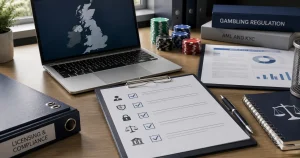


Live dealer play depends on a clear stream, while licences, table rules, deposits and bonus terms affect how each site works.
Live Casino Online: The Stream Is Part of the Game
A live casino table is not simply a digital version of a game with a different background. You watch a real dealer through a video stream, place your decisions through the screen, and see the hand or round play out at the table. The interface connects your choices to what is happening in front of the camera. That combination is what makes the format feel different from playing against software.
The stream matters. You might see the dealer handle cards, spin a wheel or announce the result, while buttons and a betting area sit alongside the video. Your screen is doing two jobs: showing the table and giving you a way to take part. When the connection is steady, those parts feel joined up. If the video freezes or the controls lag, the gap becomes obvious. It is not just a picture going wrong; you may be unsure whether your choice has registered or whether the round has moved on.
JetX Casino Game in the UK: Risks and Licensing
I used to treat the video as decoration and focus on the buttons. That was a mistake. In a live game, the stream is the main reference point for what is happening, so give it room on the screen and make sure you can see the table clearly. If you are using a small display, check whether the layout lets you enlarge the video without hiding the controls. A cramped screen can turn a simple decision into a hunt for the right button.
The difference from an automated game
With an automated casino game, the software handles the action and presents the result on screen. There is no dealer in a studio dealing cards in view or responding to the pace of a physical table. In a live game, the dealer and table are part of the presentation, while the platform carries your selections to the game.
That does not mean the dealer is personally deciding the outcome. The dealer runs the table; the game follows its rules. Your part is to make choices through the interface before the relevant stage of play ends. The visual link can make the experience feel more social or more immediate, but the basic point is practical: you are interacting with a streamed table, not just watching a recording.
Video Slots in the UK: How the Games Work
Some live tables also display other participants’ activity or offer chat. Those features can add atmosphere, but they are optional extras rather than the game itself. You can keep your attention on the table and your own controls. I find that easier than trying to follow every message while the round is moving.
There is also less room to pause and study the screen than in a purely automated game. A dealer-led table follows a shared sequence. The action proceeds, and the interface gives you a window to respond. If you are new to the format, watch a round before joining in, if the table allows it. You can learn where the controls appear and how the display signals that a decision is open, without having to work it out while the stream is moving.
What to check before joining
Treat the table screen as a working interface, not a video you can half-watch in the background. Check that the stream is clear, that the controls are visible, and that you understand how to confirm a selection. If you are using a phone, consider whether notifications or other apps might cover the display. A lost moment can be frustrating, especially when you are still getting used to the layout.
Be careful with screen sharing, too. If you are streaming your own play or showing your screen to someone else, close or hide anything that could expose personal information, such as account details or private messages. The live table may be public-facing; your account screen should not be.
Before playing, remember that UK gambling rules prohibit using credit cards to gamble. That is a useful distinction when you are deciding how to fund an account: a credit card is not an acceptable gambling payment method in the UK. Keep the deposit step separate from the excitement of joining a table, and read what the payment screen says before confirming anything.
UK Payment Rules
UK gambling rules prohibit the use of credit cards for gambling; they are not an acceptable payment method in the UK.
The live format can feel more involving because you see the dealer and the table as events unfold. It can also feel less forgiving of distraction than a game that waits for you to press a button. I would not mistake a polished stream for a promise of a better result. It is simply a different way to take part: camera, dealer, interface, and your decisions all happening together.
Recommended online casinos
- x3betBonus: Welcome Pack 100% Up to £1.000 + 200 Free Spins · Payout speed: 1-3 business days
- EvoSpinBonus: 125% up to €2500 + 125 Free Spins · Payout speed: 1-3 business days
- NightLuckBonus: Welcome Pack + 805% Up To 6400€ + 280 FS · Payout speed: 1-3 business days
- BeOnBetBonus: 100% up to €500 + 100 FS · Payout speed: 1-3 business days
- DieselwinBonus: Welcome Pack 250% up to £4000 + 200 FS · Payout speed: 1-3 business days
- JetsetspinsBonus: 200% Bonus + 100 Free Spins + Free Royal Wheel · Payout speed: 1-3 business days
- ZombillionBonus: Welcome Pack 250% up to £4000 + 200 FS · Payout speed: 1-3 business days
- AmunbetBonus: Join now and get 450% up to 2,700 GBP + 450 FS · Payout speed: 1-3 business days
- SpinFormulaBonus: 550% Up To £15,000 + 550 FS · Payout speed: 1-3 business days
- BritsinoBonus: Welcome Package – Get your £2,200 + 2,000 FS · Payout speed: 1-3 business days
Live Casinos in the UK: Check Who Is Regulated
When I look at the rules around a live casino, I start with the operator, not the studio or the dealer on screen. A polished broadcast can make a gambling site feel like a familiar venue, but the important regulatory question is who is legally responsible for offering the gambling. In Great Britain, remote casinos fall within the UK Gambling Commission’s remit, including when the equipment that runs the service is located elsewhere.
That last point matters because an online service can appear to be based abroad. The location of its servers or other key equipment does not, by itself, take remote gambling offered to Great Britain consumers outside the Commission’s oversight. The regulator’s concern is the gambling being offered to people in Great Britain, not simply the address of the technology behind it.
What the Commission does
The UK Gambling Commission oversees gambling activity in the UK, including online casino gambling. In Great Britain, it is the only regulator for commercial gambling. That gives the market a central regulatory authority rather than separate commercial gambling regulators for England, Scotland and Wales.
Low-Volatility Slots in the UK: What to Know
The Commission issues operating licences to businesses that provide gambling services. It also grants personal licences to individuals who carry out specified roles in gambling businesses. These are different forms of permission: one concerns the company offering the service, while the other concerns people working in relevant positions. A personal licence is not a substitute for the business holding the appropriate operating licence.
This framework applies to remote gambling offered to consumers in Great Britain even if the operator, studio or technical equipment is located outside the country. The service’s digital delivery does not make it a separate category beyond regulation. An online live table is still part of a remote gambling service, and the operator offering it to British consumers is the business whose regulatory obligations matter.
I used to treat online services as if their location were obvious from the way a site looked. It isn’t. The better starting point is the regulatory framework: the operator, not the scenery, is accountable for the gambling service.
Great Britain and the wider UK
People often use “UK” as shorthand for the whole market, but the legal boundaries are worth keeping straight. The Gambling Act 2005 governs gambling in England, Wales and Scotland; it does not govern Northern Ireland. The Commission’s role described here is specifically clear for commercial gambling in Great Britain, and its remote-gambling remit covers services offered to Great Britain consumers regardless of where key equipment is situated.
Regulatory Scope
The Gambling Act 2005 governs gambling in England, Wales, and Scotland, but it does not govern Northern Ireland.
That distinction is useful when reading broad claims about a “UK casino”. A label on a website does not explain which rules apply to a particular service or territory. For Great Britain, the central point is that remote gambling operators serving consumers there need the relevant Gambling Commission authorisation. A service does not avoid that requirement just by operating its technology from another country.
The framework also draws a line between a company’s permission to offer gambling and the regulator’s wider oversight of the activity. The Commission’s role is not limited to physical casinos or premises. Online casinos are included, and remote services are within scope when they are offered to consumers in Great Britain.
Why the distinction matters
Regulation is not a decorative badge. It identifies which public authority is responsible for overseeing commercial gambling in Great Britain and which businesses need permission to provide it. That is the basic context behind any claim that an online casino is part of the regulated British market.
I would not confuse the visible parts of a live service with proof of its status. A dealer, a studio set or a familiar game format says nothing by itself about whether the business offering the gambling is operating under the required framework. The regulator’s role attaches to the gambling activity and the operator’s responsibilities, not to how convincing the stream looks.
For readers, the practical takeaway is to understand what a licence represents before treating regulatory language as reassurance. An operating licence concerns the business offering gambling; personal licences relate to individuals in specified roles. The Commission is the authority overseeing commercial gambling in Great Britain, including remote casino services to consumers there. Its reach is not determined by where the cameras, servers or other key equipment happen to be.
Keno Online Casinos in the UK: How to Assess Them
That is the framework behind the market. The stream may look international, but a remote casino serving Great Britain does not become exempt from local oversight simply because its technology sits elsewhere.
Real-Money Live Casino: Set Your Limits Before You Play
Playing for real money changes how a live table feels. A decision that seemed harmless when you were only watching now has a cost attached to it, and it is easy to start treating the next hand as a chance to repair the last one. I have made that mistake. The useful move is not finding a clever staking system; it is deciding what you can spend before you sit down, then sticking to it.
Make your budget from money left over after essentials and commitments, not from money you may need later. Treat it as the full cost of an evening’s entertainment, not as a target to use up or an amount you expect to win back. If losing the budget would affect bills, food, travel or savings, it is too high. Only wager money you can afford to lose.
Set a stopping point as well as a spending limit. When either is reached, leave the table. That can feel unnecessarily strict while you are playing, especially after a run of near misses or a win that makes you feel unusually confident. I have found that this is exactly when a rule made in advance is worth more than another snap decision.
Do
- Set a budget from leftover funds
- Establish a strict stopping point
- Stop when you are tired or upset
Don’t
- Wager money needed for essentials
- Top up a balance that has fallen
- Increase stakes to chase losses
A budget works best when it is concrete. Decide what funds you are willing to risk for the session and keep that separate from money reserved for ordinary expenses. Don’t top it up because the balance has fallen, and don’t raise it just because you are ahead. A win is not permission to abandon the limit; it is still money you can choose to keep rather than put back into play.
Chasing losses is the trap I would watch most closely. After losing, it can feel logical to increase your stake so that one good result will put things right. But that makes the next decision carry more pressure, and a further loss can push you into risking money you never meant to spend. There is no reliable way to make a previous loss disappear through the next bet. Stop when you notice yourself trying to get even.
The same applies when you are tired, upset, distracted or drinking. Those moods can make it harder to follow a plan you were comfortable with earlier. If you catch yourself making hurried decisions, repeatedly changing your intended stake, or feeling that you cannot stop until you win, take a break and step away. A pause is a practical boundary, not a test of willpower.
It also helps to make the session’s purpose clear before you begin. If you are paying for entertainment, decide what that entertainment is worth to you and accept that the money may be gone. Don’t count possible winnings as part of your budget, and don’t borrow or use money earmarked for something else to extend a session. Those habits turn a leisure choice into a financial problem quickly.
Best RTP Casino Slots in the UK: How RTP Works
A real-money live casino should never be treated as income or a way to solve money worries. If you are relying on a win to cover a shortfall, don’t deposit. If gambling is becoming difficult to control, step away and seek support rather than trying to recover your position at the table.
There is no shame in choosing a smaller budget than you first had in mind, or in deciding not to play that day. The point is to keep control of the decision, rather than letting a run of results make it for you. Set the boundary while you are calm. Then honour it when the table gets tense.
Before depositing, remember that operators must verify a customer’s age before allowing funds to be added to a gambling account. In the UK, online gambling is for adults aged eighteen and over at operators holding a UK Gambling Commission licence. That does not make a session risk-free; it simply sets a legal condition for play. Your own limit still matters most.
Live Casino Games: Table Rules Versus Slot Limits
The useful distinction when moving between live tables and slots is not whether a game looks old-fashioned or modern. It is how the rules treat the stake. In Great Britain, the online slot stake cap does not apply to roulette or blackjack. Those are casino table games, even when played through a live stream.
Stake Limits
Attention: The online slot stake cap does not apply to casino table games like roulette or blackjack, even in a live stream.
A specialist review I checked reports a £5-per-game-cycle limit for online slots for customers aged 25 and over. That figure is about slots, not a general ceiling for every game in a casino lobby. The difference matters if you switch between a slot and a live roulette table without stopping to notice that the rules have changed.
I used to think the word “live” meant a different kind of game with one set of limits. It doesn’t. Live casino games can include roulette and blackjack, but the streamed format does not turn them into slots. A slot’s play cycle is governed by the slot rules; a hand or roulette round is not treated as an online slot cycle for this cap.
That doesn’t mean a table stake is automatically sensible, or that a table has no limits of its own. It means you should not assume the slot cap follows you from one game category to another. Check the table’s displayed rules and stake controls before joining, and decide what you are comfortable risking before you place a bet. Only wager money you can afford to lose.
This is especially worth remembering when a casino lobby puts live tables and slots side by side. The same account balance can be used in both, but the legal stake rule described above applies differently. A live roulette wheel may look like a familiar casino game, while a slot may be only a tap away; the interface can make the transition feel minor. The game category is not minor.
Fast-Payout Online Casinos in the UK: What to Check
If you want to try a live casino game without staking real money, check whether the operator offers a free-play version and read what that mode allows. A practice option can help you understand the layout, but it is not the same as playing for cash, and the slot stake cap is not a guide to how much to put on a table. Don’t treat free play as proof that a real-money table has the same settings.
I now pause at the game title and rules panel rather than relying on the lobby thumbnail. Is it a slot, roulette or blackjack? What stake controls does that specific game show? That small check has stopped me carrying assumptions from one game into another.
The point is simple: Great Britain’s online slot stake limit is a rule for slots. Roulette and blackjack are outside that particular limit, so use the table’s own controls and your own budget as your guide. Different game. Different rule.
Live Casino Sites: Read the Licence, Not the Sales Copy
When I compare live casino sites, I ignore the “trusted” badges and polished claims until I know which business is actually operating the site. A convincing page is easy to put together; a UK Gambling Commission operating licence is a more meaningful test for a service taking bets from people in Great Britain.
The Commission regulates commercial gambling in Great Britain, including remote casino gambling offered to consumers there. The location of a company’s servers or other key equipment does not remove that requirement. The Commission issues operating licences to businesses, while personal licences apply to individuals working in relevant roles. That distinction matters: a named person’s credentials are not a substitute for the company holding the appropriate operating licence.
Operator Licence Check
- Identify the operator named in the site’s terms
- Check the business against the Gambling Commission’s register
- Verify the register shows a relevant operating licence
- Match the business details to the brand on the homepage
So, before creating an account, identify the operator named in the site’s terms and check that business against the Gambling Commission’s register. The name in the footer, the brand on the homepage and the licensed company may not be identical. Don’t assume a logo or a sentence saying “licensed” proves anything. Match the business details, and make sure the register shows an operating licence relevant to the gambling being offered.
This is more useful than trying to build a top-ten list from promotional language. Two live dealer casino sites may look similar, but the licence check tells you whether the operator sits within the British regulatory system. A site serving customers in Great Britain without the required UKGC licence is not made compliant by having a foreign licence or by hosting games elsewhere. I learned not to confuse a professional-looking site with a regulated one. Different things.
A licence is not a promise that you will win, that every dispute will go your way, or that every game mentioned in an advert is currently available. Check the live lobby itself before relying on claims about particular tables. The point of checking the operator is narrower, but important: it helps establish whether the business is authorised to offer gambling to consumers in Great Britain.
There are practical checks around account access, too. Operators must verify your age before allowing you to deposit. Withdrawals can also be restricted while identity checks are underway, so read the account and verification information rather than assuming a displayed balance is immediately withdrawable.
Fastest payout online casino UK: what claims mean
Before signing up, check the site’s current promotions page and read the full terms for any offer you might opt into. Bonus terms, wagering requirements and game eligibility can change, and the offer shown may not apply to every UK account. Welcome bonuses are less useful if you mainly play live tables: table-game contribution can be restricted, so focus on slots with a 100% contribution rate when using one.
I treat the licence as a threshold check, not a ranking. Once the operator’s status is clear, you can decide whether the site itself suits you—without letting sales copy answer the regulatory question.
Live Blackjack: Busts, Pushes and Insurance
A live blackjack table can look straightforward until the dealer’s cards turn over and you have to work out what the result means. I found it easier to follow once I stopped treating every hand as a race to get as close to twenty-one as possible. The key is whether you stay in the hand, go over the limit, or finish level with the dealer.
If your hand total exceeds twenty-one, you bust and lose your stake. It does not matter if the dealer later goes over as well: your hand has already lost. That is why taking another card is a decision about risk, not just a way to improve a total that feels too low. I used to hit because I wanted a better number, without properly considering that the next card could end the hand. Bad habit.
Blackjack Outcomes
- Bust: Your hand exceeds 21 and you lose your stake regardless of the dealer’s result.
- Push: Your final hand ties the dealer’s and your original bet is returned.
- Insurance: A separate bet placed when the dealer’s second card is an ace.
A push is the opposite kind of disappointment: neither side wins. When your final hand ties the dealer’s, your original bet is returned. You have not won a profit, but you have not lost that stake either. That distinction matters when you are watching the result on a live blackjack table and the cards appear to match. A tie is not a dealer win.
Insurance is a separate bet offered when the dealer’s second card is an ace. It costs half your original stake. The name can make it sound like a sensible safety net, but it is still another wager, not protection that removes the risk from your hand. You are putting extra money on a particular dealer outcome. Before accepting it, be clear about what the offer means at that table and what you are risking; don’t click it just because the dealer’s ace makes the moment feel urgent.
The basic blackjack decisions are the same whether you are watching a live dealer online or sitting at a physical table, but the layout and prompts can make a choice feel more automatic. I try to read the action shown on screen before tapping, especially when the dealer reveals an ace. A quick prompt is still a real-money decision. If you are unsure what an option does, pause long enough to check the table rules rather than guessing.
3-Reel Slots in the UK: Format and Play
That applies to live blackjack casino sites as much as to a single table: don’t assume every version presents insurance or outcomes in exactly the same way. Read the rules displayed for the game you have opened. The central points stay simple: going over twenty-one loses your bet, a tie returns it, and insurance adds a separate cost. Keep your stake within money you can afford to lose, and don’t try to win back a bust by immediately increasing it. No clever shortcut.
Live Dealer Deposits and Table Pace
Getting from the cashier to a live dealer table can involve more than choosing a stake. If you are looking at a welcome offer, a specialist review I checked puts the minimum deposit for its offer stages at around £10 to £20. Treat that as a snapshot, not a promise: offers and qualifying deposits change, and the figure that matters is the one shown in the current promotion terms for your account.
I’ve also learned not to build a plan around a no-deposit live casino bonus. A “free” offer may come with eligibility rules or conditions that make it unsuitable for a particular table. Check the site’s current promotions page before signing up, then read the full terms before opting in. Bonus terms, wagering requirements and game eligibility can change, and may differ between UK accounts. Table and live games can contribute less towards wagering than slots; if you use a welcome bonus, focus only on slots with a 100% contribution rate. For table-game players, the offer may be worth less than its headline suggests.
Table Pace
Live blackjack tables can have very short windows for action, such as 15 seconds to place wagers and 12 seconds to choose hit or stand.
The other practical adjustment is pace. A specialist review I checked describes live blackjack tables with 15 seconds to place wagers and 12 seconds to choose hit or stand. Those are short windows, especially if you are still reading the table display or deciding what to do. Have your decision in mind before the prompt appears, and don’t feel obliged to play a hand just because the countdown is running. Sit one out if you need to.
A dealer-led game is not the place to sort out your account details in a rush, either. Operators must verify your age before allowing a deposit. Keep personal information out of view if you share your screen while streaming, and remember that withdrawals can be restricted while identity checks are underway. Better to have the account side in order before you start.
I used to treat an offer as a reason to deposit first and read later. That’s backwards. Check what is currently available, confirm the qualifying deposit and eligibility, and decide whether the table’s pace suits you before joining. A few seconds can feel like a lot less when money is on the screen.
Live Casino Bonuses: The Wagering Catch
A live casino bonus can look generous until you check what you have to do before withdrawing. The key detail is the wagering requirement: it tells you how much qualifying betting is needed before bonus funds, and sometimes winnings, can be cashed out. The headline amount is only part of the deal.
5-Reel Slots in the UK: How They Work
A worked example makes the arithmetic clear. A specialist review describes a £100 bonus with a 35x wagering requirement: that means £3,500 in bets must be placed before cashing out. It is a specific illustration, not a promise that every offer uses those terms. I used to read the bonus amount and skip the conditions. Bad habit. The turnover matters.
Then check which games count. Live casino and other table games may contribute at a reduced rate, or may be excluded, so they can make a welcome offer poor value if they are what you intended to play. If you choose to use a welcome bonus, focus on slots with a 100% contribution rate, and read the offer’s terms to confirm which titles qualify. A full contribution rate means eligible stakes count fully towards the requirement; it does not remove the wagering requirement.
Free spins need their own check. A specialist review notes that winnings from free spins may have a cash-out cap and may also carry wagering requirements. So a win displayed in your balance may not be withdrawable in full, or immediately. Look for the cap, any extra wagering, eligible games and the expiry conditions in the promotion terms.
Before opting in, open the current promotions page and read the full bonus terms and wagering conditions. Bonus terms, wagering requirements and game eligibility can change, and an offer’s availability or value may differ between UK accounts. Check the conditions attached to the specific promotion you can claim, rather than relying on an old bonus code or a general description.
The “best” live casino bonus is not necessarily the one with the biggest headline figure. If its game restrictions clash with how you want to play, the offer may add little. I treat the terms as the offer itself. The banner is just the bait.
Bonus Wagering
Identify the Requirement
A bonus of £100 comes with a 35x wagering requirement.
Calculate the Turnover
Multiply the bonus by the requirement: £100 × 35 = £3,500.
Determine the Goal
£3,500 in qualifying bets must be placed before bonus funds can be cashed out.
Live Dealer Software and Table Stakes
Live dealer software is more than a video window. It has to keep the table feed, your bet controls and the game state in step, so you can see what is happening and act while the betting window is open. I find the practical difference between a polished interface and a frustrating one is often whether the controls are clear before the hand starts—not how glossy the lobby looks.
Before joining a live blackjack table, check its displayed limits. One specialist review reports a £5 minimum and £5,000 maximum for live blackjack, but that is a snapshot, not a promise about every table. The limit shown in the current lobby is the one that matters. A low minimum may suit a cautious session; a high ceiling does not make a table a sensible fit for your budget. I have learned that the hard way.
The same principle applies when comparing roulette, baccarat or Dragon Tiger. A casino may advertise a game category, but that does not confirm a particular table is available in its current lobby. Look at the actual table listing, including its stake range, before you plan around it. Software providers and game titles can change, so I would not treat a provider name on a general page as proof that a specific live table is running now.
Pace is part of the setup, too. The interface may show a countdown and buttons for placing or changing a bet; once the window closes, you may have to wait for the next round. I prefer to open the table with enough time to inspect the layout rather than rush into a decision. If you share your screen while streaming, keep personal information out of view.
Monopoly Live Casino in the UK: What to Check
One more practical point: operators must verify your age before allowing deposits, and withdrawals can be restricted while identity checks are underway. That is separate from the software, but it can affect how smoothly an account works. Read the table information, make sure the controls are clear, and only wager money you can afford to lose. No clever interface changes that.
Live Casino Offers: Check the Terms Before You Opt In
A live casino offer can look generous in a banner and feel much less appealing once you open the terms. I’ve learned not to treat the headline as the deal. Before signing up, check the operator’s current promotions page: offers change, and what appears in an advert may not match what is available to your UK account.
Then read the full promotion terms before opting in. Look for the qualifying conditions, wagering requirements, eligible games and any restrictions on withdrawing funds. Bonus terms, wagering requirements and game eligibility can change. Eligibility and value may also vary between UK accounts, so don’t assume an offer described elsewhere applies to you.
“Best” is a sales label, not a useful measure on its own. A welcome offer may be a poor fit if you mainly want live tables: live casino and other table games can have restricted contribution rates. If you use a welcome bonus, focus on slots with a 100% contribution rate, and check that the promotion actually allows the games you intend to play. The detail matters more than the banner.
The same goes for poker-branded promotions. A reference to live poker does not tell you which games count, whether a bonus applies to them, or what conditions attach to any winnings. Confirm those points in the current terms rather than relying on a short description.
I now check the offer while logged into the account I plan to use, read the conditions through, and opt in only if they suit how I intend to play. If the terms are unclear, I leave it alone. No banner is worth guessing over.
Material created by the team Basswin UK Guide