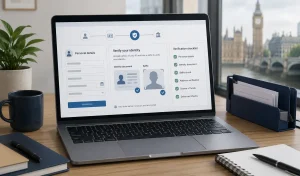

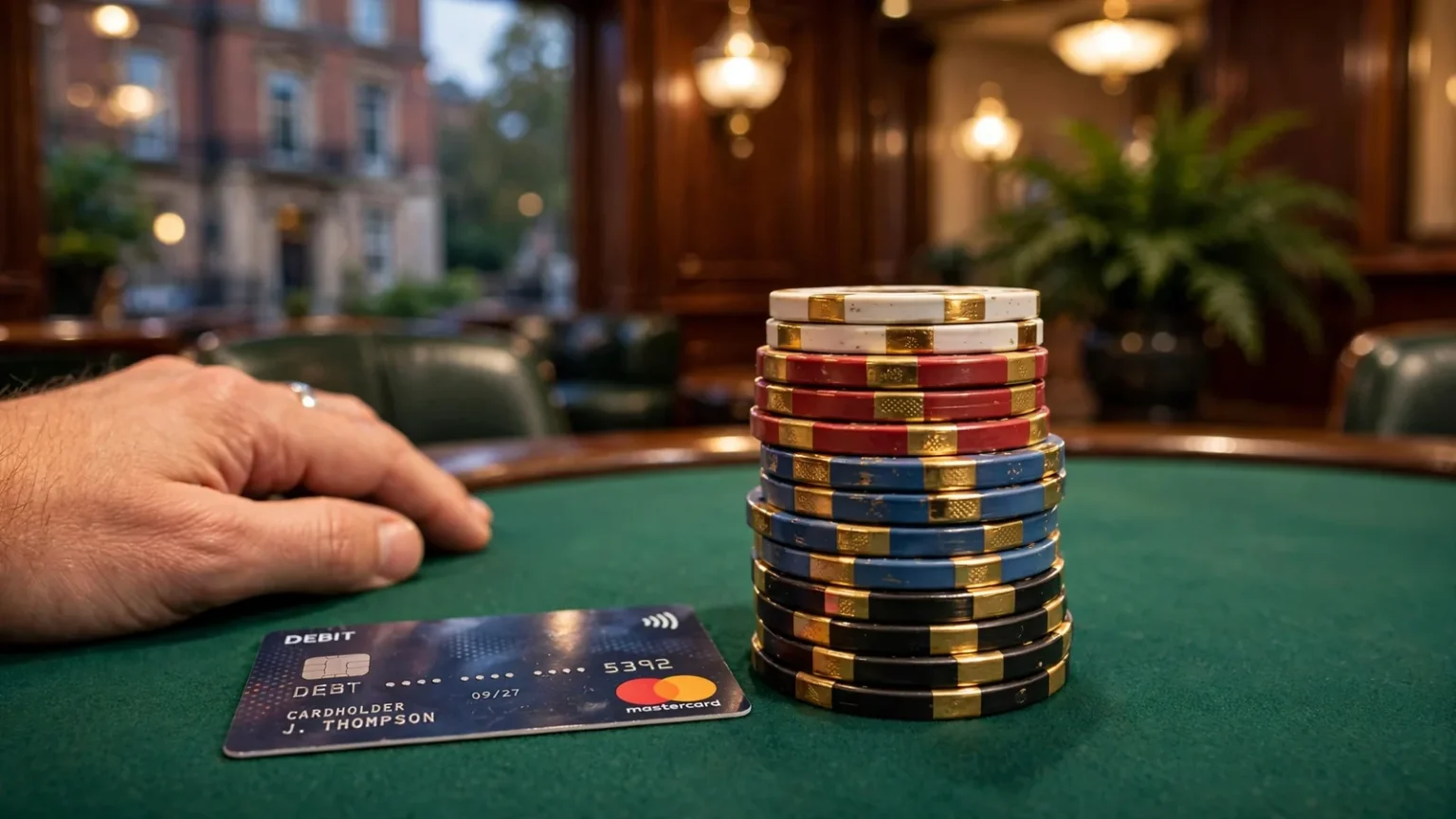
Debit card acceptance can vary by casino, so the cashier list is the practical way to confirm payment options for an account.
Debit cards are widely accepted, but the cashier has the final say
If you are looking for a UK casino that accepts debit cards, the starting point is encouraging: debit cards are commonly accepted, including Visa and Mastercard. That makes a card a familiar option to look for when comparing casino sites. It does not mean every site will accept every card, though, or that a payment option mentioned somewhere on a site is necessarily available to you.
I used to treat a Visa or Mastercard logo as a kind of promise. It isn’t. A logo can tell you that a card brand is associated with the site, but the payment options displayed in the cashier are the more useful check. That is where you can see what the operator is currently making available for your account. Small distinction. Big difference.
So, when you compare debit card casino sites in the UK, try not to decide from a headline, a logo or a general claim on a landing page alone. Those can be useful clues, but they are not a substitute for checking the actual list of accepted payment methods. Availability can vary from one casino to another, and the cashier is the place to confirm it.
This matters even if you have used your card at another casino. Acceptance at one site does not establish acceptance at the next. I learned that the annoying way: I assumed a payment option would carry over because it had worked elsewhere. It didn’t. The sensible approach is to check each casino individually rather than building a shortlist around a card logo and assuming the rest.
The same goes for lists of the “best” debit card casinos. A ranking can help you find places to investigate, but the label does not tell you whether the card option you want is currently shown in that casino’s cashier. Nor does it tell you whether that option is available for your account. I would treat a recommendation as a starting point, not a guarantee.
UK Casino Sites That Accept EcoPayz (Now Payz)
There is no need to make the comparison more complicated than it is at this stage. First establish whether a casino presents debit cards as an accepted route; then confirm the current options in its cashier. If Visa or Mastercard is listed there, you have a clearer answer than you would from a general claim elsewhere on the page. If it is absent, do not assume that a logo or old review overrides what the cashier shows.
I also try to separate “takes cards” from “is the right casino for me”. The first is a practical availability question. It does not, on its own, tell you anything about the quality of the games, account terms or support. A site can list a card brand and still not suit what you are looking for. Conversely, a site you like for other reasons may not present the card option you expected. Those are separate checks.
When a page says it supports debit cards, read that as a reason to look in the cashier, not as the last word. Payment information can be broad, while the cashier is specific to the operator’s current offering. I would rather spend a moment checking than find out later that I had mistaken a general statement for a confirmed option.
For anyone comparing online casino sites that accept debit cards, that is the main expectation to keep in mind: card acceptance is common in the UK, but it is not universal in every situation. Visa and Mastercard are familiar names to look for, not proof that a particular transaction will be available. Check what the casino actually displays, and make your decision from there.
That sounds less exciting than a “top” list. It is also more dependable. The cashier has the final say.
Recommended online casinos
- x3betBonus: Welcome Pack 100% Up to £1.000 + 200 Free Spins · Payout speed: 1-3 business days
- EvoSpinBonus: 125% up to €2500 + 125 Free Spins · Payout speed: 1-3 business days
- NightLuckBonus: Welcome Pack + 805% Up To 6400€ + 280 FS · Payout speed: 1-3 business days
- BeOnBetBonus: 100% up to €500 + 100 FS · Payout speed: 1-3 business days
- DieselwinBonus: Welcome Pack 250% up to £4000 + 200 FS · Payout speed: 1-3 business days
- JetsetspinsBonus: 200% Bonus + 100 Free Spins + Free Royal Wheel · Payout speed: 1-3 business days
- ZombillionBonus: Welcome Pack 250% up to £4000 + 200 FS · Payout speed: 1-3 business days
- AmunbetBonus: Join now and get 450% up to 2,700 GBP + 450 FS · Payout speed: 1-3 business days
- SpinFormulaBonus: 550% Up To £15,000 + 550 FS · Payout speed: 1-3 business days
- BritsinoBonus: Welcome Package – Get your £2,200 + 2,000 FS · Payout speed: 1-3 business days
What happens when you deposit with a debit card
When you make a debit card deposit, the amount you enter is not necessarily the amount the casino will let you submit. The cashier sets a minimum for the selected payment method, so the figure shown for a card can differ from the one shown for another option. I used to treat the minimum as a general account rule. It is better read as a condition attached to that particular deposit route.
A specialist review typically suggests a starting range of £10–£20, though the precise minimum depends on the specific payment method selected.
A specialist review gives a typical starting range of £10–£20, with the precise minimum depending on the payment method selected. Treat that as a guide, not a promise that every online casino with debit card deposits will use the same threshold. The cashier is where you can see the amount that applies to your account and chosen route before committing to a payment.
That small distinction matters if you have already decided how much you want to put in. Say the amount you planned is below the card minimum shown: the deposit may not go through at that amount. You can either reconsider the amount or stop and review your options. Don’t assume that a lower figure displayed elsewhere on the site also applies to a debit card deposit. Different methods can have different minimums.
The process itself is straightforward to follow: open the cashier, choose the debit card option, enter the amount, then read the details on screen before confirming. I try to pause at that last step instead of clicking through on autopilot. Check that the amount is the one you meant to enter and that the cashier is still showing the card route you selected. A rushed tap is an avoidable way to turn a small decision into an annoying one.
Casino Sites That Accept Jeton in the UK
It also helps to separate the deposit minimum from the amount you personally want to spend. The casino’s minimum tells you what its payment flow will accept; it does not tell you what you should deposit. I’ve found it easy to let a suggested amount or a “quick deposit” button make the decision feel automatic. It isn’t. Take a moment to decide your amount first, then see whether it fits the cashier’s stated minimum.
If it does not, there is no need to keep trying slightly different figures without checking what the screen says. The displayed minimum is the useful reference point. Repeated guesses can make it harder to keep track of the amount you intended, especially if you are moving quickly between the cashier and the game lobby. Read first. Then choose.
A debit card online casino may also present the amount entry and payment confirmation as separate steps. Treat each screen as a chance to verify what you are doing, rather than assuming the first selection carries through unchanged. If the amount, payment route or confirmation details do not match your intention, stop before submitting. There is no prize for finishing the deposit in the fewest taps.
That is the practical shape of an online casino deposit with a debit card: select the card route, check the minimum attached to it, enter an amount you have chosen for yourself, and review before confirming. The minimum can vary with the selected method, so a figure quoted in a review is only a starting point for your expectations. The cashier’s current display is the one that applies to the transaction you are about to make.
Debit Card Deposit
Open the cashier
Select the debit card payment option from the available methods.
Enter amount
Input the sum you wish to deposit, ensuring it meets the cashier’s stated minimum.
Review and confirm
Read the details on the screen carefully to verify the amount and route before submitting the transaction.
Check your card and account currency before paying
Seeing Visa or Mastercard mentioned on a casino’s payment page is a useful starting point, not proof that your particular card will work. The logo tells you the payment network the site may support; it does not confirm that every card carrying that logo is eligible. Before you choose a casino or try to pay, check the live cashier while signed in.
A specialist review may list Visa and Mastercard among a site’s payment options, but availability for UK customers and eligibility for particular card products can change. Treat a general payment-method list as a prompt to check, not as a promise. The cashier is where you can see what the casino currently offers for your account.
I used to assume that if my card worked for ordinary online shopping, it would work anywhere that displayed the same network logo. That shortcut can leave you staring at a rejected payment and wondering whether you entered something incorrectly. The issue may instead be that the site does not currently offer that card route to you, or that your specific card product is not eligible. Check the options shown before entering payment details.
It also helps to distinguish the payment network from the card itself. Visa and Mastercard are networks; your bank or other issuer provides the card. A cashier listing one of those networks does not necessarily confirm acceptance of every card issued under it. If the payment screen describes eligible cards or gives a reason for a declined transaction, read that wording rather than repeatedly submitting the same details.
Casinos That Accept Wirecard UK: What to Check
Confirm the account currency
Check the currency attached to your casino account before your first transaction. A specialist review may report that GBP is supported, but what matters for you is the currency displayed in your account or at the point of payment. If your account is set to a different currency, a card payment may involve conversion rather than being charged and recorded in pounds.
That distinction is easy to miss. The amount you enter can look familiar while the currency shown beside it is not. I now pause at that point and check the currency label before going any further. If you cannot find it in the cashier, look in the account settings or ask customer support to confirm the account currency before paying.
The card’s billing currency matters too. When it differs from the casino account currency, the transaction may involve a conversion along the way. Don’t assume that seeing a pound symbol on one screen settles every part of the transaction; check what the casino will charge and what currency your card account uses. The exact details depend on the accounts and payment route involved, so the relevant screens and terms matter more than a generic claim about card acceptance.
If the currency is not what you expected, stop and clarify it before completing the payment. A successful card authorisation would not, by itself, mean you chose the currency you intended. Once funds have moved, sorting out a misunderstanding is more awkward than checking first. Small pause, fewer surprises.
Do
- Check the live cashier while signed in
- Verify the account currency is set to GBP
- Confirm your specific card product is eligible
Don’t
- Assume a network logo guarantees card acceptance
- Rely on general payment lists as a promise
- Assume a successful authorisation means the correct currency was used
For anyone comparing online casinos that accept debit cards, these checks are more useful than a broad label such as “Visa accepted”. Look for the card options in the current cashier, confirm that your own card product is eligible, and verify that the account is set to GBP if you want to transact in pounds. Those are separate checks: the network can be listed while your card is not eligible, and the card can be accepted while the account currency still needs attention.
I would not choose a site solely because a page says it accepts Visa or Mastercard. I’d check the live options, the eligibility wording and the account currency first. It is a plain bit of housekeeping, but it tells you far more about whether your own setup fits than a payment logo on a promotional page.
Cards are not the only way to fund a casino account
A debit card is a familiar starting point, but it is not the only route you may see in a UK casino cashier. Depending on the site, you could also be offered a bank transfer, an e-wallet or a prepaid voucher. The useful comparison is not simply which logo looks familiar; it is what that method lets you do at that particular casino, and whether its terms fit the way you plan to use the account.
Bank transfers and open banking services can sit alongside card payments. A specialist review describes these options as supporting instant deposits and fast withdrawals at many sites, but that should not be read as a promise for every cashier or every bank. Look at the options and conditions shown by the casino itself. “Instant” is a neat label; the actual route still depends on the service being offered and your transaction going through.
E-wallets are another possibility. PayPal is often presented as a speed-and-convenience option, though a specialist review notes that it may be excluded from bonus eligibility. Skrill and Neteller appear at some sites; a specialist review also says they are often excluded from promotions. That can matter if you were planning to claim an offer: the payment method may affect whether you qualify, even when the casino accepts it. Check the promotion’s payment terms before you choose a wallet.
I used to treat a payment logo as a simple yes-or-no answer. It is not. The cashier can show that a method is accepted while the promotion rules impose a separate condition. Read both. If you do not care about a bonus, that restriction may make no difference; if you do, it can change the decision.
Paysafecard works differently from a card or wallet. It is a prepaid voucher and is deposit-only, so do not choose it expecting the same route to handle a withdrawal. That distinction is easy to miss when you are scanning a row of payment logos. If you use a voucher to fund the account, understand that deposits and payouts may involve different methods.
The options are not interchangeable. A bank transfer may use your banking service directly; an e-wallet has its own account and rules; a prepaid voucher has a defined deposit role. A debit card may feel simpler if you already use it for everyday payments, while another method may suit you better if it is available and its conditions work for your plans. There is no need to pick a method just because a casino calls it “easy”. That word says little about eligibility or what happens after the deposit.
Bank Transfers
Supports instant deposits and fast withdrawals at many sites, depending on the service and bank.
E-wallets
Includes options like PayPal, Skrill, and Neteller; note that these may be excluded from bonus eligibility.
Prepaid Vouchers
Examples include Paysafecard, which is a deposit-only method and cannot be used for withdrawals.
Before settling on an alternative, open the cashier and check whether it is offered for your account. Then read the relevant payment and promotion terms, especially if you expect to use a bonus. Do not assume that a method listed on a general payments page is available for every customer or every transaction. What matters is the current option and its stated use in your account.
I would keep the choice practical: use a route you understand, confirm whether it is deposit-only or tied to promotion conditions, and avoid treating a marketing label as a guarantee. Cards remain one option among several. The cashier’s details are the part worth checking.
Compare the full cost, not just the visible fee
I used to treat “no fee” as the end of the calculation. It isn’t. A debit card deposit can involve charges at more than one point: the casino, the payment provider, your card issuer or bank, and, where a transaction crosses currencies, the exchange rate. Some payment routes can also carry network costs. The cashier may show only part of that picture.
A specialist payment-cost review identifies those as possible charges to check, rather than a fixed set that applies to every transaction. So I wouldn’t assume a method is free just because the casino’s deposit screen displays no charge. Equally, seeing a fee does not tell you the total cost on its own.
Casinos That Accept Bitcoin in the UK: Payment Checks
Work out the cost for the amount you intend to move
Compare the same deposit amount across the options available to you. Start with any casino charge shown before you confirm, then check whether the payment provider or your bank may add a fee. If the account and card use different currencies, look at the rate that will be applied and whether a spread is built into it. That spread is the difference between the exchange rate used for your transaction and a reference rate; it may not appear as a separate line item.
That last part is easy to miss. A specialist review of payment costs notes that a conversion spread can outweigh a visible flat fee. A route that appears cheaper on the screen might therefore cost more once the conversion is included. I’ve learned to check the amount that will actually leave my account, not just the label beside the payment button.
Network costs can matter too, depending on the route. If a charge is unclear, check the casino’s payment terms and the provider or bank’s own fee information before confirming. Don’t guess from another casino’s cashier: charges can differ between operators, providers and transactions.
There isn’t one payment method that is always the cheapest. The result depends on the actual amount, any fixed or percentage-based charges, currency conversion, and costs added by the parties involved. A fee that barely affects one transfer may matter more for another; the only useful comparison is for the amount you plan to move.
Attention: A conversion spread between the exchange rate and the reference rate can outweigh a visible flat fee, making some "no fee" routes more expensive.
I’d also keep the cost check separate from the decision to deposit. A “zero-fee” message is not a reason to put in more than you intended, and a small visible charge does not automatically make a route poor value. Check the full charge first, then decide whether the transaction still makes sense for you.
The boring detail matters. Do the total, not the slogan.
Why withdrawals may go back to your card
When I first looked at a casino that accepts debit cards, I treated the card as a way to get money in and assumed the payout route would be a separate choice. That is not a safe assumption. UK anti-money laundering rules generally mean a casino must return funds to the original payment source, so a withdrawal may need to go back through the card used for the deposit.
That can feel less flexible than choosing a different destination when you cash out. But it is part of how remote gambling licensees check and control the movement of money. Returning funds to the source is also a common anti-fraud measure: it helps the casino confirm that money is going back through the route associated with the original transaction.
So, if you use an online casino that accepts debit card deposits, do not assume that the cashier will let you send a withdrawal wherever you prefer. The operator’s payment rules and the route used for the original transaction matter. I would check those rules before paying in, rather than discovering them only when I want to take money out.
Casinos That Accept InstaDebit in the UK: What to Check
There can be exceptions to the straightforward route. A card or payment source may not be available for a particular payout, or the casino may need to handle the transaction another way. If an alternative is offered, expect the operator to ask for additional verification. That is not automatically a sign that something has gone wrong; it can be part of confirming the transaction and meeting its anti-money laundering checks.
The distinction matters when comparing a “best” casino that accepts debit cards. A long payment-method list does not tell you whether a payout can return to the original source, or what happens if it cannot. Read the withdrawal terms as well as the deposit information, and look for how the casino describes returning funds to the original payment method. If the wording is unclear, ask the operator before you make a deposit.
I would also avoid treating a different payout route as a workaround. A casino may need to verify why the original source cannot be used and whether the alternative is acceptable. Sending a request through another route without checking could mean more questions and extra checks. Better to know the process first.
The point is not that every card withdrawal follows an identical path. It is that the original payment source can shape the payout route, and changing that route may bring additional verification. Keep that in mind when choosing a casino that accepts debit card deposits: the useful comparison is not only whether your card can fund the account, but whether you understand how the casino handles returning funds. Simple enough.
Card Withdrawals
- Funds are generally returned to the original payment source due to UK anti-money laundering rules
- Returning funds to the source acts as a common anti-fraud measure
- Alternative payout routes may require additional identity verification
- Withdrawal terms should be reviewed alongside deposit information
A fast card deposit does not mean a fast payout
A debit-card deposit can appear in your casino balance straight away, which makes it tempting to expect winnings to travel back just as quickly. That is not a safe assumption. A specialist review notes that a card deposit may be instant while a withdrawal takes several business days. Different stages are involved, and the casino’s own processing is part of the wait.
Before money is sent, the casino may need to approve the withdrawal. That internal check can take time, and the overall speed also depends on whether your account is fully verified. First withdrawals may take longer while verification is completed. I would not treat a displayed processing estimate as a promise that funds will be in your bank by that point. There is a queue before the payment even leaves.
A “quick payout” label can leave out that distinction. It may describe the payment method after approval, rather than the time from requesting a withdrawal to seeing the money available. I’ve learned to separate those two clocks. Annoying, but useful.
Bank transfers add their own timing variables. A request made after a bank’s cut-off time may not move through the same day; weekends can also affect delivery. If currency conversion is involved, that can add another step or delay. So a transfer estimate is not just about the casino: the bank’s processing and the currency being moved matter too.
When comparing debit-card casinos, look for the stated withdrawal process, not only claims about deposits being instant. Check whether the casino explains its approval stage and what verification it may need. If the wording is vague, ask support before you rely on a particular arrival time.
Casinos That Accept iDEAL in the UK: What to Check
The practical expectation is simple: a smooth deposit tells you little about a payout. Keep enough money outside the gambling account for anything you need on a particular day, and do not plan around winnings arriving immediately. The cashier may accept your card in moments; the withdrawal has a separate journey.
Can you use a debit card for online gambling in the UK?
Yes. You can use a debit card to fund an account at a UK-licensed online casino, provided you meet the operator’s requirements. Debit cards, including Visa and Mastercard, are widely accepted. The important distinction is that a debit card uses money held in your bank account; it is not a credit-card payment.
I used to treat the two types as basically the same because they look alike in my wallet. They are not treated alike for gambling. The UK regulator banned credit-card gambling on 14 April 2020, and that ban remains in force. A UK-licensed casino cannot accept a credit card for a gambling deposit, even if the card has available credit or the payment is routed through a money service business.
That also matters if you are thinking of using a digital wallet. A wallet cannot be used for gambling payments if it allows credit-card funds to be used for that purpose. Moving the payment through another service does not make the underlying credit-card funding acceptable.
Debit, not credit.
So, can you deposit at an online casino with a debit card? In principle, yes: debit-card deposits are a normal option at UK casinos. But “accepted” is not a promise that every card will work for every customer. The operator’s rules and the payment route still apply, and the casino must verify your age before allowing a deposit.
Credit Card Ban
UK-licensed casinos are prohibited from accepting credit cards for gambling deposits; only debit cards are permissible.
The legal boundary is straightforward: real-money online gambling in the UK is for adults aged 18 and over at sites holding the relevant UK Gambling Commission licence. A debit card does not make an unlicensed site legitimate, and a credit card does not become permissible because a site offers it. For a UK-licensed casino, use an eligible debit card and keep credit-card funding out of the transaction.
That is the basic answer. Check the card type, not just the logo.
Keep the payment route in your own name
When I look at a debit card casino in the UK, I pay attention to more than the card logo. The name on the casino account and the name attached to the payment route should belong to the same person. It sounds like a small admin detail; it can save you from a transaction becoming harder to explain.
I learned not to treat account forms as something to rush through. A shortened name, an old address or using somebody else’s card can leave basic ownership details unclear. That does not mean every mismatch will stop a payment, but it can create avoidable questions when the casino checks who owns the account or payment method. Keep your details accurate and use a card or account that is yours.
If you are deciding which casino you can join using a debit card, the cashier can tell you whether that card is offered there. For this part, though, the useful check is whose payment route it is: it should match the customer details you registered with. A partner’s card or a relative’s account may seem like a handy workaround, but it introduces another person into a transaction that should be straightforward.
I also prefer to keep one named account as my regular route for deposits and withdrawals, where the casino supports it. Switching between accounts can make the trail less clear and may mean you have to explain details that would otherwise line up. Consistency is not a promise that every transaction will pass without review. It simply removes one easy source of confusion.
Before paying, take a moment to check that the casino profile is yours, the payment account is yours, and the details are entered consistently. I used to assume the important part was just getting the payment through. The ownership details matter too.
Keep it simple.
Set a deposit limit before the first payment
Before you make your first deposit, a UK-licensed casino must prompt you to set a financial limit. It is not just another box to click through: it gives you a chance to decide what you can afford before money enters the account. I have rushed past that sort of pause before and regretted treating it as admin.
You should also be able to find account-level limit controls later, so you can review or change your settings. The useful move is to choose a figure that fits your own budget, rather than letting a cashier’s maximum decide what feels normal. A top debit card casino is no substitute for a limit you have thought through.
Keep in mind that the amount you can deposit may depend on more than your chosen limit. The cashier can set a maximum for an individual transaction, while account rules may also apply over a day or month. Those caps can vary with the payment method and your account status, so check the displayed terms instead of assuming the same amount applies everywhere.
I used to treat a successful payment as proof that the amount was sensible. It proves no such thing. Set your own boundary first, then make sure the account controls are easy to find. A boring pause. A useful one.
Why can a fast payout casino still delay my withdrawal?
Your withdrawal still needs the casino’s internal approval, and a first payout may take longer while verification is completed. An account that is not fully verified can also slow things down.
Why must withdrawals return to the deposit method?
UK anti-money-laundering rules commonly require payouts to go back to the original payment source. This also helps prevent fraud; using another route may mean extra verification.
What is the fastest withdrawal method for UK casinos?
PayPal, open banking services and debit cards linked to fast payout systems are generally among the quickest options. The casino’s approval process and whether your account is verified also affect the timing.
Do UK casino withdrawals require verification?
Verification may be needed, particularly for a first withdrawal, and it can take longer if your account is not fully verified.
Are Visa and Mastercard deposits definitely debit cards?
No. Visa and Mastercard are card brands, not proof that a particular card product is eligible; check the cashier for current availability and confirm that your card can be used.
Can I use a credit card at 333 Casino in Great Britain?
No. Credit-card gambling has been banned by the UK regulator since 14 April 2020.
Material created by the team Basswin UK Guide