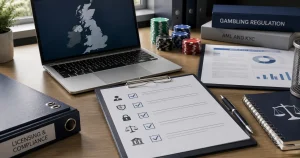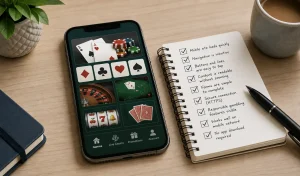

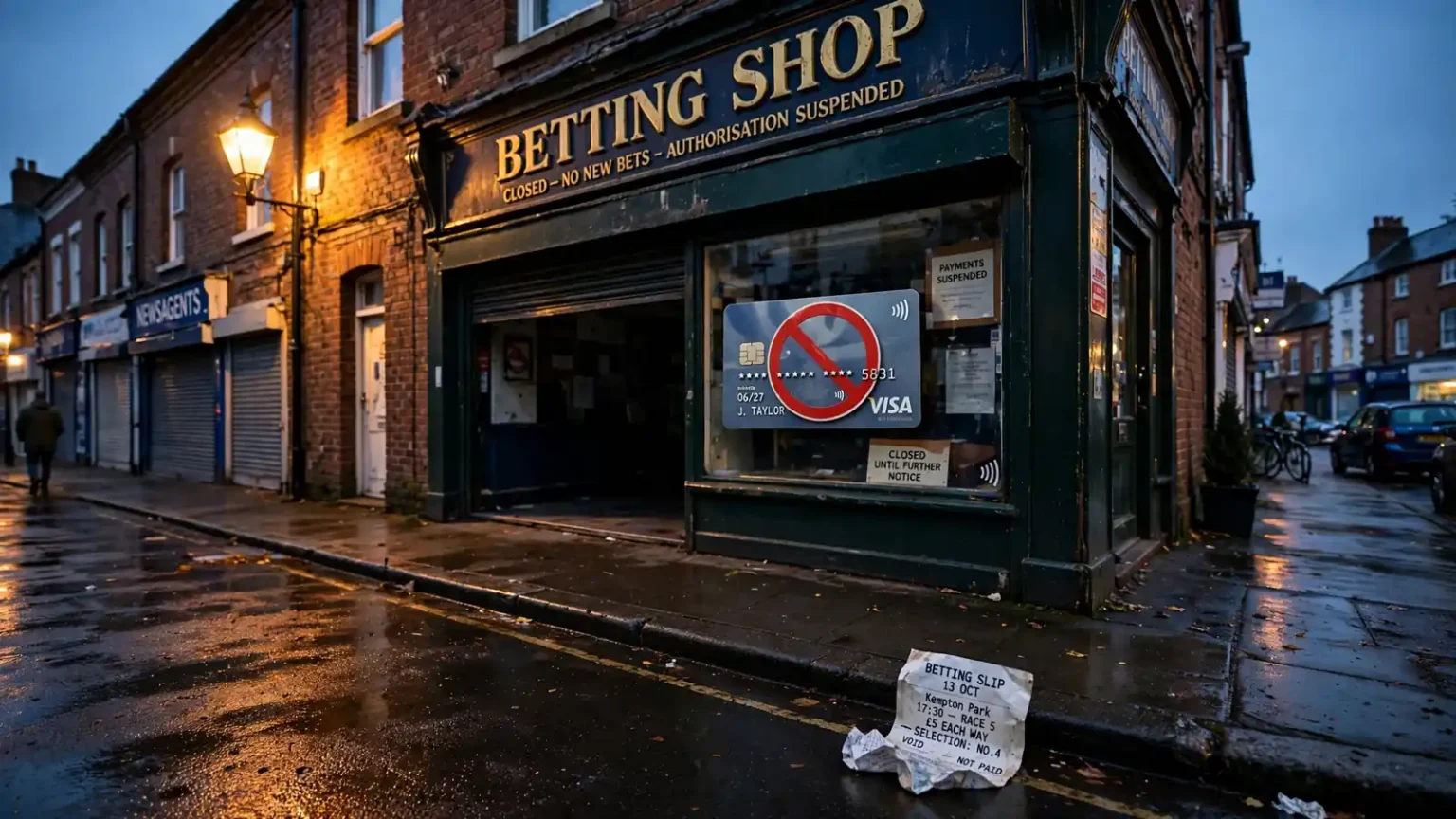
The UK ban, payment alternatives, deposit limits and cashier checks clarify how gambling funds can be paid in.
The UK Credit-Card Ban Is Still in Force
Credit-card payments for gambling have been prohibited at UK-licensed casinos since 14 April 2020. The UK Gambling Commission introduced the ban, and it has not been relaxed. So when a site is serving customers under a UK licence, this is not a temporary cashier setting or a rule that an individual casino can choose to ignore.
The point is the source of the money. A credit card lets you borrow, while gambling can involve losing the money you put in. The ban prevents licensed remote gambling operators from taking credit-card payments for gambling, rather than leaving the decision to each operator or card issuer. That is the core of the UK casino credit-card ban.
I find it helps to separate the payment method from the place you are using it. A card may be accepted for ordinary purchases elsewhere, but that does not make it an eligible way to fund gambling at a UK-licensed casino. The relevant question is not simply whether a card works online; it is whether the casino can accept that credit-card payment for gambling. Under the current rule, it cannot.
This is why a casino’s general payment information can be easy to misread. A page may talk about cards without making clear which card products are permitted for UK customers or what a particular payment is being used for. The ban itself is clear, though: a UK-licensed casino must not accept credit-card payments for gambling. “Cards accepted” is not the same as credit cards accepted for gambling. Small wording difference. Big one.
The rule is about gambling payments, not a blanket claim that credit cards have become unusable in Britain. It also does not mean the ban applies only when a player types card details directly into a casino’s cashier. The purpose is to stop credit being used as the funding source for gambling, so a route that merely changes how the payment is presented does not turn it into an allowed gambling payment.
That distinction matters because the ban is sometimes discussed as though it were a choice between cautious and less cautious casinos. It is not. Remote gambling operators serving the UK market need the appropriate UK Gambling Commission licence, and the credit-card restriction is part of the rules they must follow. A licensed operator cannot make an exception because a customer asks, because a card is accepted by another merchant, or because a payment screen appears to offer it.
The date is worth keeping in mind when you see older information. The regulator brought the restriction into force on 14 April 2020; it remains in force today. If a claim suggests that a UK-licensed casino can now take a credit card for gambling, treat that as a warning sign rather than evidence that the rule has changed. The ban has not been lifted.
Can You Use a Credit Card at a UK Online Casino?
No. You cannot use a credit card to pay for gambling at a UK-licensed online casino. That applies whether you are playing slots, table games or another casino game: the operator cannot accept credit-card payments for gambling.
The practical point is that changing the route does not make credit-card funds acceptable. A remote gambling licensee cannot take a credit-card payment passed through a money service business to fund gambling. Nor can it accept a payment from a wallet where credit-card funds can be used for gambling. The restriction is about the source and purpose of the money, not just whether you type card details directly into the casino’s cashier.
That can matter when a payment screen seems to offer several ways to move money. If a wallet is involved, it does not automatically turn credit-card funds into an allowed gambling deposit. The same goes for an intermediary presented as a separate payment step. If the route is being used to pass credit-card money into gambling, it is not a workaround.
I’d keep the distinction simple: a card that draws on borrowed credit is not a permitted way to fund gambling at a UK-licensed casino. A payment option being visible somewhere does not change that rule. And a card brand appearing on a page is not the same as permission to use every card product for every purpose.
Credit Card Ban
UK-licensed casinos are prohibited from accepting credit-card payments for gambling. This restriction has been in force since 14 April 2020 and has not been relaxed.
The restriction has been in force since 14 April 2020 and has not been relaxed. So if you are asking, “Can I deposit at an online casino with a credit card in the UK?”, the answer for a UK-licensed casino remains no. It is not a temporary cashier issue or a matter of finding the right button.
This also means there is no legitimate credit-card route for online gambling through a UK-licensed casino, whether you intend to gamble online generally or use the balance for slots. The operator is not allowed to accept that funding for gambling. If a payment attempt does not go through, do not assume that a different intermediary will make the same credit-card funds acceptable.
I know the temptation: a card can feel like an easy way to cover a payment when your available balance is short. But credit is still credit, even when it travels through another service. That is the bit worth remembering before you try to pay.
This answer is specifically about gambling at a UK-licensed casino. It is not advice to seek out an unlicensed site instead; online gambling in the UK is legal only at licensed and regulated sites. The direct answer remains the same: no credit-card payments for gambling. No clever detour.
Casinos That Accept Wirecard UK: What to Check
Recommended online casinos
- x3betBonus: Welcome Pack 100% Up to £1.000 + 200 Free Spins · Payout speed: 1-3 business days
- EvoSpinBonus: 125% up to €2500 + 125 Free Spins · Payout speed: 1-3 business days
- NightLuckBonus: Welcome Pack + 805% Up To 6400€ + 280 FS · Payout speed: 1-3 business days
- BeOnBetBonus: 100% up to €500 + 100 FS · Payout speed: 1-3 business days
- DieselwinBonus: Welcome Pack 250% up to £4000 + 200 FS · Payout speed: 1-3 business days
- JetsetspinsBonus: 200% Bonus + 100 Free Spins + Free Royal Wheel · Payout speed: 1-3 business days
- ZombillionBonus: Welcome Pack 250% up to £4000 + 200 FS · Payout speed: 1-3 business days
- AmunbetBonus: Join now and get 450% up to 2,700 GBP + 450 FS · Payout speed: 1-3 business days
- SpinFormulaBonus: 550% Up To £15,000 + 550 FS · Payout speed: 1-3 business days
- BritsinoBonus: Welcome Package – Get your £2,200 + 2,000 FS · Payout speed: 1-3 business days
How to Read Claims About Casinos Accepting Credit Cards
A page can say that a casino “accepts cards” without answering the question you actually need answered: whether a particular card product is available to customers in the UK, and whether it can be used for gambling at a UK-licensed casino. Those are separate details. I used to treat a payment logo as a simple yes. It isn’t.
Visa and Mastercard are card networks, not a guarantee that every card carrying their branding will work in every cashier. A debit card and a credit card can share a network logo while being different products. So a list that names Visa or Mastercard tells you very little on its own about credit-card eligibility. It also may not show whether the information applies to UK customers or to another version of the casino’s site.
There’s another distinction worth keeping clear. Remote gambling licensees serving the British market must hold a UK Gambling Commission licence. A site’s general payment page, or a page discussing casinos for an international audience, does not establish that the site is licensed for British customers. Nor does a list of card brands show that credit-card payments for gambling are available under UK rules. At a UK-licensed casino, they are not.
"Card payments accepted" may refer to debit cards, availability in other countries, or a broad label covering several products; it is not proof that credit cards are permitted for UK customers.
That sounds obvious when stated plainly. The wording on a promotional page can make it less obvious. “Card payments accepted” might refer to debit cards, might describe availability in another country, or might be a broad label covering several products. “Credit card casino” in a heading is not proof of what the UK cashier will allow. Read the actual conditions, not just the headline.
What a payment list can and cannot tell you
A specialist review may list Visa and Mastercard among a casino’s payment options. Treat that as a starting point for checking, not as confirmation that every Visa or Mastercard product is eligible in the UK. The list may be incomplete, may not reflect a recent change, or may describe the brand’s broader offering rather than the cashier shown to a UK customer.
I check for three things before drawing a conclusion:
- The market covered: Does the information refer to the UK version of the casino and customers in Britain?
- The product named: Does it distinguish credit cards from debit cards, rather than listing only a card network?
- The current cashier: Does the payment screen for the account show what is currently available and which card products are eligible?
If any of those details is missing, the claim is not settled. It may be a genuine description of a card option for someone, somewhere, but that does not make it an option for a UK customer using a credit card for gambling.
The cashier matters because it is the operator’s live payment interface, not a detached list copied into an article. Check what it displays for your location and account. If the page says Visa but the cashier does not make clear whether it means debit only, do not fill in the gap by guessing. Ask the operator directly if its wording remains unclear. A logo is not an answer.
Be wary of lists that blur different sites
Search results can place UK-licensed casinos beside sites aimed at other markets, and a page can discuss both without making the distinction easy to spot. A claim about a casino accepting credit cards does not tell you whether that casino holds a current UKGC operating licence. Check the operator against the UK Gambling Commission’s public register before depositing.
That check is not a workaround for the credit-card restriction. It helps establish which regulatory system applies. A site operating outside the UKGC system is not evidence that a UK-licensed casino can take a credit card for gambling. I would not treat “not on GamStop” or similar wording as a substitute for checking licensing and payment terms; it does not answer the card-eligibility question.
Casino Sites That Accept Jeton in the UK
Be especially careful with pages that use one broad label for every payment method, repeat card logos without explaining product types, or fail to say which country their information covers. “Best” is marketing language, not a payment condition. What matters is whether the specific UK cashier identifies an eligible payment product—and whether the proposed use complies with the rules for a UK-licensed casino.
A sensible way to verify the claim
Start with the casino’s own terms and payment information, then compare that wording with the cashier available to you. Look for a clear distinction between debit and credit cards, and for any statement about UK customers. If the information is generic or contradicts itself, do not rely on the more convenient interpretation. Contact support and ask a precise question: which card products, if any, are available to UK customers for gambling deposits?
Keep a record of the answer if you need to refer back to it, but remember that support wording does not change the rules governing UK-licensed casinos. If a page promises something that the UK cashier or the operator’s terms do not support, the promise has not proved the payment route exists. Small print matters. So does the licence.
What to Use Instead of a Credit Card
Once credit-card payments are off the table, the practical choice is between a debit card, a bank-based route or another payment service. I’d start with the options shown in the casino’s cashier, rather than trusting a banner that says “easy deposits”. That phrase can mean very little until you see what the site actually lets you use.
Debit Cards
Visa and Mastercard debit cards are commonly accepted. Funds are drawn from your bank balance rather than a credit facility.
Bank Transfers
Direct transfers or open-banking payments allow you to move money from your account without entering card details.
E-wallets and Vouchers
Services like PayPal, Skrill, Neteller, and Paysafecard are available, though some may be excluded from bonus eligibility.
Debit cards
Debit cards are the closest substitute for a credit card at many UK casinos. Visa and Mastercard debit cards are commonly accepted, though the cashier is where you need to confirm what works at the particular site. The money comes from your bank balance rather than a credit facility, so check that you are selecting the debit-card option and using a card eligible for gambling transactions.
Apple Pay is another possible deposit route at some UK-licensed casinos. It is not a credit-card workaround: remote gambling operators cannot accept a wallet payment if it lets credit-card funds be used for gambling. Use only a permitted funding source, and do not assume that a payment service being listed means every card behind it is acceptable.
Bank transfers and open banking
A direct bank transfer or an open-banking payment can be worth considering if you prefer to move money from your bank account without entering card details. Some specialist casino reviews describe these routes as offering instant deposits and fast withdrawals at many sites. Treat that as a possibility, not a promise: the option and processing experience depend on the casino and payment service.
The names can be confusing because a cashier may present a bank connection as a separate service rather than as an ordinary transfer. Follow the instructions on screen and check that you understand which account you are authorising. An unfamiliar route is not automatically a better one.
E-wallets and prepaid vouchers
PayPal is widely discussed as a convenient payment service, but a specialist casino review notes that some casinos may exclude it from bonus eligibility. If a promotion matters to you, read its payment terms before opting in; the method you use can affect whether the offer applies.
Casinos That Accept Citadel in the UK
Skrill and Neteller are offered at some casinos. Specialist reviews also report that these e-wallets are often excluded from promotions, so check the offer conditions rather than assuming a deposit qualifies. A bonus can look like a perk and turn into a restriction. Read the small print.
Paysafecard is a prepaid voucher for deposits only. That makes it different from a bank account or card route, so consider whether a deposit-only option suits the way you intend to manage your account. Do not treat it as a complete payment route for every stage of play.
Keep the funding source legitimate
The key distinction is not simply “card versus wallet”. It is whether the funds come through a route the casino is allowed to accept for gambling. UK remote gambling operators cannot accept credit-card payments for gambling, including credit-card funds passed through a money service business. A wallet does not make prohibited credit funding acceptable.
I’d keep the shortlist simple: a debit card, a bank-based option, or an e-wallet funded from an eligible source. Then compare the actual terms attached to each one. You do not need to choose the most elaborate payment method; you need one you can use properly and whose conditions you understand. Start there.
Deposits, Withdrawals and Where the Money Goes
A deposit and a withdrawal are separate transactions, even when you use the same payment route for both. The deposit moves money from you into your casino balance. A withdrawal sends eligible funds back out, after the casino has dealt with the request and checked where the money should go.
Attention: A deposit is often instant, but withdrawals involve internal casino reviews and verification, meaning payout timings are not mirror images of deposit timings.
I used to treat the cashier’s “instant” label as a promise about the whole journey. It only describes one part: how quickly a deposit may appear in your account. Getting a payout involves extra steps, so the two timings are not mirror images.
What happens after you request a payout
Once you ask to withdraw, the casino may need to review the request before releasing it. That internal approval is part of the processing time; it is not the same as the time a bank or payment service takes to deliver the money after the casino has sent it.
There can also be checks on a first withdrawal. If the casino still needs to verify your identity or account, that work can hold up approval. In other words, a payout marked as pending may not yet have left the casino. I find it helps to separate “the casino is reviewing this” from “the payment provider is moving this”. Different stages, different delays.
A specialist review describes card deposits appearing instantly while payouts take several business days. That is a reported example, not a timetable you can rely on at every casino. The operator’s processing queue, your verification status and the payment route all matter. Quick in. Slower out.
Why the payout may go back where it came from
UK anti-money laundering controls generally mean a payout should return to the original payment source. This is often called a closed-loop approach: the money does not simply go wherever is most convenient after you have played. The casino may need to follow the route used to fund the account, rather than treat a withdrawal as an unrelated transfer.
UK Casino Sites That Accept EcoPayz (Now Payz)
That can make the payout path less straightforward than the deposit screen suggests. A method displayed for paying in does not, by itself, tell you how a withdrawal will be handled. The casino may apply its own process, and checks may be needed before it can release funds. I would not assume that the quickest-looking deposit option also means the simplest or fastest payout.
The same distinction matters if the original source is no longer usable. Contact the casino before making assumptions about a replacement route; the operator may need to confirm what it can accept and carry out further checks. Guessing can turn a routine request into a back-and-forth.
Read the status, not just the headline speed
When you check a withdrawal, look for whether it is awaiting casino approval or has been sent for payment. Those statuses describe different points in the chain. If it is still under review, a payment provider cannot yet be the cause of the delay. If it has been released, the remaining movement depends on the route and its processing.
Keep the account details and payment records available if the casino asks for information during verification. Responding to a request can help the review proceed; it does not guarantee a particular arrival time. If a stated processing window passes, use the casino’s support or complaints route to ask where the request is sitting.
That is the bit I wish I had understood earlier: a deposit confirms money went in, not how soon money can come back out. Treat each stage separately, and the cashier’s speed claim becomes a lot less misleading.
Do
- Use a casino account and payment method registered to the same person
- Use one named account consistently
- Contact support if your payment details have changed
Don’t
- Use a card or bank account belonging to a partner, relative, or friend
- Route credit-card funds through another person or a wallet
- Use mismatched ownership details for transactions
Keep Payment Ownership Simple
The least complicated setup is usually a casino account and a payment method registered to the same person. If the names or other basic ownership details do not line up, a transaction may need extra checks before it can be accepted or processed. It is a small detail that is easy to overlook when you are focused on getting money into an account.
I have learned not to treat a payment method as interchangeable just because it is available to me. A card or bank account belonging to a partner, relative or friend can turn a straightforward transaction into a question about who owns the funds and who is using the gambling account. Using another person’s details does not make the account yours; it can instead create friction and prompt the casino to ask for more information.
The cleaner route is one named account, with a payment method in that same customer’s name, used consistently. That gives the casino a clearer connection between the person registered to play and the source of the money. It does not guarantee that no checks will be needed, but it reduces the chance that a basic mismatch is the reason for a delay or query. Less untangling. Better.
Why the casino may send money back to its source
Casinos may require funds to return to the original payment source. This is known as a closed-loop approach: money that came in through a particular route is sent back through that route where possible. Returning funds to their source is a common anti-fraud and anti-money-laundering control, rather than an arbitrary hurdle invented to make a payout difficult.
UPaycard Casinos in the UK: Check the Cashier First
If the original route cannot be used, the casino may ask you to provide another eligible destination or complete additional verification. The details depend on the operator and the payment method, so do not assume that changing the destination will be automatic. A different account or route can leave the casino needing to establish that the person requesting the money is entitled to receive it.
That is also why I would not deposit through one person’s payment account and expect a withdrawal to go neatly to someone else. The names need to make sense together. If your account or payment details have changed, contact the casino and ask what it needs before trying to move funds; repeated attempts with mismatched details are unlikely to make the ownership question disappear.
If you are looking at claims for online casinos that accept credit cards in the UK, keep ownership checks separate from the payment method itself. A route being described on a page does not mean it is suitable for your account, and a payment method cannot be used to get around restrictions on credit-card funds for gambling. Do not route those funds through another person or a wallet to make them appear different. Where a wallet permits credit-card funds to be used for gambling, a UK-licensed casino cannot accept that payment for gambling either.
The practical check is simple: use your own casino account and a payment route in your own name, then follow the operator’s instructions if it asks for evidence. That keeps the transaction trail easier to explain and avoids making someone else’s account part of your gambling activity.
Deposit Limits and the Amount You Can Pay In
A casino’s minimum deposit is not the same thing as the amount you are allowed to spend overall. I used to treat the figure beside a payment button as the whole story. It is only the entry point for that particular transaction.
Difference between cashier and account limits
Cashier limits govern what a particular transaction can do (minimum and maximum per payment method), while your account-level financial limit is the boundary you choose for your own total spending as required by UKGC rules.
A specialist review places the minimum deposit at £10–£20, with the exact amount depending on the payment method. Treat that as a guide, not a promise that every cashier will show the same threshold. The amount can change between payment options, and the cashier is where the operator displays the limit that applies to your account.
Maximums can be set per transaction, per day or per month. A specialist review notes that they may differ by payment method and account status, so there is no single ceiling that applies to every customer. If a deposit is declined or an amount is unavailable, check the cashier and your account details rather than assuming the casino has one universal maximum.
That is separate from the financial limit you set for yourself. UKGC rules require remote gambling operators to prompt new customers to set an account-level financial limit before their first deposit. They must also make limit controls accessible afterwards. This is a control on your gambling account, not another name for the payment method’s minimum or maximum.
I find it helps to keep those two figures apart: the cashier limit governs what a particular transaction can do; your account limit is the boundary you choose for your own spending. A payment option might permit a larger deposit than you want to make, or a transaction cap might be lower than your account limit. Neither tells you what the other one is.
If you came here looking for a UK casino credit-card deposit, the deposit amount does not change the payment rule: UK-licensed casinos cannot accept credit-card payments for gambling. A smaller deposit is not an exception. Check the cashier’s stated minimum and maximum for an eligible payment route, then set an account-level limit you can live with before funding the account.
Casinos That Accept eCheck in the UK: What to Check
No guesswork needed.
Check the Cashier Before You Choose a Payment Route
A payment logo on a casino page is a starting point, not proof that the method will work for your account. I’ve learned to open the cashier while logged in and check what it actually offers before deciding how to pay. A specialist review may list Visa and Mastercard, for instance, but that does not establish that every card product is eligible or that the method is currently available to UK customers.
That distinction matters if you’re asking whether credit cards are allowed at UK online casinos. A card brand appearing in the cashier does not make credit-card payments for gambling acceptable. Check the card type the casino permits; UK-licensed casinos cannot take credit cards for gambling. Don’t assume the logo answers the question.
Check both sides of the transaction, too. A method shown for deposits may not be offered for withdrawals, and a route that works for your first payment may not be the route used to return your balance. Casinos can apply closed-loop rules, sending funds back to the original payment source as an anti-fraud and anti-money-laundering measure. If that source cannot receive the payout, another route may involve extra verification. Small detail. Big delay.
I also check the account currency before making a first payment. A specialist review may say that GBP is supported, but the currency setting on your own account is the practical detail to confirm. If the account is set to another currency, a deposit or withdrawal may involve conversion. Confirming GBP first can help you avoid that mismatch.
Cashier Verification
- Check if the payment method is available for your account
- Confirm the method is eligible for deposits
- Verify the method can receive withdrawals
- Confirm the account currency is set to GBP
My quick check is simple: does the cashier show the method for my account, is it eligible for deposits, can it receive withdrawals, and is the account currency GBP? That takes less effort than finding out after a payment has been submitted.
The Real Cost of Paying In
When I compare payment routes, I don’t stop at the fee shown beside the deposit button. The total cost can come from several places: the casino, the payment provider, your bank or card issuer, currency conversion, and, where relevant, a payment network. A specialist payment-method review identifies these as possible charges, but the exact combination depends on the transaction.
That distinction matters. A casino may show no deposit fee while your provider or bank applies its own charge. If your account balance and the transaction are in different currencies, the exchange rate can add a cost too. A specialist review also cautions that the conversion spread — the difference between the rate offered and a reference rate — can outweigh a clearly stated flat fee. “Free” can be a narrow description.
For a fair comparison, check the actual amount you plan to pay in, not just a headline claim about one method. Look for a casino charge, a provider fee, any issuer or bank charge, the exchange rate used, and any network cost. Then compare the total for that transaction. A route with no visible fee is not automatically the cheaper one if its conversion rate is less favourable.
I learned to check this before confirming, rather than trying to work out afterwards why the amount credited did not match what left my account. It takes a moment. Worth it.
There isn’t one payment method that is always cheapest. The result can change with the amount, currency, and charges applied by each party. So compare the figures shown for your own transaction, and don’t assume a method that costs less at one casino will do so elsewhere.
One important boundary: UK-licensed casinos cannot take credit-card payments for gambling. So if you came looking for a way to pay by credit card at a UK casino, a fee comparison doesn’t make that route permissible. Keep the comparison to payment methods the cashier offers for gambling deposits, and check their charges before you submit the payment.
Playing Slots Without a Credit Card
If you’re looking to play online slots, you can’t fund gambling with a credit card at a UK-licensed casino. The ban took effect on 14 April 2020 and remains in force. That applies to credit-card payments for gambling, not just to a particular slot game or provider.
I used to assume that seeing Visa or Mastercard in a cashier meant any card with that logo would work. It doesn’t. UK casinos commonly accept debit cards from both networks, but a debit card and a credit card are different products even when they carry the same brand. Check which card you’re selecting and make sure it is a debit card.
Nor is routing credit-card money through a wallet or another payment service a way around the rule. Remote gambling licensees cannot accept credit-card funds for gambling through those routes either. If a payment option seems to blur that distinction, don’t treat its presence in a menu as permission to use borrowed funds for a slot deposit.
The practical version is simple: choose a debit card if you want to pay by card, and don’t expect a credit card to work for slot play at a UK-licensed site. A card logo alone tells you little. Read the payment option carefully.
Before you start playing, remember that a payment method is only one part of the setup. UK-licensed casinos must prompt new customers to set a financial limit before their first deposit and provide account-level controls afterwards. Set a limit you can live with; slots can make it easy to lose track of repeated deposits.
No clever workaround. Debit, not credit.
Can I use a credit card at 333 Casino in Great Britain?
No, if you are gambling at a UK-licensed casino: credit cards cannot be used to fund gambling. Check that the site holds a UK licence before depositing.
Which payment methods are accepted in Great Britain?
UK casinos commonly accept Visa and Mastercard debit cards, and many also offer PayPal, bank transfer or open banking, Paysafecard, Skrill, Neteller, and sometimes Apple Pay. Available options vary by casino, so check its cashier.
Is Skrill available?
Yes, Skrill is offered at some UK-friendly casino sites. Check the casino’s cashier, as availability and bonus eligibility can vary.
Which method has the lowest fees?
There is no universally cheapest method: costs can include casino or provider charges, currency conversion, and network fees. Compare the total cost for your amount, including any exchange-rate spread.
What is the fastest withdrawal method for UK casinos?
PayPal, open banking, and debit cards linked to fast payout systems are generally among the quickest. The casino’s approval process and whether your account is verified also affect timing.
Do UK casino withdrawals require verification?
Yes, verification may be needed, and a first withdrawal can take longer while checks are completed. Keeping your account details and payment method in your own name can help avoid unnecessary delays.
Material created by the team Basswin UK Guide