

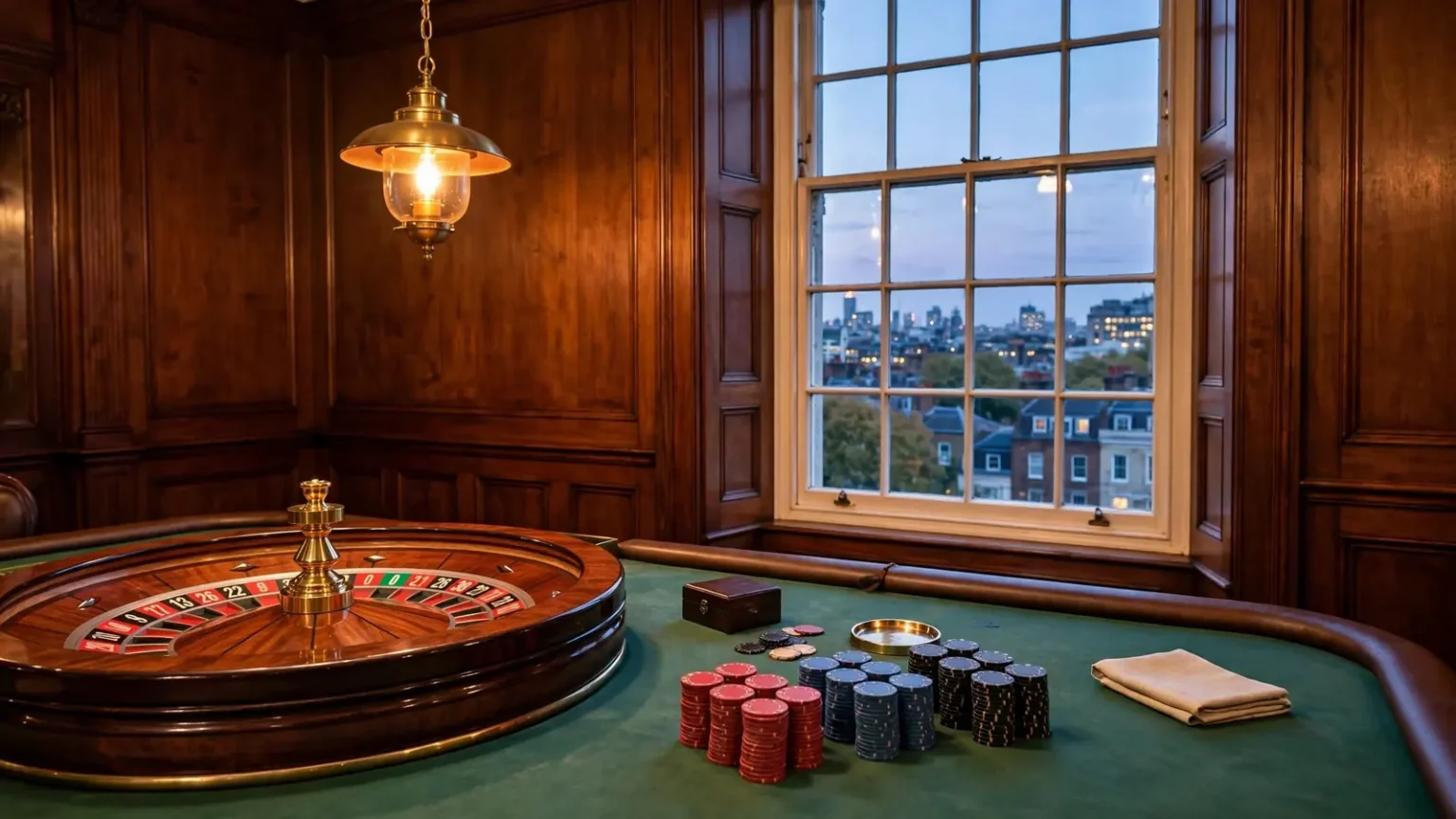
A practical guide to European roulette tables, their payouts, game formats and the UK licence checks that should come before a deposit.
Start With the Licence, Not the “Best” Badge
A “best” badge is easy to print beside a roulette table. It tells you very little about who is taking your deposit or what the promotion actually asks you to do. When I compare online casinos with European roulette, I start with the operator’s UK Gambling Commission status, then look for the game information and terms that affect the value of an offer. That order has saved me from being impressed by a banner before reading the small print.
For real-money play in Great Britain, the operator needs the relevant UKGC licence. The Gambling Commission is the regulator for online casino activity there. Check the operator’s name and licence details on the Commission’s public register rather than relying on a logo in a footer. I’ve learned that a polished site and a familiar-looking badge are not the same as verification. If the details do not match, I would not deposit.
Online Casino Games for Real Cash in the UK
That is the basic filter for anyone comparing European roulette casinos in the UK. It applies whether you are looking at a standard table, a live-dealer page or a VIP-labelled section. “VIP” sounds like a perk; it does not replace a licence check, and it does not tell you whether the terms suit you. A platform without a valid UKGC licence cannot legally offer real-money gambling to British residents.
Next, find the RTP information for the roulette game you intend to play. It should be accessible before you commit, not buried behind a vague claim about a casino being generous. RTP is a game information figure, not a promise about what will happen in your session. I treat it as something to read and understand, not as a prediction. If you cannot find the relevant information, pause and ask the operator where it is published.
Then open the bonus terms. Not the headline, not the bright button, and not the summary that says the offer is “easy”. Look for which games qualify, how roulette wagers count towards wagering requirements, and whether live roulette is treated differently from RNG roulette. The distinction matters: you might be playing roulette and still make little progress towards clearing bonus funds.
Most UK operators count roulette wagers at 10% to 20% of wagering requirements. That means a stake does not necessarily contribute its full value to the required playthrough. A specialist review has also reported that contribution can depend on the format, with live roulette counted at 10% or 20% and RNG roulette at 100%. Treat those figures as a prompt to inspect the specific offer, not as a rule that applies to every casino. The operator’s own terms are the ones to check before opting in.
Online Casino Tournaments UK: What to Check
I once saw a large bonus and assumed roulette would do most of the work. I had not checked the game weighting. That was my mistake: the offer looked generous, but the qualifying-game details changed what my play counted for. If you want to use a bonus, make sure the wording covers the exact roulette game and format you plan to play. If it is unclear, ask customer support before accepting. Keep the reply.
A specialist regulatory update reports that, since January 2026, UK rules cap bonus wagering at a maximum of 10x for licensed operators. Even with that cap, the headline multiple is not the whole calculation. Read how the casino defines the qualifying deposit or bonus amount, which games count, and any other conditions attached to the offer. A limit on wagering requirements does not make every promotion equally useful or remove the need to understand its terms.
I would not rank the “best European roulette casinos” from a badge or a bonus figure alone. First confirm the licence on the public register. Then locate the game’s RTP information and read the offer’s wagering rules, including roulette’s game weighting. If those details are easy to find and agree with what you were told, you can make a more informed comparison. If the terms are hidden or inconsistent, move on. No banner is worth guessing over.
The European Wheel: One Zero, One Clear Trade-Off
The defining feature of European roulette is easy to miss when you first open a game: there is just one green zero. The wheel has 37 pockets altogether, numbered from 1 to 36 plus that single zero. That layout is the reason the game’s standard maths differs from versions with extra green pockets.
European roulette features a single green zero and 37 pockets in total, resulting in a house edge of 2.70%.
I used to treat “European” as a label on the screen and move straight to choosing a table. It is worth pausing before that. The pocket count is not decoration; it determines how often a given number can come up relative to the full set of possible results. The single zero gives European roulette a house edge of 2.70%. That is the game’s built-in mathematical advantage for the house over time, not a prediction of what will happen in any one session.
The wheel and betting layout work together, but they are not the same thing. The wheel is the physical or simulated circle where the ball lands. The layout is the surface on which you choose how to cover the numbers.
When you see European roulette in an online casino, check that the game is actually described as European roulette rather than assuming that a familiar-looking table tells you everything. The name points to the single-zero format, but the screen may also show a game provider, a studio presentation or a particular ruleset. Those details can affect how the game is presented, so I read the game information instead of relying on a thumbnail or a “classic” badge. Badges are cheap.
The attraction is a clear trade-off. One zero means fewer green pockets than on a wheel that adds another zero, and the European version’s edge is 2.70%. That does not make a spin more predictable, nor does it make a winning number due after a run of losses. It simply describes the underlying odds across repeated play. I learned the hard way that knowing the maths and feeling the maths are two different things.
European roulette sits alongside other standard variants, rather than replacing them. American roulette has a different pocket arrangement, while French roulette is associated with rules such as La Partage and En Prison. French roulette has the lowest house edge among standard variants because of those rules. The distinction matters: the wheel’s pocket structure and the rules applied to particular outcomes are separate features. A game can resemble another at a glance while treating results differently under its rules.
French Roulette Online Casinos in the UK: Rules and Odds
That is why I now look at the game name and the rules together. A European wheel tells you to expect one zero and 37 pockets. It does not, by itself, tell you every condition that may apply at the table. If a rule is relevant to your play, find it in the game information before staking money. I once assumed a familiar layout meant I already knew all I needed. It didn’t.
For anyone searching for European roulette at a UK online casino, the useful starting point is not a “best” label or a dramatic studio set. It is whether the game is the single-zero version you intended to play, and whether its rules are displayed clearly. The basic design is straightforward: 36 numbered pockets and one zero. The house edge is 2.70%. That is a real advantage for understanding the game, but not a promise about the next result.
A wheel can look simple and still invite you to read too much into it. The number of pockets tells you what outcomes are possible; it cannot tell you which one comes next. I keep that distinction in mind now. One zero. Clear maths. No crystal ball.
Do
- Verify the operator’s UKGC licence on the public register
- Locate the game’s RTP information before playing
- Read the specific wagering rules and game weightings
Don’t
- Rely on a “best” badge or polished site design
- Assume a bonus is easy based on the headline
- Guess the terms based on a promotional banner
Choosing a Table That Suits the Way You Play
I used to treat “best European roulette casino” as if it meant there was one obvious table waiting for me. There isn’t. A table can suit your budget and patience without being right for someone else, and a polished lobby tells you very little about how the game will feel once you sit down.
Start with the format. You may find a standard online table, an automated table, a speed roulette option or a live table with a dealer. They differ in how the session is presented and how quickly you can move through it. You do not need to choose the most elaborate version. If you want a quiet practice session, a straightforward digital table may be enough; if the human presence matters to you, look for live play. Those are different experiences, not a ranking.
Then look at the pace. A faster format can make it easier to place another wager before you have properly thought about the last one. I know that pull: the screen is ready, so I treated the next round as a harmless continuation. It wasn’t always harmless to my budget. If you prefer time to pause and reconsider, choose a table that does not rush you, or set a personal stopping point before you start. Fast is not automatically better. Sometimes it is just faster.
Online Casino Without ID in the UK: What It Means
Minimum stakes deserve the same attention as the table name. RNG roulette can offer lower minimums, with some games starting as low as 10p. UK live roulette minimums can start at 10p too, while auto-roulette and speed formats sometimes start at 5p. A specialist review reports those lower starting stakes for some automated and speed tables; treat that as a table-specific detail, not a promise that every operator offers it. Check the displayed minimum in the game itself before joining. A small entry stake can help you keep a session within your budget, but it does not make the outcome predictable.
I’d also compare the table’s information before you play: its stated rules, the available limits and whether you can see the minimum and maximum stake clearly. European roulette rules are worth checking at the table, not relying on a label alone. I’m not talking about memorising every betting option here; I mean confirming that the game is the version you intended to open and that its terms are visible. If you have to hunt around for basic details, close it and check another.
A free European roulette game can be useful for getting comfortable with the screen and seeing whether its pace suits you, without risking a deposit. But free play is a way to inspect the interface, not evidence that a real-money session will feel identical or produce a reliable result. When you switch to real play, check the table’s stake settings again. The free version may not tell you what the live table’s minimum is.
So what counts as the best online European roulette casino for you? I’d answer with a checklist, not a badge: a format you actually enjoy, a pace you can manage, a clearly shown stake that fits your budget, and game information you can find without guesswork. Compare the table, not the advertising around it. That’s less exciting. More useful.
Choosing Your Table
- Select a format (RNG, live, speed, or automated) that suits your preference
- Verify the minimum stake fits your budget
- Check the pace of the game to ensure it doesn’t rush your decisions
- Confirm the table’s specific rules and limits are clearly visible
How to Play and What the Payouts Actually Mean
The first time I played European roulette online, I understood the numbers on the screen well enough. What I hadn’t properly clocked was the difference between choosing a bet and understanding what its payout meant. I treated the bigger ratio as a reason to get excited. It isn’t. It tells you what a winning bet pays, not how likely the spin is to land your way.
To play, choose a stake and select the number or group of outcomes you want to cover on the betting area. The available bet types range from a single number to broader choices such as red or black. Before confirming, check the selected bet and stake: a misplaced chip can leave you backing something you never intended. Once betting closes and the result is settled, the table shows which selections won and applies the listed payout.
Inside bets: narrower choices, larger payouts
A straight-up bet covers one number. If it wins, it pays 35:1 on European roulette. That ratio is the same on American roulette, though the wheels differ. A split bet covers two adjacent numbers and pays 17:1. A street bet covers a horizontal row of three numbers and pays 11:1.
Those figures describe the payout ratio, not a promise that a bet will win. I used to see 35:1 and think the game was offering a clever opportunity. Really, I was choosing a very narrow outcome. A larger return on a winning selection does not make that selection more likely to land.
It also helps to check how the table expresses returns. A ratio such as 17:1 is the stated payout for a winning bet; don’t confuse the ratio with the amount you risked or assume that a displayed total is pure profit. Read the table’s pay information before placing a real-money bet, especially if you have moved between different games or providers.
Online Bingo UK: Formats, Slots and Real-Money Play
Outside bets: broader selections
Outside bets cover larger groups of results. Red or black, even or odd, and high or low each pay 1:1 when they win. They are easier to read at a glance, but a simple-looking choice is still a bet on a roulette result, not a way to make the outcome predictable.
A useful habit is to decide what you mean to cover before adding a stake. If you want red, select red; if you want a particular number, select that number. Don’t keep adding extra bets just because the first choice feels exposed. I’ve done that, and it mostly made the screen busier while making it harder to tell what I was actually risking.
If you want to learn how to play European roulette without staking cash, a free-play version can help you get used to selecting bets and reading the result screen. It cannot show you what real-money play will feel like, though. When switching to real money, take a moment to check the stake and payout display again. A European VIP roulette table may look different from a basic game, but the bet’s stated payout is still the thing to read—not the label around it.
Keep it simple: pick the bet, verify it, then let the result stand.
Single-Zero Bets—and the System I’d Stop Trusting
A single-zero wheel can make a difference to what happens when you place an even-money bet, but the zero still matters. Red or black, odd or even, and high or low may look like safer choices because they cover many numbers. They can still lose when the ball lands on zero.
Even-money bets like red or black, odd or even, and high or low can still lose if the ball lands on the zero.
Some European roulette tables offer La Partage: if the ball lands on zero, half of an even-money stake is returned. On those bets, that rule reduces the house edge to 1.35%. Don’t assume the rule is included just because a table has a single-zero wheel. I’ve learned to open the table rules before betting; the label on the lobby tile is not the full deal.
That distinction applies to the betting options more broadly. Inside bets and outside bets change how much of the layout you cover, but neither gives you a way to control where the ball lands. A broad bet can feel less exposed than backing one number, yet the zero remains part of the outcome. La Partage changes the result for qualifying even-money bets on zero; it does not turn every bet into a protected one.
Why I’d leave the Martingale alone
The Martingale is easy to understand: after every loss, double the next bet, hoping one win will recover the earlier losses and leave a small gain. I’ve been tempted by that neat little story. It makes a run of losses sound like something you can manage with a bigger stake.
But doubling does not make the next spin more likely to win. Roulette outcomes are determined by chance, and no staking strategy can predict the final result. A losing streak can keep going, and each attempt to recover by raising the stake puts more pressure on your bankroll. The system doesn’t remove the losses; it carries them forward and asks you to risk more.
That is the part I used to gloss over. I’d picture the eventual winning spin and ignore how quickly the required stake could grow if losses continued. It’s a tidy plan on paper. Real money feels different.
Live Dream Catcher Casino UK: What to Check
Keep the stake separate from the prediction
If you enjoy a European roulette single-zero table, choose a stake you can accept losing and treat each spin as its own uncertain outcome. Don’t increase it because the previous spin lost, and don’t read a run of red or black as a signal that the other colour is due. The wheel has no memory to consult.
Before you start, check whether the table’s rules include La Partage and which bets it applies to. Then decide your stopping point while you’re calm, rather than after a loss when recovering the balance can start to feel urgent. I’ve made that mistake: changing the plan mid-session because I wanted the last result back.
A staking system can organise how much you wager. It cannot change the odds, make a losing streak end, or tell you what the next spin will do. That’s the line I try not to cross.
RNG or a Real Wheel: What You’re Actually Watching
The difference between simulated roulette and a live stream is not just the picture on your screen. It is how each spin happens. With RNG roulette, software uses a random number generator to produce the result. A live-dealer game sends video from a studio, where a dealer sets a physical ball in motion around a real wheel.
I used to assume the live version must be more “authentic” in a way that mattered to the result. What it actually changes is the experience: you watch a person and a physical ball, rather than a digital animation. Neither format gives you a way to predict where the ball will land.
RNG Roulette
Software-driven results via a random number generator. These tables typically move faster and often offer lower entry stakes.
Live Dealer Roulette
A real wheel streamed from a studio with a human dealer. It provides a more physical experience but at a generally slower pace.
Speed Roulette
A live-dealer format that trims the time between rounds, capable of exceeding 150 spins per hour.
Software spins and studio spins
RNG tables tend to move quickly because they do not have to wait for a dealer to spin and settle a physical ball. They can also have low entry stakes; some start at 10p. That can be useful if you want to keep each wager small, though a quicker pace can make it easier to place bets without pausing to think. I’ve done exactly that. Not clever.
A live table has a human dealer and a real wheel streamed from a studio. There is more to watch between bets, and the physical process takes time. A specialist review puts standard live tables at 80–100 spins an hour, while describing speed roulette as capable of exceeding 150. Those are reported rates, not a promise about every table you open. The quicker format still uses a live wheel; it simply trims the time between rounds.
The minimum stake can vary by format too. A specialist review reports live roulette starting at 10p, with auto-roulette and speed tables sometimes available from 5p. Treat those as possible table settings, not prices guaranteed across every operator. Check the stake shown in the game before you join.
What the pace means for you
For a separate point of comparison, a specialist review describes RNG American roulette as running at 150–200 or more spins an hour, against 50–60 for live dealer play. That comparison is about American roulette, so I would not use it as a precise speed guide for every European table. The broader point is simpler: automated play can move faster, while a streamed wheel includes the dealer and ball drop.
If you want to see a real wheel turn, live dealer is the obvious fit. If you prefer a quicker game and a lower stated minimum, an RNG or automated table may suit you better. Either way, check the game’s rules and stake controls before playing, and take a moment to set your own pace. A fast spin is still a spin.
Reading the European Roulette Table Layout
The first thing I notice on a European roulette table is that the felt is arranged to make the choices visible, even if the labels look busy at first. The numbered section sits in the middle: a narrow green zero beside a grid of red and black numbers. A European wheel has 37 pockets in total, numbered from 1 to 36 plus that single zero. The table mirrors that set, but it is a betting map, not a picture of the wheel.
The grid is the part to get familiar with first. Numbers run across it in short horizontal rows, with the zero set apart at one end rather than tucked into a coloured run. The colours help you scan, but they do not tell you what will happen on the next spin. I used to stare at the red and black pattern as if it were leaving clues. It wasn’t.
Around the numbered grid, you’ll see smaller marked spaces touching numbers or sitting along the grid’s edges. Those are where the table groups nearby numbers together. The marks can be easy to miss on a phone screen, so I enlarge the view before choosing anything. A chip placed on a line or corner can look almost the same as one placed inside a number square when the display is small.
A racetrack-style display may be present, showing numbers in the order they appear on the wheel rather than the grid order.
Beyond the grid are the broader betting areas. Labels such as red and black, odd and even, and low and high sit apart from the individual-number section. The layout separates these wider groups from choices tied to particular numbers, which makes it easier to see the kind of selection you’ve made without turning the table into a lesson in payouts.
Some European roulette casino table layouts add a racetrack-style display beside or below the main felt. It presents the numbers in wheel order, which is different from the grid order. I find it useful as a visual reference, but it can be distracting if you are still learning where the main betting areas are. You do not need to use every panel.
There isn’t a hidden European roulette strategy in the table’s shape. The layout helps you locate your options and check where a chip has landed; it cannot make one section of the grid more likely to come up. Before confirming a selection, I pause and check the chip position on the table itself, especially near the zero and the borders between spaces. A quick second look beats an avoidable misclick.
Recommended online casinos
- x3betBonus: Welcome Pack 100% Up to £1.000 + 200 Free Spins · Payout speed: 1-3 business days
- EvoSpinBonus: 125% up to €2500 + 125 Free Spins · Payout speed: 1-3 business days
- NightLuckBonus: Welcome Pack + 805% Up To 6400€ + 280 FS · Payout speed: 1-3 business days
- BeOnBetBonus: 100% up to €500 + 100 FS · Payout speed: 1-3 business days
- DieselwinBonus: Welcome Pack 250% up to £4000 + 200 FS · Payout speed: 1-3 business days
- JetsetspinsBonus: 200% Bonus + 100 Free Spins + Free Royal Wheel · Payout speed: 1-3 business days
- ZombillionBonus: Welcome Pack 250% up to £4000 + 200 FS · Payout speed: 1-3 business days
- AmunbetBonus: Join now and get 450% up to 2,700 GBP + 450 FS · Payout speed: 1-3 business days
- SpinFormulaBonus: 550% Up To £15,000 + 550 FS · Payout speed: 1-3 business days
- BritsinoBonus: Welcome Package – Get your £2,200 + 2,000 FS · Payout speed: 1-3 business days
Roulette Demos, Slots, and the Lightning Catch
A roulette demo and a roulette-themed slot can look related in a casino lobby, but they are different games. In a demo, you’re trying a roulette game in a non-cash mode: the wheel and betting interface are still the point. A slot with a roulette-style name or graphics is built around slot reels and their own game rules. The theme doesn’t turn it into roulette.
That distinction helps when you come across titles described as three-dimensional, Gold or Platinum European roulette. Those words may be part of a slot’s title, not evidence that it uses a European roulette wheel. Check the game’s category and how it plays before you start. If symbols spin on reels and form combinations, you’re looking at a slot, even if the artwork borrows a roulette table.
A roulette demo is useful for getting comfortable with the screen without treating a win there as money you can withdraw. I’ve made the mistake of judging a game by its demo balance; it tells you nothing about what you’ll take away from real-money play. Treat it as a way to inspect the controls and presentation, not a preview of results.
There’s another practical difference if you move from roulette to slots. In Britain, online slot autoplay is banned, and each slot spin must last at least 2.5 seconds. Those rules apply to the slot game, not to a roulette demo. Don’t assume that a roulette-themed slot follows roulette’s betting or payout structure.
Lightning Roulette is roulette, but its highlighted-number feature can distract from the payout difference that matters. A specialist review describes a straight-up bet that receives no lightning multiplier as paying 29:1, rather than the 35:1 associated with a standard straight-up roulette payout. So the feature isn’t a blanket boost to every number bet. Check the game’s own rules and payout display before staking money; the multiplier mechanic is not a reason to assume every winning number pays more.
Lightning Payouts
In Lightning Roulette, a straight-up bet that does not receive a multiplier pays 29:1, which is lower than the standard 35:1 payout.
The same specialist review reports that outside bets in Lightning Roulette retain standard roulette odds. In other words, the special feature affects the relevant number bets, while outside bets are not described as receiving a modified payout. Read the table information rather than relying on the word “Lightning”. It’s the paytable that counts.
Live Dealer Roulette: The Wheel, the Rules, and Your Limits
With a live European roulette table, you’re watching a real wheel in a studio: a human dealer sets the game in motion and the ball physically drops. I like that it feels less abstract than a simulated spin. But the stream doesn’t make the game safer or change what you can afford to lose. Your account controls matter more than the camera angle.
For British players, real-money live roulette can only be legally offered by an operator with a valid UK Gambling Commission (UKGC) licence. The UKGC regulates online casino activity in Great Britain. Before depositing, I check the operator’s licence number on the Commission’s public register; a platform without a valid UKGC licence cannot legally offer real-money live roulette to British residents.
There are other checks I expect to see. Operators must verify your age before letting you deposit, and online gambling is for adults aged 18 and over. A UKGC-licensed operator should make the game’s RTP information accessible, so you can find it rather than relying on a promotional claim.
Account controls should be easy to locate, too. New customers must be prompted to set a financial limit before their first deposit, with account-level controls available afterwards. UKGC-licensed live casino operators must also offer deposit and loss limits, session time reminders, reality checks and cool-off periods. GamStop self-exclusion should be available if you need to block yourself from gambling with participating operators.
I used to ignore those settings because I thought I’d remember when to stop. That was optimistic. Setting limits while you’re calm is more useful than trying to make a sensible decision mid-session.
Check the complaints route as well: UKGC licensees must provide an internal complaints process and access to an approved Alternative Dispute Resolution service. If you can’t find the limits, self-exclusion information or complaints process, pause before signing up. A polished live stream is not a substitute for clear protections.
European vs American Roulette: The Extra Zero Changes the Maths
When I compare European roulette with American roulette, I look at the green pockets first. The difference is easy to miss on a small screen, but it changes the game’s built-in disadvantage for the player.
A European wheel has 37 pockets: numbers 1 to 36 and one zero. The American version adds a double zero, making 38 pockets in total. That extra pocket is not a harmless decoration. It gives the house a bigger edge: 5.26% on American roulette, compared with 2.70% on European roulette.
In plain terms, the house edge describes the game’s mathematical advantage over time. It does not tell you what will happen on your next spin, and it cannot predict a session’s result. I used to treat small differences in the wheel as trivia. They aren’t. If I’m choosing between these two versions, the single-zero European wheel is the one with the lower house edge.
That is why I check the table title and wheel before placing a bet, particularly in an online European roulette casino game where several variants may sit close together in the lobby. “Roulette” on a tile is not enough detail. Look for the named version and confirm whether the layout shows one green zero or both zero and double zero. A familiar interface can make the variants look more alike than they are.
This comparison is about the wheel, not a promise that European roulette will make a session profitable. Both versions remain games of chance, and the lower edge does not remove the risk of losing. It only means the maths is less unfavourable than on the American wheel.
My rule now is simple: if I want roulette and both versions are available, I choose the single-zero table. The extra green pocket in the American game has a measurable cost, and I see no reason to ignore it. Small detail. Real difference.
Material created by the team Basswin UK Guide