

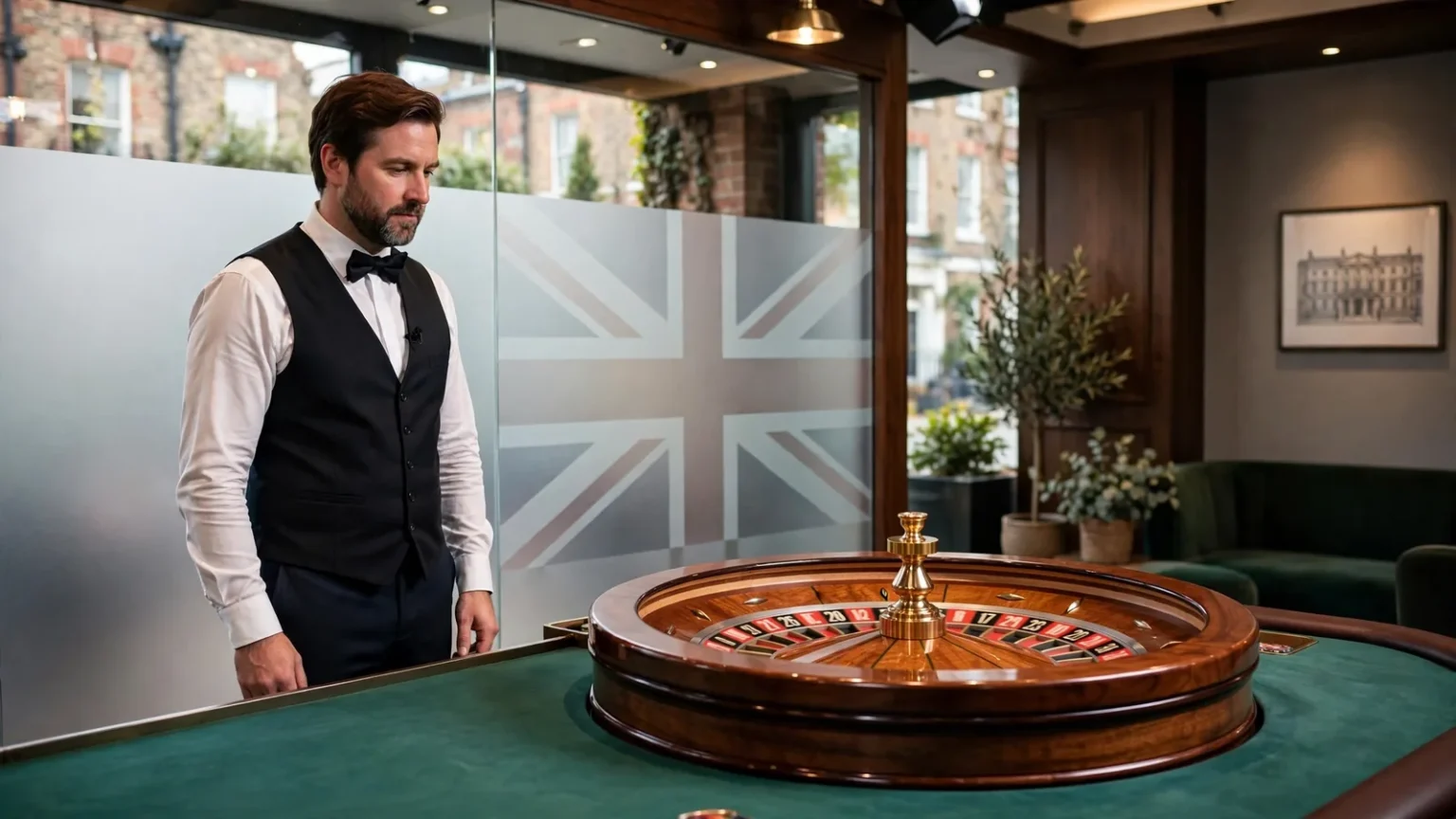
A practical guide to operator checks, live tables, roulette limits, bonuses and free-play options under Great Britain’s gambling rules.
What to check before choosing a live roulette casino
Before I open an account, I check who is actually operating the site. A familiar brand name or polished page is not enough: the business behind a casino should be identifiable, and its details should match what appears on the Gambling Commission’s public register. That small bit of checking is less exciting than looking at a roulette table, but it can save you from trusting a name that cannot be verified.
For customers in Great Britain, remote operators must hold the relevant Gambling Commission licence. Search the Commission’s register using the operator’s legal name, not just the casino brand, and check that the licence covers the business and its remote gambling activity. If the site publishes a licence number, look it up on the register rather than treating the number as proof by itself. I have learnt not to stop at a badge in a website footer. A badge is a claim; the register is where you can test it.
Then compare the registered details with the site you intend to use. Does the company name correspond with the brand? Does the register identify the website domain you have reached? If the casino gives a different company name in its terms, or the domain does not appear to match, pause and work out why before handing over personal details. A legitimate explanation should be clear, not buried in vague wording. If you cannot establish which business is responsible, I would not create an account.
A specialist review reported that a check of the public Gambling Commission register dated 26 September 2026 did not identify a LuckyPays entry under that brand or its stated domain, including luckypays.io. That is a specific register check, not a general claim about every casino or a substitute for checking the current register yourself. Register details can change, so look up the operator directly before relying on an older statement. If a site’s licence status cannot be confirmed, do not treat reassuring language on the site as a replacement.
Mines Casino Game UK: Demo and Real-Play Guide
I also look for a usable route to contact the operator. The site should make clear which company is responsible and how a customer can raise a complaint. UK-licensed casinos must provide an internal complaints process and access to an approved Alternative Dispute Resolution service. Find those details before you need them. If the complaints information is missing, difficult to locate, or does not explain what happens if the operator cannot resolve an issue, that is a reason to hold off.
Account controls matter too. Remote operators must prompt new customers to set a financial limit before their first deposit and provide accessible account-level limit controls. I would check where those controls are and whether the site explains them plainly, rather than assuming I will find them easily after registering. UK-licensed casinos must also provide responsible-gambling tools, including self-exclusion. These are practical safeguards, not decoration. I only gamble what I can afford to lose.
Pay attention to how the casino handles payments. UK-licensed operators cannot accept credit cards for gambling, including credit-card funds routed through a money service business; they also cannot accept wallet payments where the wallet allows credit-card funds to be used for gambling. If a payment route appears to sidestep that restriction, stop and check what is being offered. You should not have to guess whether the money is being treated as a credit-card payment.
There is another basic check before depositing: the operator must verify a customer’s age before allowing funds to be deposited into a gambling account. A site that appears to let you bypass its age checks is not offering a helpful shortcut. It is a reason to question whether the account process is being handled properly.
I try not to let a live roulette page rush me through these checks. A prominent “trusted” label or a confident claim about being established does not tell me which company runs the site, whether its licence is current, or how I would complain. I open the terms, the contact page and the register separately, then compare the names and domain. It takes a little patience. Better than guessing.
Choosing a Live Casino
- Verify the operator’s legal name on the Gambling Commission public register
- Confirm the website domain matches the registered details
- Locate the internal complaints process and ADR service
- Check for accessible financial limit controls and self-exclusion tools
- Ensure the site does not accept credit cards for gambling
For a UK roulette casino, the useful test is whether the operator’s identity and licence can be verified independently, and whether the account safeguards and complaint route are visible before you commit. If any of those points remain unclear, leave the account unopened until they make sense. A roulette session can wait.
Recommended online casinos
- x3betBonus: Welcome Pack 100% Up to £1.000 + 200 Free Spins · Payout speed: 1-3 business days
- EvoSpinBonus: 125% up to €2500 + 125 Free Spins · Payout speed: 1-3 business days
- NightLuckBonus: Welcome Pack + 805% Up To 6400€ + 280 FS · Payout speed: 1-3 business days
- BeOnBetBonus: 100% up to €500 + 100 FS · Payout speed: 1-3 business days
- DieselwinBonus: Welcome Pack 250% up to £4000 + 200 FS · Payout speed: 1-3 business days
- JetsetspinsBonus: 200% Bonus + 100 Free Spins + Free Royal Wheel · Payout speed: 1-3 business days
- ZombillionBonus: Welcome Pack 250% up to £4000 + 200 FS · Payout speed: 1-3 business days
- AmunbetBonus: Join now and get 450% up to 2,700 GBP + 450 FS · Payout speed: 1-3 business days
- SpinFormulaBonus: 550% Up To £15,000 + 550 FS · Payout speed: 1-3 business days
- BritsinoBonus: Welcome Package – Get your £2,200 + 2,000 FS · Payout speed: 1-3 business days
How online roulette fits into the UK gambling rules
I used to assume that an online casino was governed by the rules of wherever its studio or servers happened to be. That is not how remote gambling is treated in Great Britain. The UK Gambling Commission regulates gambling activity here, including online casinos, and its reach over remote gambling does not depend on where the equipment behind a service is located. A roulette site cannot avoid the British regulatory framework simply by running its operation from elsewhere.
That distinction matters because a live roulette game may look like a broadcast from another country, but the location shown on screen is not the deciding factor for regulation. What matters is whether the operator is offering remote gambling to consumers in Great Britain. Operators serving that market must hold the relevant Gambling Commission licence. In practical terms, the regulator is concerned with the gambling service offered to the customer, not just the physical setting of a table.
Online Casino Without ID in the UK: What It Means
The Commission is the sole regulator for commercial gambling in Great Britain. That does not mean it personally runs casinos or decides the result of a roulette spin. Its role is to oversee the commercial gambling system and license the businesses and people involved in operating within it. Keeping those roles separate helped me understand why a casino’s claims about being “regulated” should refer to a real regulatory relationship, rather than a vague assurance in an advert.
Business licences and personal licences
An operating licence is issued to a business. It authorises the relevant company to provide gambling activities, subject to the licence and the regulatory requirements that apply. For an online casino offering roulette to people in Great Britain, the operator needs the appropriate authorisation for its remote gambling activity. The licence is not a badge that automatically covers every possible product or circumstance; it relates to the business and the activities it is permitted to provide.
Personal licences are different. The Gambling Commission also issues licences to individuals who operate in relevant roles in Great Britain. That distinction can be easy to miss: a company’s permission to run a gambling business and an individual’s permission to perform a regulated role are not interchangeable. A licensed business does not make personal licensing irrelevant, and a person’s licence is not a substitute for the business holding its own operating licence.
This framework is one reason I try not to treat “licensed” as a complete explanation. It tells you something important about who supervises the operation, but it is not a promise that every customer will have a good experience or that every spin will go their way. Regulation and chance are separate things. Roulette remains roulette.
Jurisdiction Note
The Gambling Act 2005 applies to England, Wales, and Scotland, but does not apply to Northern Ireland.
The Gambling Act 2005 is the main gambling law for England, Wales and Scotland; it does not apply to Northern Ireland. The Commission’s remit described here is Great Britain, so it is worth being precise rather than using “UK” as though every part of the country had identical arrangements. People commonly search for an online roulette casino in the UK, but the regulatory detail depends on the jurisdiction being discussed. For consumers in Great Britain, remote operators must meet the relevant Commission licensing requirements.
What regulation means for a player
The rules are not only about whether a business has permission to operate. Licensed remote gambling operators have obligations around how gambling is offered and how customers are treated. For instance, operators must check a customer’s age before allowing them to deposit, and online gambling is legal for adults aged 18 and over when it is provided by an operator holding a UK Gambling Commission licence. A licence therefore sits within a broader set of responsibilities, rather than acting as a simple quality rating.
Online Casino Tournaments UK: What to Check
There are also protections designed to give customers ways to manage their accounts and raise problems. Remote operators must prompt new customers to set a financial limit before their first deposit and make account-level limit controls accessible. UK-licensed casinos must provide responsible gambling tools, including self-exclusion. They must also have an internal complaints process and access to an approved Alternative Dispute Resolution service. Those requirements do not remove the need to make your own decisions, but they give the regulatory framework practical consequences beyond the licence itself.
I once read a polished “trusted” claim and let the wording do the thinking for me. That was lazy on my part. A regulatory system is more useful when you understand what it actually governs: the business providing the gambling, the people in certain operating roles, and the rules that apply to the service. It is not a guarantee of winnings, nor a shortcut to deciding whether roulette is right for you.
Whatever the operator or table, only gamble what you can afford to lose. Regulation sets boundaries for the service; it cannot make a losing session harmless.
Live roulette tables, studios and the people dealing
A live roulette table changes the feel of the game because you are watching a dealer handle a physical wheel, rather than seeing only an animation on a screen. The table is streamed to your device; you make your choices through the casino interface while the dealer runs the round. It is still online roulette, but the human presence gives the session a more direct, shared atmosphere.
American Roulette Online in the UK: What to Check
For me, the dealer is not just background scenery. Their voice and manner help make the sequence of a round easier to follow: the wheel is set in motion, the ball travels, and the result is called. If you prefer an English-speaking dealer, hearing the action in English can make the table feel more accessible and less like you are trying to work out what is happening from visuals alone. It does not change the roulette outcome, though. A friendly voice is part of the presentation, not a way to influence where the ball lands.
That distinction matters. Casino language can dress a live table up as “immersive”; what that really means is that the game is presented through a camera feed with a person dealing. The experience may feel less solitary than playing against a computer-generated display, but you are still interacting with software to place your wagers. The dealer is not taking your choices for you, and the stream does not make the result predictable.
I have learned not to confuse a polished presentation with a better chance of winning. A calm dealer can make a round easier to follow, and a clear delivery can reduce the sense of being rushed or lost. Neither changes the basic uncertainty of roulette. If I am distracted, tired or chasing a result, a personable table can even make it easier to stay longer than I meant to. Nice atmosphere. Same risk.
The studio setting is part of that presentation. Cameras show the wheel and dealer, while the online interface lets you follow the round and take part remotely. You are not physically seated at the table, so the experience is necessarily mediated by the stream and the controls on your screen. The quality of that connection can shape how comfortable the session feels, but it should not be mistaken for a guarantee of uninterrupted play or a particular style of interaction. Tables differ, and it is sensible to look at what is actually shown before settling in.
Grosvenor offers a useful British example of how established the format has become. The operator first introduced its live casino games in 2013, with Roulette among a selection that also included Blackjack and Texas Hold’em. That history places live roulette within a broader move towards bringing dealer-led casino play online; it is not a new invention simply because the table now appears on a phone or computer.
When you sit down at a live roulette table, pay attention to whether the dealer’s language and pace work for you, and whether you can follow the layout without strain. You do not need to treat the dealer as a companion or the studio as a reason to keep playing. It is a presentation of a gambling game, and the choice to stop remains yours. Only gamble what you can afford to lose.
Roulette games alongside the other live tables
Roulette can be the reason you open a live casino lobby, but it is rarely the only table game on offer. A casino’s live section may bring several familiar formats together, so it helps to see roulette as part of a wider choice rather than the whole experience. The neighbouring tables matter if you enjoy switching between games, or if you are still working out which style suits you.
Grosvenor’s live casino launch gives a useful historical example. The operator first unveiled its live casino games in 2013, with a selection that included Roulette, Blackjack and Texas Hold’em alongside other card and casino games. That mix says something simple: live casino was presented as a collection of different table experiences, not just a roulette wheel streamed to a screen.
Roulette
Built around a wheel and its outcomes, offering a recognisable shape of play.
Blackjack
A card game with its own specific decisions, pace, and conventions.
Texas Hold’em
A card game that appeals to different moods compared to roulette.
The distinction between those games is not a matter of one being automatically better. Roulette is built around a wheel and its outcomes; Blackjack and Texas Hold’em are card games with their own decisions, pace and conventions. You do not have to be an expert in either to understand why a casino might group them together. They appeal to different moods. Sometimes you want the recognisable shape of roulette; sometimes a card table is more your thing.
I used to treat a larger lobby as a sign that I had found something better. It took a few disappointing sessions to realise that a long list is only useful when the games in it are ones you actually want to play. A broad live selection can make it easier to move between roulette and other tables, but it does not make every option a good fit for you. More choice, not more value.
That is worth remembering when browsing a UK casino’s live games. A page labelled “live casino” may bring roulette together with card games, but the label alone tells you little about the actual range available at that operator. Grosvenor’s 2013 line-up is a historical example, not proof that every casino has the same games today. If a particular title matters to you, check the current lobby rather than assuming it will be there because another operator offered it.
There is also no need to turn a casual preference into a search for the “best” table. If you came for roulette, it can remain your main choice; the other games are context, not an obligation to try everything. I find it more useful to notice what is on offer and decide whether it genuinely adds something for me, rather than letting a busy lobby make the decision.
A live casino can feel like a small collection of rooms with different kinds of table games, even when you access them through one screen. Roulette sits naturally beside Blackjack and Texas Hold’em in that collection, but each remains its own game. Keeping that distinction clear helps you choose what you came for without mistaking variety for a reason to keep playing.
Set your own boundary before you start, and only wager what you can afford to lose. That still matters when the lobby offers more than one table.
What makes a roulette casino worth considering?
I’m wary of any page that declares one casino the “best” without showing what that judgement rests on. A roulette site can look polished and still be a poor fit for you. Rather than chase a universal winner, I’d compare the operator’s terms and the way its service works for the kind of play I actually want.
Start with the basics of the account, not the sales pitch. Can you find clear information about deposits, withdrawals, account verification and how to contact support? If something goes wrong, vague promises of “easy banking” are no help. I want the relevant conditions set out plainly, with no need to guess what happens next.
The operator’s own terms also matter. Read the rules that apply to its roulette games and check that the available table limits suit your budget. A maximum wager is not a target; it is simply a boundary. I’ve made the mistake of treating a prominent limit as a sign that a site was built for me, when what mattered was whether I could play comfortably within my own spending plan.
For anyone looking for the best odds, be careful about what that phrase is supposed to mean. Roulette is not made safer by a confident headline, and no operator can promise a particular result. Compare the game information and the stated rules rather than relying on claims about a “winning” casino. If the details are hard to find, that tells me something about how much effort the operator expects me to make before I understand the offer.
The same goes for requests for roulette numbers or a supposed best strategy. Those are not sound ways to judge a casino. A site should make its game terms understandable; it should not imply that choosing a special sequence will control an uncertain outcome. I’d rather see clear information than a clever-looking system dressed up as advice.
There is also a difference between a casino that suits someone else and one that suits you. You may care about a particular style of play, a straightforward account or customer support that answers clearly. I would not assume that a large catalogue or an impressive-looking interface settles the question. Those are features to weigh, not proof of quality.
In Great Britain, remote operators serving customers must hold the relevant Gambling Commission licence. That is a baseline, not a personal recommendation: it does not tell you whether the casino’s terms, service or roulette offering will suit you. Check the licence details before depositing, then judge the operator on the rest of the experience too.
Finally, look at the controls available to you. A responsible operator should provide tools that help you manage gambling, including self-exclusion. I’d want to know where those options sit before I needed them, rather than search for them in a rush. Set a spending boundary that fits your finances, and only wager what you can afford to lose. A sensible choice is not the one with the loudest claim; it is the one whose terms you understand before you play.
Playing roulette for money: the limits that do and don’t apply
It is easy to see a headline about gambling limits and assume it covers every game in the same way. It does not. The stake restrictions discussed here concern online slots in Great Britain, not roulette or blackjack. So if you play roulette at a casino, live or otherwise, do not treat the slot figures as a cap on your roulette wager.
A specialist review describes the slot limits as £5 per game cycle for adults aged 25 and over, and £2 per game cycle for adults aged 18 to 24. Those amounts relate to a slot game cycle; they are not a general limit for every casino game. Roulette is a different game category, so the slot stake limits do not apply to roulette. The same distinction applies to blackjack.
Stake Limits
Great Britain online slot limits (£5 or £2 depending on age) do not apply to roulette or blackjack wagers.
That difference matters when you move between a slot lobby and a live roulette table. The figures may appear in a casino’s information about slots, but they do not tell you what you can stake on a roulette spin. Nor should a slot limit be read as a minimum wager or as a suggested amount for roulette. Check the rules shown for the particular game and table rather than carrying a limit over from another section of the casino.
When I first started playing online, I assumed a rule described as a gambling limit must apply across the site. That was a lazy shortcut. Game-specific rules are easy to blur together, especially when the same account offers slots, blackjack and roulette. For roulette, the relevant distinction here is simple: the Great Britain online slot limits are not roulette limits.
This is not a reason to treat roulette stakes casually. A table may allow wagers that feel small in isolation, but repeated play can still add up, and the result of a spin is uncertain. Set a personal amount you can afford to lose before you start, and stop when you reach it. No chasing. No borrowed money.
If you are switching between games, pause and check which rules belong to which one. Slot limits apply to slots; they do not set the stake for a roulette wager or a blackjack hand. That keeps the categories straight without turning a rule about one game into a promise about another.
Roulette bonuses: read the conditions before you count the value
A roulette offer can look generous in a banner and turn out to be awkward once you open the terms. I’ve learned not to treat a headline bonus as money I can simply take to a live table. It is an invitation to check the details, not a promise of useful roulette play.
Start with eligibility. See whether the offer is for new customers, whether you must opt in, and which games count towards it. A casino welcome bonus or deposit offer may apply to selected games rather than roulette, or exclude live casino play altogether. If roulette is included, check whether that applies to every table or only named games. “For roulette” can hide a narrow definition.
Then read how the bonus is released and what happens if you withdraw before completing the stated conditions. Look for any wagering requirement, expiry date, maximum bonus amount, game contribution rules and restrictions on stakes while the bonus is active. These terms can change whether an offer suits the way you actually play. I once skimmed the headline and missed that the game I wanted did not count as I expected. Annoying lesson.
For a live roulette bonus, make sure the live tables are explicitly eligible. The same goes for a named game such as Lightning Roulette: don’t assume a general casino promotion covers it just because it is roulette. If the wording is unclear, ask customer support to confirm the terms in writing before opting in. Keep the reply with the offer details.
Do
- Check if live tables are explicitly eligible for the bonus
- Ask customer support to confirm terms in writing
- Compare the offer with the casino’s ordinary terms
Don’t
- Treat a headline bonus as guaranteed money
- Assume general promotions cover named games like Lightning Roulette
- Accept conditions you do not fully understand
A no-deposit promotion is a separate kind of claim, not proof that you can use the bonus freely or withdraw any resulting winnings without conditions. Check what participation requires and whether any winnings are restricted. The next sensible move is reading those terms, not counting the advertised amount as a gain.
I’d compare the offer with the casino’s ordinary terms, then decide whether I would still play there if the promotion disappeared. If the bonus rules push you into games or wagers you would otherwise avoid, the headline value is doing its job for the operator, not for you. Walk away from conditions you don’t understand; there will always be another offer in front of you.
Treat any promotional wording as provisional until you have read the full terms that apply to your account and chosen game. And keep the basic limit in mind: only gamble what you can afford to lose.
Trying roulette without depositing
A free roulette table can be a useful way to see how a casino’s site works before you put money in. But “free” can mean different things: a demo game with no cash involved, or an offer attached to an account. Those are not the same thing, and I wouldn’t assume either is available just because a casino has roulette.
Look for a clear description of the play mode before you start. Is it a practice table, or does it require you to claim an offer or meet account conditions? Can you play without depositing? If the wording leaves that unclear, ask the operator rather than guessing. I’ve learned not to treat a bright “play free” button as an explanation.
Check what happens to any balance shown on screen, too. A demo balance may simply let you try the interface; it does not necessarily represent money you can withdraw. If the casino links free play to an account offer, read its terms separately before accepting. That is where the distinction between a no-deposit game and a promotion matters.
You might also see French Roulette or a named variation such as Fireball Roulette among the games. A title alone tells you little about whether that particular table is available in free mode. Check the game’s own information and the casino’s lobby, and don’t assume that the rules or features of one roulette version apply to another. If you want to understand a specific table, read its displayed rules before playing.
Even if you are only trying a demo, use a casino whose identity and status you can verify. Before depositing, check the operator’s licence number against the UK Gambling Commission’s public register. Operators must verify your age before allowing a deposit, and you must be at least 18 to gamble online with a UK-licensed casino.
Free play removes the immediate cost of a wager, not every risk of moving on to real-money play. Set your own boundary before you begin, and only gamble what you can afford to lose. If the site makes the free option hard to distinguish from paid play, I’d leave it there. A demo is optional.
Roulette wins: what you can control and what you can’t
I used to look for a pattern in roulette results, as if a run of one colour meant the other was due. It felt like analysis. It wasn’t. Previous spins don’t tell you what the wheel will do next, and a streak is not a promise that it will continue or reverse.
Casino Games: Slots, Live Tables and Online Options
There is no reliable method for winning every time, whether you play at a live table or on electronic roulette. You can choose where to place a wager, but you cannot make the ball land on a particular number or colour. A system may organise your choices; it cannot control the result. Calling one the “best way to win” is often just a sales pitch with a betting pattern attached.
What you can control is how you approach a session. Decide what you can afford to lose before you start, and stop when that amount is gone. Don’t chase losses by increasing your wagers in the hope of getting back to even. I’ve made that mistake: the urge to recover money can make a poor decision feel like a plan. It usually just gives the next spin more power over your mood.
You can also choose not to play a spin, or to leave when you no longer feel comfortable. Those are real decisions. They do not improve the chance of a particular result, but they can keep a session within limits you set for yourself. If you feel you’re wagering money you need for other things, step away.
Online roulette can make each decision feel quick and separate, but the same basic distinction applies: your choices are yours; the outcome isn’t. A run of wins doesn’t mean you’ve worked out a secret, and a run of losses doesn’t mean a win is owed. Electronic roulette doesn’t change that principle.
So, can you win at roulette in a casino? Yes, a session may end ahead, but that possibility is not a dependable plan or a promise of profit. Treat any win as an uncertain outcome, not proof that you’ve found a repeatable edge. Keep it affordable. Know when to stop.
Lightning Roulette and other live-game variations
Lightning Roulette is a named live roulette variation, but the name alone does not tell you what a particular casino’s version includes. I’d read the game information on the table itself rather than assume its rules or features from a headline. “Lightning” sounds like a promise; it is still worth checking what you are actually opening.
It can sit beside other live casino formats in a lobby, but that does not make them roulette. Crazy Time and Dream Catcher are also named live-casino products; their presence alongside roulette is not a reason to treat them as the same kind of game. If you are looking specifically for a live roulette table, check the game title and category before you enter.
You may also see Lightning Roulette described as a slot, or encounter casino scores attached to it. I would not use those labels as a substitute for the casino’s own game listing. A score does not explain how a game works, and a loose category label does not establish that you are looking at a roulette table. The listing should make clear what game is being offered.
The same goes for “First Person” wording. A label can suggest a different presentation, but I would check the actual description instead of assuming it means a particular feature or set of rules. If the details are unclear, leave it until they are.
Whatever variation you choose, the name does not change the basic uncertainty of gambling: you cannot control the outcome. I’ve learned not to mistake a new label for an edge. Keep to an amount you can afford to lose, and stop if the session is no longer enjoyable.
Material created by the team Basswin UK Guide