

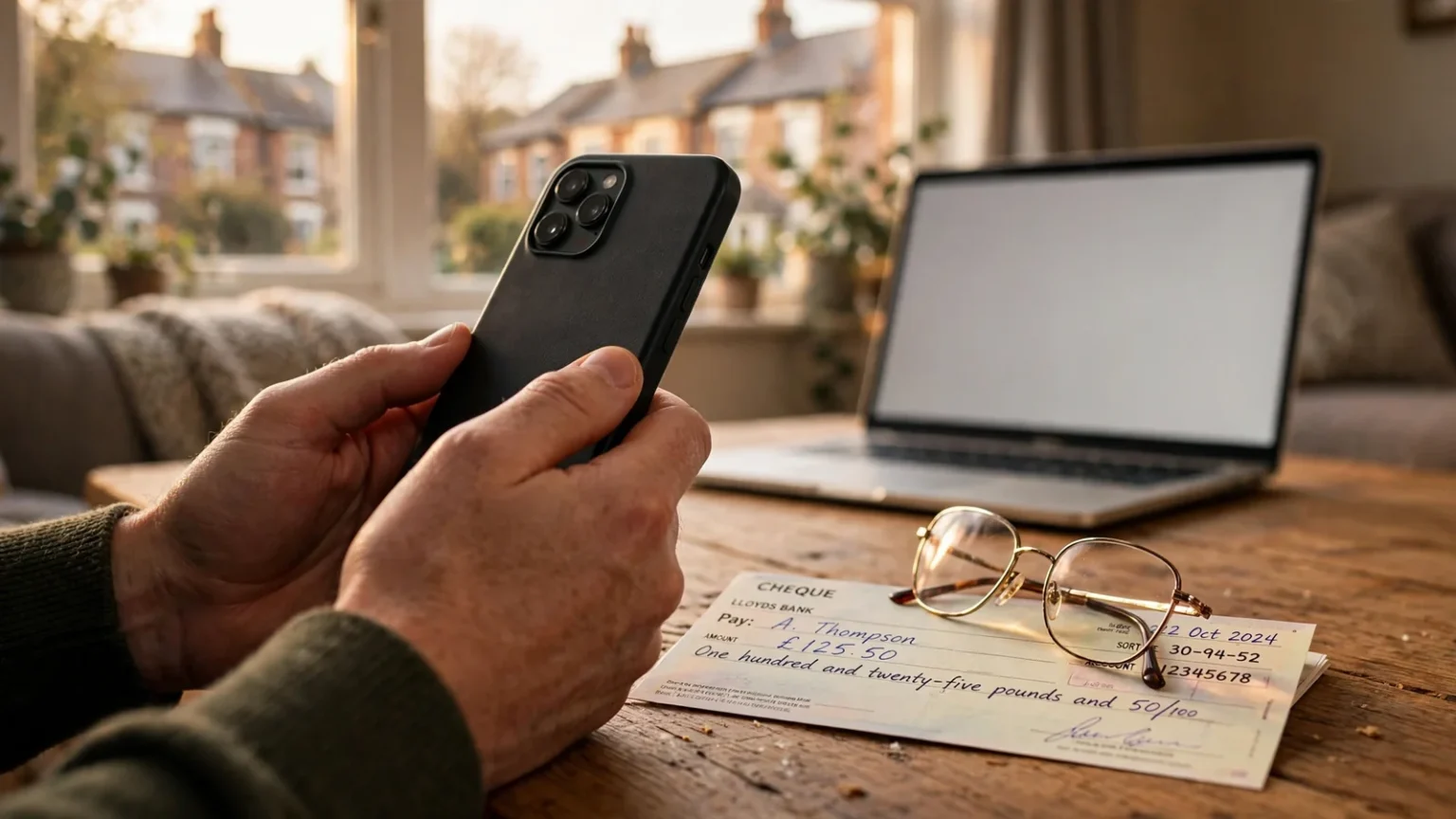
Availability, account-name rules, limits, exchange rates and withdrawal routing can affect whether an e-cheque option suits a UK casino account.
Can You Confirm an E-Cheque Option Before You Sign Up?
If you are looking for an e-cheque option at a UK casino, do not treat a payment-method list on a review page as confirmation. The cashier is the place to check what the operator currently makes available to you. I have learned to separate “mentioned somewhere” from “actually offered on the account in front of me”. They are not the same thing.
Payment availability can change, and a method may not be offered to every customer or in every situation. A casino’s general payments page can be a useful first check, but it may not show the full, current cashier menu. Nor does a list that mentions a payment type prove that you can select it for your own account. Before opening an account or depositing, look for e-cheque in the casino’s own payment information and, where possible, in its cashier.
The wording can also be slippery. An operator might use a label that differs from the term you have in mind, or not list an e-cheque option at all. Don’t assume that a bank transfer, a card payment or another bank-related route is the same thing. If the cashier does not clearly identify the method, ask customer support what payment route the label refers to and whether it is available to UK customers. Get a plain answer before you commit.
Casinos That Accept eCheck in the UK: What to Check
That may sound like a small bit of admin. It is less annoying than signing up on the strength of a vague claim and then discovering the option is absent when you reach the cashier. If you cannot view the cashier without an account, check the operator’s payment page first and contact support before registering. Ask specifically whether e-cheque is currently available for a UK account, rather than asking whether the casino “supports bank payments” in general.
I would also check the account currency before making any first transaction. A specialist review may say that a site supports GBP, but that is not a substitute for confirming the currency offered when you set up your own account. If the account is not in pounds, a conversion may come into play. Better to spot that before entering payment details.
The same caution applies to cards. UK casinos commonly accept debit cards, including Visa and Mastercard, but a specialist review listing those brands does not establish that every card product or current UK cashier will be eligible. Check the cashier’s current options and the payment terms. Credit-card payments for gambling are not permitted at UK-licensed casinos, so do not read a mention of a card brand as permission to use a credit card.
Here is the basic check I use before signing up:
- Look at the operator’s own payment information, not just a third-party list.
- Check whether e-cheque is named clearly, rather than assuming another bank-related method is equivalent.
- If the information is unclear, ask support whether the option is available to UK customers before creating an account.
- Confirm the account currency and the payment options shown in the cashier before making a transaction.
No grand system. Just a direct check.
The cashier matters because a payment method can be advertised in broad terms while the options available to an individual customer differ. If e-cheque is not shown, that does not prove no UK casino offers it; it does mean you should not assume that the casino you are considering does. Equally, finding the term on an old page or in a general list is not a reason to deposit before confirming it with the operator.
There is no useful “best e-cheque casino” answer unless the payment route is confirmed at the specific site you are considering. A polished ranking cannot tell you what is in your cashier today. I would rather see a clear confirmation from the operator than a confident headline. Marketing is easy. The cashier is the test.
For a search like “casinos that accept e-cheque in the UK”, the practical answer starts with verification, not a name list. Check the payment page, ask support if needed, and only proceed once the cashier makes the option clear. If you cannot get a straight answer, move on rather than guessing. That saves an avoidable detour.
Do
- Check the operator’s own payment information
- Confirm e-cheque is named clearly
- Ask support about UK availability before registering
- Verify account currency in the cashier
Don’t
- Rely on third-party review lists as confirmation
- Assume other bank-related methods are equivalent
- Deposit based on a vague claim of support
- Assume GBP is available without checking your account
Check Whether the Payment Route Works Both Ways
A payment method appearing beside the deposit button does not tell you whether it can also receive a withdrawal. I used to treat a cashier’s list as one menu of interchangeable routes. It isn’t. Deposit and withdrawal options can be shown separately, and a method that lets you send money in may not be offered as a way to take money out.
That distinction matters if you are looking for an e-cheque option. Seeing “e-cheque” in a deposit list would confirm only that the casino appears to accept it for funding an account. It would not, on its own, confirm that winnings can be returned by e-cheque. Before you open an account or deposit, look for the withdrawal section too, or ask customer support a direct question: can this specific route be used for both deposits and withdrawals on my account?
I’d be wary of wording that says only “payments accepted”. It leaves a useful detail unanswered. The same goes for a page that lists a method without saying whether it is deposit-only. What you want is a clear statement about the direction of payment, and the cashier is the practical place to check what is currently available to you.
Read the two cashier menus separately
If the cashier has separate deposit and withdrawal tabs, inspect both before you make a decision. If you are not signed in, the options may be incomplete or general; once you can view the account cashier, check the options shown there. A method described elsewhere on the site may not appear in your own account’s available routes.
Casinos That Accept Interac in the UK
Don’t assume that similar-looking labels mean the same thing, either. A casino might use a provider’s name in one place and a broader description in another. If the names do not line up, ask the operator to confirm whether they refer to the same payment route and whether it is available for withdrawals. A guess is not a payment plan.
You can also check whether the withdrawal page names the route you used for a deposit, or gives a clear alternative. That helps you understand the process before money is involved. If the cashier lists a route only under deposits, treat it as a deposit option until the operator confirms otherwise. “It should work” is not confirmation.
Why a return to the source is common
There is another reason not to think of deposits and withdrawals as independent choices. UK anti-money laundering rules usually require payouts to go back to the original payment source. Returning funds to where they came from is also a common anti-fraud control. In practice, that can shape which withdrawal routes a casino offers after you have paid in.
So, if you deposit by one method, don’t assume you can freely choose a different destination later. The cashier’s withdrawal instructions matter because they show how the operator handles the return route, rather than merely what it accepts at the point of deposit. If a different destination is proposed, the casino may ask for additional verification before processing it.
That does not mean every transaction will follow an identical path. The key is not to promise yourself a particular route based on a deposit list alone. Check the cashier’s stated options and read any payment instructions attached to them. If the wording is unclear, get an answer from the operator before putting money in.
A payment method appearing in the deposit list does not guarantee it can also be used for withdrawals. Always check the withdrawal section or ask support to confirm a two-way route.
I learned to separate two questions that look like one: “Can I pay this way?” and “Can the casino pay me back this way?” The first may be answered by a deposit icon. The second needs its own confirmation.
A useful check before depositing
When you are comparing an e-cheque online casino in the UK, focus less on the label and more on the complete route. Is e-cheque listed for deposits? Is it also shown for withdrawals? Does the cashier explain whether payouts return to the original source? If you cannot find the answer, ask support and keep the reply so you can refer to it later.
If the casino says that withdrawals may go to a different method, ask what conditions apply. Since an alternative can mean additional verification, it is better to understand that before relying on it. You do not need to assume the casino is doing anything wrong; you do need enough clarity to know where a payout is intended to go.
A “best” option is not much use if it only gets money into the account. For an e-cheque casino site, a deposit-only listing can still be relevant, but it is not evidence of a two-way payment route. I would count it as suitable for both directions only when the operator’s cashier or support confirms both.
Check both sides. Then decide.
Casinos That Accept Entropay in the UK: What to Check
Recommended online casinos
- x3betBonus: Welcome Pack 100% Up to £1.000 + 200 Free Spins · Payout speed: 1-3 business days
- EvoSpinBonus: 125% up to €2500 + 125 Free Spins · Payout speed: 1-3 business days
- NightLuckBonus: Welcome Pack + 805% Up To 6400€ + 280 FS · Payout speed: 1-3 business days
- BeOnBetBonus: 100% up to €500 + 100 FS · Payout speed: 1-3 business days
- DieselwinBonus: Welcome Pack 250% up to £4000 + 200 FS · Payout speed: 1-3 business days
- JetsetspinsBonus: 200% Bonus + 100 Free Spins + Free Royal Wheel · Payout speed: 1-3 business days
- ZombillionBonus: Welcome Pack 250% up to £4000 + 200 FS · Payout speed: 1-3 business days
- AmunbetBonus: Join now and get 450% up to 2,700 GBP + 450 FS · Payout speed: 1-3 business days
- SpinFormulaBonus: 550% Up To £15,000 + 550 FS · Payout speed: 1-3 business days
- BritsinoBonus: Welcome Package – Get your £2,200 + 2,000 FS · Payout speed: 1-3 business days
A Convenient Deposit Is Only Half the Story
A payment button can make the first step look effortless. You choose a method, enter the amount, and the balance appears; that does not tell you how smooth the rest of the account experience will be. I’ve learned not to judge a cashier by the deposit screen alone. The useful question is what happens when you later ask to take money out, especially if the casino still needs to complete KYC or review the transaction.
That distinction matters when you are comparing e-cheque options on a phone as well as on a desktop. A mobile cashier may make it easy to start a deposit, but a tidy screen is not evidence that the operator has finished checking your account or that a later withdrawal will be approved immediately. Before treating a payment route as a convenient choice, look at the whole journey: what the cashier says, what the account asks you to complete, and whether the operator has explained its review process.
I used to read “instant” as a promise about the entire payment experience. It is not. A deposit can be quick to initiate while the casino still has work to do before approving a withdrawal. The two steps belong to different parts of the process, and the cashier’s speed says little about how quickly an account review will be finished. That’s the bit people miss.
A specialist payment review describes PayPal, open banking services and debit cards connected to fast payout systems as methods that can sit among the quicker withdrawal options. Treat that as a general comparison, not a guarantee for every casino or every account. Even where a payment route is presented as fast, the operator’s own approval stage remains part of the journey. A method cannot skip checks the casino has not completed.
Account verification (KYC) is a separate process from the payment method. Even with a fast deposit route, a withdrawal may be delayed until the operator completes its internal review and verification checks.
This is why I would not choose a casino solely because a deposit route sounds simple. I would first see whether the operator makes its account-verification requirements clear and whether the cashier gives a realistic picture of the steps after a withdrawal request. If those details are buried or vague, the smooth deposit is only one small piece of the experience. It may still suit you, but you are choosing with less clarity.
KYC is not just a box to tick when you feel like withdrawing. If the account is not fully verified, the casino may need to finish its checks before it approves a payout. A specialist review identifies both the operator’s internal approval process and the player’s verification status as factors in withdrawal timing. In practice, that means a delay may have nothing to do with the payment button you used to deposit. The account may simply not be ready for the next step.
I find it useful to complete any requested checks before they become urgent. That is not a promise that a withdrawal will be approved at once; it just avoids leaving basic account work until the moment you want access to your balance. Read the operator’s instructions carefully, make sure you understand what it is asking for, and use its own account area or support channel if something is unclear. Guessing rarely makes a review simpler.
There is a trade-off here. A route that feels familiar and takes little effort to use may be perfectly adequate, while another may be described as faster for withdrawals but still involve an operator review. Neither label tells you everything about how you will experience the casino. The practical choice is the one whose deposit process you can use comfortably and whose verification and approval steps you understand.
Casinos That Accept Neteller in the UK
That applies if you are looking from a mobile device, too. A compact cashier can hide details behind menus, so take a moment to open the payment information and account requirements rather than stopping when the deposit succeeds. I would also avoid reading a promotional phrase as a service standard. “Fast” is a claim about an impression until you know which stage it describes and what the operator must do before releasing a withdrawal.
When I assess a payment experience now, I separate the initial transaction from the account work around it. Does the deposit route appear and work as described? Is KYC complete? Does the casino explain that its own review is part of withdrawal approval? Those checks are more useful than assuming a convenient first deposit means every later step will be equally straightforward. A little scrutiny up front. Better than a surprise later.
Check the Deposit Limits Before You Commit
A payment option can look suitable until you reach the cashier and see the amount it will actually accept. With an e-cheque route, if one is available to you, check the minimum and maximum shown for that method before deciding how much to deposit. A figure mentioned on a general casino page may not be the figure attached to your account or the payment route currently displayed.
I have learned not to treat a minimum as a suggestion. If the cashier sets a minimum above what you planned to spend, you may be pushed into depositing more than you intended just to use that route. A specialist review I checked reported minimum deposits in the £10–£20 range, with the amount depending on the payment method. That is a report from one review, not a promise that an e-cheque deposit at a particular casino will fall within that range. The cashier’s own figure is the one to use.
Understanding Deposit Limits
Limits may apply to a single transaction or be set as a daily or monthly cap. These figures can vary based on the specific payment method chosen and the current status of your account.
Look at the maximum as carefully as the minimum. A limit may apply to a single transaction, or it may be set over a daily or monthly period. Those are different restrictions: a deposit that fits beneath the per-transaction ceiling could still be blocked if you have reached a broader account limit. Maximums can vary by payment method and account status, so a number you saw before signing in may not match what appears once the casino has your account details.
That difference matters if you are trying to make a deposit of a particular size. Don’t assume you can split it into smaller payments to get around a displayed ceiling; the cashier may also apply a daily or monthly cap. Check the terms shown for the method and, if the limit is unclear, ask the operator before sending money. Better to pause than to discover the restriction halfway through.
I would check the amount in the cashier itself, not rely on a promotional panel or a third-party summary. Open the deposit area, select the e-cheque option if it is listed, and read the minimum and maximum presented for that route. If the cashier only shows a limit after you enter an amount, stop before confirming the transaction and make sure the amount is acceptable. Keep the distinction clear: the casino can set a limit for its payment route, while your account may also have a separate cap.
It is worth checking again when you return to deposit. The available limit may depend on the payment option selected and the status of your account, so an old note or screenshot is not a substitute for the current cashier display. A payment route being visible does not tell you what size of transaction it will allow.
Casinos That Accept Ethereum in the UK: Payment Checks
If the amounts do not suit you, don’t force the deposit. You can compare another option shown in the cashier, or leave the transaction alone. “Flexible” is a nice word on a page; the actual minimum and maximum are what decide whether the method fits your plans.
I’d make the decision before entering payment details: know the smallest deposit you are willing to make, check that the route’s minimum does not exceed it, and look for any upper cap that could affect the amount. That keeps a payment choice from quietly dictating your spend. Small check. Big difference.
Keep the Payment Details in Your Own Name
When you look for an e-cheque casino in the UK, it is easy to focus on whether the cashier displays the method and overlook the name attached to it. I used to treat payment details as a box to fill in and get past. That is a poor habit: if the casino account and payment route appear to belong to different people, a straightforward transaction can become a question about who owns the funds.
Keep the casino registration details accurate, and use a payment route in your own name. The point is consistency, not formality for its own sake. Matching ownership information reduces the chance that basic details create avoidable friction when a transaction is checked. It also means you are less likely to have to explain why the account holder and the payment holder do not match.
Ownership Match
Ensure the casino account and the payment route are in the same name. Using a borrowed account or mismatched details can cause transactions to be flagged or delayed during security reviews.
This matters whether you are comparing an e-cheque with another cashier option or trying to identify the “best” e-cheque online casinos in the UK. A method’s label does not tell you whether your particular account details will be accepted. Before entering anything, read the cashier instructions and make sure you understand whose name the casino expects to see. If a detail is unclear, ask the operator before you deposit rather than assuming it will be sorted out later.
I would also avoid borrowing someone else’s payment account as a workaround. Even if that person has agreed, the casino may still see a mismatch between the customer and the source of the transaction. That can mean extra questions or a delay while the details are reviewed. Not worth the hassle.
The cleanest setup is often one named account that you use consistently for deposits and withdrawals. That does not promise a particular outcome, but it keeps the basic ownership picture simple. If you change a payment route later, check that the new one is also yours and that the casino’s account details remain accurate.
There is no clever trick here. Use your own details, check them before submitting a transaction, and do not assume a payment method is suitable just because it appears in the cashier. A little care at the start can spare you an avoidable ownership query later.
Casinos That Accept Tether in the UK: What to Check
Compare Payment Routes, Not Casino Superlatives
A “best” e-cheque casino sounds like a tidy answer, but a ranking cannot tell you what the payment will cost for your own transaction. I would not trust a list that declares one route cheapest without showing how its charges apply to the amount you plan to deposit. The useful comparison is between the options actually shown in the cashier, not the praise attached to a casino name.
Start with the e-cheque option, if it is available to you, and compare it with the other routes the cashier offers. UK casinos commonly accept debit cards, including Visa and Mastercard, so those may appear alongside other payment choices. Seeing a familiar logo does not tell you the full cost, though. Check the casino’s payment terms and the provider’s terms rather than assuming that a route is free because the deposit screen does not display a charge.
There is no single payment method that is the cheapest in every case. A specialist payment review makes the same practical point: the result depends on the casino’s own charges, any fee from the payment provider, currency conversion, and network costs. Those parts can fall in different places, so compare the total for the amount you intend to send. A visible fee is only one part of the calculation.
I used to focus on the headline label and skip the small print. That is how “free” can turn out to mean only that one party is not charging you. If the casino lists no fee, the provider may still have its own terms; if your account currency differs from the payment currency, conversion can affect what leaves your account. Check the currency before confirming, and do not compare two routes using different assumed amounts.
Comparison Tips
- Compare the total cost for the specific amount you intend to send
- Check both casino and payment provider terms for hidden fees
- Verify the account currency to avoid unexpected conversion costs
- Calculate the final debit amount rather than relying on “free” labels
A sensible comparison does not need a grand ranking. Write down the route, the casino charge, any provider charge, and the amount that will actually be debited. If the terms are unclear, ask the operator or payment provider before sending money. That is more useful than a generic e-cheque casino list, especially when a list names sites but says nothing reliable about the cost you would face.
No magic winner. Just the arithmetic.
The Real Cost Can Hide in the Exchange Rate
When I compare an e-cheque casino payment in the UK, I look past the button that says “free”. That label may describe the casino’s charge, not the full cost of moving money. A specialist payment guide identifies several possible layers: a fee from the casino, one from the payment provider, a charge from your bank or issuer, and, where a payment crosses currencies, conversion costs. A network fee may also apply, depending on the route.
The exchange rate is the bit I used to overlook. If your casino balance is not in pounds, the amount credited can be affected by the rate used and its spread: the difference between that rate and a reference market rate. A specialist payment guide notes that this spread can work out more expensive than a clearly displayed flat fee. So a route with no obvious charge is not automatically the cheaper one.
Before confirming a transaction, check which currency the casino account uses and whether the cashier or payment provider will convert the funds. Then look at the provider’s terms and your bank’s fee information, rather than assuming the casino’s payment page shows every cost. If the amount shown is in another currency, pause and work out what will leave your account in pounds. That small check can change the comparison.
Casinos That Accept Boku in the UK: Current Options
I’d also keep the costs separate on paper: casino charge, provider charge, bank or issuer charge, conversion spread and any network cost. Some may not apply to your route, and the amount can depend on the provider and transaction. The useful comparison is the total for the payment you are actually making, not a generic claim that e-cheques are “cheap”. Check the details before pressing confirm.
Deposit Speed Does Not Tell You When You’ll Be Paid
A payment that reaches your casino balance quickly tells you very little about how quickly a withdrawal will arrive. I used to treat a smooth deposit as a sign that the whole payment route would be just as smooth. That was the wrong measure.
A specialist review notes that a card deposit can be instant while a payout takes several business days. That is a useful reminder, not a timetable to rely on for every casino or payment method. With an e-cheque, check the cashier and the operator’s withdrawal information for the stated processing stages. Do not assume the deposit estimate also describes a withdrawal.
There can be a wait before the money even leaves the casino. The operator has to review and approve a withdrawal, and the time spent on that internal step is part of the overall process. If the account has not yet been verified, a first withdrawal may take longer while KYC checks are completed. I would rather find that out before depositing than discover it when I am waiting for a payout.
There is a distinction between casino processing time (internal approval) and the time it takes for funds to actually reach your bank or payment account after approval.
Read the withdrawal terms for the distinction between casino processing and the time after approval. A short processing estimate does not necessarily mean the money will reach your bank or payment account by then. If the terms are unclear, ask support how withdrawals are handled for the payment route you plan to use, and whether verification is still needed.
I now separate two questions: how soon will the deposit appear, and what steps happen before a withdrawal is paid? An instant balance update answers only the first. Keep your expectations tied to the withdrawal process the casino actually describes, not to how quickly the deposit went through.
Different stages. Different clocks.
Why a Withdrawal May Go Back to Its Starting Point
It can feel odd when a casino sends a withdrawal back through the payment route used for a deposit, especially if you expected to choose a different destination. I used to read that as needless friction. The reason is less mysterious: returning money to its starting point is a common anti-fraud and anti-money-laundering control.
Casinos That Accept USDC in the UK: What to Check
For UK players, this also fits the usual expectation that payouts go back to the original payment source. The route helps the casino check that funds are moving back towards the source from which they arrived, rather than being redirected without scrutiny. It is a security measure, not necessarily a comment on your account or your choice of payment method.
That matters when you are checking an e-cheque option. Do not assume that being able to deposit through a route means you can nominate any destination for a withdrawal. Look at the cashier’s withdrawal instructions and the operator’s payment terms before paying in. If the route is not shown for withdrawals, ask the casino what happens to a payout before you commit.
A different destination may be possible, but it can bring extra verification. The casino may need to establish why the payout is going elsewhere and confirm that the alternative route is acceptable. That can add checks and delay the process; it is not a reason to assume the casino will simply switch the destination on request.
Casinos That Accept MuchBetter in the UK
The practical point is to plan around the stated return route rather than treating withdrawal details as something to sort out later. If you are comparing casinos, pay attention to the explanation of closed-loop rules as well as the deposit button. “Flexible” can sound reassuring, but the actual withdrawal process is what counts.
Keep it clear. Check first.
Set a Spending Limit Before Your First Deposit
Before funding an account, I’d decide what amount I can afford to lose and set a financial limit that reflects it. That’s separate from any minimum or maximum imposed by a payment method: this is about keeping gambling within a budget, whether you’re looking at e-cheque casinos for UK players or another way to pay.
For customers in Great Britain, UK Gambling Commission rules require remote gambling operators to prompt new customers to set a financial limit before their first deposit. They must also make account-level limit controls accessible. So the prompt is not just a box to click past on the way to the cashier. It is a chance to put a boundary in place before real money is involved.
I used to think I could work out my spending as I went. That sounds flexible; in practice, it made it easier to lose track. A limit chosen while you’re calm is more useful than a promise to stop later, when you may be chasing a loss or trying to stretch a session.
Take a moment with the account controls and check what limit you are setting and where you can find it again. The cashier’s payment options tell you how you may fund the account; they don’t decide what you can comfortably afford. Keep those two decisions separate.
If the limit-setting prompt appears before your first deposit, don’t rush through it just to reach the payment page. Choose a boundary you can live with, then make sure you know how to access the controls in your account. If you cannot find them, pause and ask the operator for help before depositing.
No grand system. Just a boundary set before the money moves.
Why must withdrawals return to the deposit method?
Returning funds to the original payment source is a common anti-fraud and anti-money-laundering control. Using the same customer details for the account and payment route can also help avoid transaction friction.
What is the fastest withdrawal method for UK casinos?
PayPal, open banking services and debit cards linked to fast payout systems are generally among the quickest options. The casino’s approval process and your verification status also affect how quickly you receive funds.
Do UK casino withdrawals require verification?
Verification may be needed, particularly for a first withdrawal. Payouts can take longer while the casino completes its checks, and a fully verified account can help avoid delays.
Why can a fast payout casino still delay my withdrawal?
A casino’s internal approval process can add time, and first withdrawals may take longer while verification is completed. Your account’s verification status affects payout speed.
Are fast casino withdrawals guaranteed?
No. Withdrawal speed depends on the casino’s approval process and whether your account is fully verified.
Material created by the team Basswin UK Guide