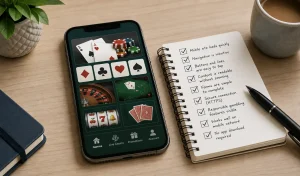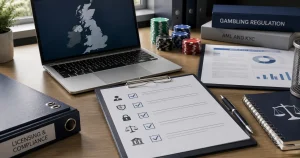


Game listings can change, so confirm titles in the casino lobby and check account access, game information and terms before playing.
Finding Play’n GO Games in a UK Casino Lobby
When you want to play Play’n GO slots in the UK, the useful question is not which casino once advertised them. It is whether the operator’s lobby shows them now, and whether you can open them from your account. Game availability can change, so an old review, forum post or search result is a starting point, not confirmation.
I used to treat a provider logo as a promise that its games would be there. It isn’t. A casino may list a supplier on a general page while a particular title is unavailable, or its lobby may have changed since that page was written. Check the operator itself before you spend time registering or making a deposit.
Search the lobby, not just the homepage
After signing in, look for the casino’s game library or slots lobby. If there is a search field, enter Play’n GO with the apostrophe and try Play’n as well if the first search returns nothing. Some lobby searches match title names more reliably than provider names; others have a separate provider filter. The layout varies by operator.
If the site offers filters, look for one labelled “provider”, “studio” or similar. Selecting Play’n GO should narrow the displayed games, if that provider is currently available and the filter is working as expected. A blank result is not definitive proof that the casino has no Play’n GO games: the filter could be absent, the search could be limited, or the lobby may require a different spelling. Try the site’s own help pages or ask customer support to confirm.
Don’t confuse a general slots category with a provider listing. Seeing a large slots collection does not establish which companies supply it. Likewise, a logo in a footer or promotional banner does not tell you whether the games are playable in the casino lobby. “Featured” is a marketing label, not a stock check.
Megaways Slots at UK Online Casinos: What to Know
Confirm a title can actually be opened
If the lobby returns a result, open the game’s information panel or launch page and check that it loads from your account. A title card can remain visible even if the game is temporarily unavailable, and a search result may lead to a page that does not offer a playable session. If you see an error, a maintenance notice or a message that access is restricted, don’t assume the casino carries a usable version just because its name appears in search.
Availability can also depend on where you are accessing the service and on the operator’s current arrangements. If you are using an account from the UK, make your check while signed in to that account rather than relying on a page that may show a broader catalogue. If the lobby is unclear, ask support a direct question: does this casino currently offer Play’n GO games to UK customers, and can you name a title that is available in the lobby? Keep the answer in writing if you may need to refer back to it.
I’ve found that a specific question gets a more useful answer than “Do you have these slots?” Ask about the provider and current UK availability, not just whether the casino has a large selection. If support sends you back to a generic games page, that still leaves the check unfinished.
Treat casino round-ups as leads
A page claiming to show the best online casinos with Play’n GO slots in the UK may help you decide where to look, but it cannot replace a live check. Listings can be out of date, and “best” may reflect an editor’s ranking rather than anything about your own access. Before relying on a recommendation, visit the operator’s lobby and repeat the search there.
Be cautious with pages that use provider names as decoration but offer no way to establish what is currently available. A clear explanation of how to check is more useful than a confident list with no date or evidence. I’d rather spend a minute in the lobby than trust a badge that might have been copied from an old page.
Do
- Search the casino’s game library or slots lobby
- Use the provider filter for Play’n GO
- Confirm a title loads from your account
- Ask support direct questions in writing
Don’t
- Rely on homepage logos or footer badges
- Trust general slots categories as provider lists
- Use “featured” labels as a stock check
- Assume a search result confirms playability
You can also check the operator’s own game information or help centre. Look for wording that connects Play’n GO specifically to the games offered to customers in the UK. If a page only describes the casino generally, or refers to a catalogue without showing which games are accessible, it does not settle the question. Ask support to point you to the relevant lobby or provider page.
Make the check before committing
If Play’n GO is the reason you are considering a casino, verify access before making a deposit. You do not need to guess from a brand name, a review headline or a list of providers. Search the live lobby, try the provider filter if there is one, open a result, and contact support if anything remains ambiguous.
That approach will not tell you which Play’n GO game is best; that is a separate decision. It does help you avoid choosing an operator on the assumption that a game provider’s catalogue is automatically available there. Check first. Then decide.
Which Play’n GO Games Are Actually Available?
A list of Play’n GO games can look definitive while telling you very little about what you can actually open. A catalogue may show titles associated with the studio, but that does not mean every casino has every title available to its customers. The useful question is narrower: which games can you play at the casino you are considering, right now?
I would not treat a general “best Play’n GO slots” list as a promise of access. A list might help you recognise a title, but it cannot tell you whether that game appears in a particular casino’s current selection. Availability can also change, so an old list is a poor substitute for checking the game itself.
Online Casinos with NetEnt Slots in the UK: What to Check
How to read a game list
Start by separating a provider catalogue from a casino’s playable selection. The first is a reference to games associated with a provider; the second is what a particular operator makes available to its customers. They are not interchangeable. If a review names a game, that alone does not establish that you will find it at the casino where you have an account.
The title is only part of the check. Make sure the result is the game you meant to find, rather than a similarly named entry, a promotional tile or a page describing the game. Open the game from the casino’s own listing and check that it loads and can be played under the account conditions that apply to you. A thumbnail in a catalogue is not the same thing as a working game.
I have learned not to confuse a polished lobby with a complete catalogue. A casino can organise games in ways that make a selection feel larger or more carefully curated than it is. Search by the exact title when you have one in mind, and use the provider label as a cross-check rather than assuming that a category page contains every relevant game.
What “best” can and cannot mean
There is no useful universal answer to which Play’n GO slot is best for every player. People mean different things by “best”: a familiar theme, a game they have already enjoyed, a particular style of play, or simply a title they can access. Those preferences do not establish that a game is available at a particular casino, nor do they tell you how it will perform.
There is no universal "best" Play’n GO slot; preferences depend on theme, style of play, or a title a player has already enjoyed.
I would also be wary of a ranking that gives no reason for its order. A confident label such as “top pick” can be a matter of editorial preference, not a guarantee of quality or fit. Decide what you want from a game before relying on someone else’s ranking, then confirm that the casino lists the exact title. No magic shortlist.
A useful catalogue entry should help you identify a game, not push you into opening an account. Look for the exact title and provider information, then check the casino’s own game entry. If the listing is unclear, or the game does not open, do not assume that another title with a similar name is the same game. It is better to pause than to rely on a guess.
Why availability needs a fresh check
A game list can become outdated, and availability at one casino does not establish availability at another. Even when a title appears in a casino’s lobby, access may depend on the account or the version of the site you are using. The practical check is therefore direct: find the game in the casino’s own catalogue, open its details, and see whether it is available to you.
That is particularly important if you have arrived at a casino because an outside page mentioned a specific game. Treat that mention as a lead, not proof. If the title is absent from the casino’s own catalogue, you have not found evidence that it is playable there. If it is present, confirm that the listing opens the game you intended.
You may also see people use “Play’n GO games” as shorthand for a broad collection. That phrase does not tell you which titles are included in a particular casino’s selection. Nor does the word “slot” in a page heading establish that every game listed is a slot. Read the individual entry instead of relying on a broad category label.
Slots at UK Online Casinos: Games and Providers
When comparing titles, keep your notes modest: the exact name, whether the casino currently lists it, and whether the game opens. That is more useful than copying a long list whose availability you cannot confirm. If you are browsing several casinos, repeat the check for each one; finding a title in one lobby does not answer the question for another.
The honest answer to “which games are actually available?” is the set of titles the casino itself currently lets you open. A catalogue or recommendation can point you towards names to check, but it cannot replace that check. I would rather leave a supposed list unclaimed than tell you a game is there when it may not be.
Checking a Casino’s UK Licence Before You Play
When I look at a casino carrying Play’n GO slots, I don’t treat a familiar game name or polished website as proof that the site is suitable for UK play. The first check is the operator’s UKGC licence. That matters because the Gambling Commission regulates gambling activity in the UK, including remote gambling offered to people in Great Britain. Its oversight applies even when the operator’s equipment is located elsewhere.
UKGC Licence
Ensure the operator holds a valid UKGC licence to legally offer remote gambling to customers in Great Britain, regardless of where their equipment is located.
That last point is easy to miss. A casino may be run from abroad, but location alone does not remove the requirement to hold the relevant UKGC licence when it offers remote gambling to customers in Great Britain. The Commission is the regulator for commercial gambling in Great Britain; it is not simply a badge an operator can display because it works with a game supplier.
Check the operator, not just the games
A provider’s name in a casino lobby tells you about the games being presented there, not whether the casino itself is authorised to serve UK customers. These are separate things. Before making a first deposit, find the operator’s legal name and UKGC licence details, then check that information against the Gambling Commission’s Public Register. Don’t stop at a logo or a line in the footer: make sure the register entry belongs to the business running the casino and that its status is current.
I used to take a licence badge at face value. It felt like enough. It isn’t a difficult check, and it is worth doing before you hand over payment details. If the operator’s name is hard to find, the licence information is unclear, or the register details do not match, pause rather than assuming it is a harmless website quirk.
The distinction between a business licence and an individual licence can also help make sense of what you see. The Commission issues operating licences to businesses and personal licences to certain individuals working in the gambling sector. For a player deciding whether a casino is authorised, the operator’s business licence is the relevant thing to verify. An individual’s licence is not a substitute for the company’s permission to provide gambling.
Online Casinos with Big Jackpot Slots: UK Checks
What a UKGC licence tells you
A current UKGC operating licence indicates that the operator is within the British regulatory framework for the activities covered by that licence. It does not mean every game listed on the site has been individually checked by you, or that you should assume a particular Play’n GO title is available. Nor is the provider name a shortcut around checking the casino: your account is with the operator, and it is the operator whose status you need to establish.
I find it useful to separate the checks. First, confirm the operator’s licence. Then, once you are satisfied the site is properly authorised, check the casino’s own lobby or help pages for the game you want. A search result, an old review, or a game thumbnail can linger after a casino’s offering changes. Don’t treat those as confirmation of what is currently available.
The rules also have a geographical scope. The Gambling Act 2005 sets the main framework for gambling in England, Wales and Scotland; Northern Ireland has a different legal framework. The Gambling Commission’s role described here concerns Great Britain. So when a site uses broad wording such as “UK licensed”, check what the operator actually says about the licence and the customers it serves, rather than reading a general label as a complete explanation.
Attention: Terms like "trusted" or "fully licensed" are marketing language unless you can verify the operator via the Gambling Commission’s Public Register.
Be wary of lookalike assurances
Terms such as “trusted”, “safe” or “fully licensed” are marketing language unless you can connect them to a real operator and a verifiable register entry. I’ve learned not to let confident wording do the checking for me. A legitimate-looking design, a popular slot, or a customer-service chat cannot replace the register.
If a casino says its licence belongs to a related company, make sure the relationship and the licensed business are clear. The name on the register should make sense alongside the operator named in the site’s terms. When it does not, don’t guess which company is responsible. Leave the deposit for later and seek clarification directly from the operator.
For someone comparing new or established Play’n GO casino sites in Britain, this is a practical filter, not a ranking. It won’t tell you which site has the best lobby, and it cannot establish that a specific game is present. It does help answer the more basic question: is the business offering remote gambling to customers in Great Britain operating under the required UKGC licence?
I now check that before getting drawn into browsing. It takes less effort than untangling a confusing account later. Verify the operator first; then decide whether the rest of the site deserves your attention.
Recommended online casinos
- x3betBonus: Welcome Pack 100% Up to £1.000 + 200 Free Spins · Payout speed: 1-3 business days
- EvoSpinBonus: 125% up to €2500 + 125 Free Spins · Payout speed: 1-3 business days
- NightLuckBonus: Welcome Pack + 805% Up To 6400€ + 280 FS · Payout speed: 1-3 business days
- BeOnBetBonus: 100% up to €500 + 100 FS · Payout speed: 1-3 business days
- DieselwinBonus: Welcome Pack 250% up to £4000 + 200 FS · Payout speed: 1-3 business days
- JetsetspinsBonus: 200% Bonus + 100 Free Spins + Free Royal Wheel · Payout speed: 1-3 business days
- ZombillionBonus: Welcome Pack 250% up to £4000 + 200 FS · Payout speed: 1-3 business days
- AmunbetBonus: Join now and get 450% up to 2,700 GBP + 450 FS · Payout speed: 1-3 business days
- SpinFormulaBonus: 550% Up To £15,000 + 550 FS · Payout speed: 1-3 business days
- BritsinoBonus: Welcome Package – Get your £2,200 + 2,000 FS · Payout speed: 1-3 business days
Playing Play’n GO Slots on Your Phone
A slot can look fine on a desktop and still feel awkward on a phone. Buttons sit close together, the game takes time to load, or the screen seems to jump when you turn the device. I check those basics before settling in. The provider name alone tells you very little about how a particular casino’s mobile setup will behave.
Red Tiger Slots at UK Casinos: How to Verify Availability
Start with the casino’s own site or app, if it offers one, and open the game from there. A link found elsewhere may lead to a different version, a sign-in page or a game that is not available through that operator. Once it opens, give the screen a moment to settle rather than tapping repeatedly while it loads. I have done that and ended up with menus on top of menus. Not clever.
Check that the game fits the screen in portrait or landscape mode, and try the orientation that feels natural to you. The controls should be easy to read and tap without covering important parts of the display. If the balance, spin control or settings are clipped, or the game keeps reloading, close it and reopen it from the casino lobby. If the problem continues, the casino’s support team is the right place to ask; a provider logo on the screen does not tell you who can help with your account.
A phone connection can change as you move around, so avoid starting a session if the signal is dropping in and out. If a spin appears to hang, do not assume straight away that it failed. Wait for the game to respond, then check the displayed balance or game history before trying again. Repeated taps can make it harder to tell what happened. That small pause has saved me from adding confusion to a technical wobble.
Mobile Setup Check
- Open the game via the casino’s own site or app
- Verify the game fits the screen in portrait or landscape
- Check that controls are easy to read and tap
- Ensure a stable internet connection
- Test volume and screen brightness
Also look at how the game behaves when you leave it. Switching apps, locking the screen or receiving a call may interrupt play, and the casino’s software may ask you to sign in again when you return. Keep your login details private, and use the casino’s normal sign-in route rather than following a message or pop-up that asks you to enter them. If the screen looks unfamiliar, stop and reopen the casino directly.
For UK play, mobile access does not remove the rules that apply to online slots. Autoplay is prohibited, and each spin must be separated by at least 2.5 seconds. If a game appears to offer an autoplay control, do not use it; check that you are in the UK casino’s version and contact the operator if something looks wrong. A smooth interface is useful, but it is not a reason to rush through the controls.
Before you begin, check the volume, screen brightness and whether you are on a connection you trust. Those sound like minor details until a game starts making noise in the wrong place or the display becomes hard to read. I prefer a short test run with the controls and menus before I decide the setup is comfortable. If it is not, switching to a larger screen is a perfectly sensible fix. Mobile should mean accessible, not fiddly.
Play’n GO as a Casino Games Provider
A games provider and a casino operator do different jobs. The provider develops or supplies gaming software; the operator runs the account you use, takes deposits, handles withdrawals and applies its own terms. I find that distinction useful because a familiar provider name can make a casino feel more established than it is. It tells you who is associated with a game, not who is responsible for your account.
Push Gaming Slots at UK Online Casinos
For play in Great Britain, the operator offering remote gambling to customers must hold a UKGC licence, wherever its equipment is located. The Gambling Commission also issues licences to businesses and individuals involved in gambling. Those are separate roles: a software supplier’s status does not replace the operator’s obligation to hold the appropriate licence. Before depositing, I would check the casino itself on the Commission’s Public Register rather than treating a provider logo in a lobby as proof of approval.
That matters when you see searches or marketing language about a “casino platform”. It might refer to the software behind a casino, a collection of games supplied to it, or simply the operator’s own site. Those terms are not interchangeable. Nor does the phrase “live casino” establish that a provider supplies live-dealer tables; that is a different format from a digital slot or roulette game. I would look for a clear description of what is actually being offered, not infer it from a provider name.
The same caution applies to Play’n GO. A casino’s current game information is the practical place to confirm what it carries, while the register is where to check the operator’s licensing position.
I used to treat a provider badge as a shortcut: recognised name, therefore safe choice. It isn’t. The operator remains the business you deal with for deposits, payouts, account support and promotional conditions. If something goes wrong, knowing the supplier’s name does not tell you who holds your account or handles a complaint.
Provider vs Operator
A provider supplies the software, but the operator is responsible for your account, deposits, and payouts.
So read the provider label as a clue about who may have supplied the software, not as a review of the casino around it. Check the operator separately, and don’t assume that a slot supplier also runs a casino, offers live games, or sets the terms attached to your account. A logo is not a licence.
Free Demos, Deposits and Playing for Money
A free demo and a real-money game can look much the same on screen, but they are different ways to play. In a demo, you are not staking money you have deposited; in real-money play, your balance is involved. I used to treat “free” as a complete description. It isn’t. Check what the casino is actually offering before you open the game.
If you want to try a Play’n GO slot without depositing, first see whether the casino provides a demo for that particular title. Access can depend on the operator and the game, so don’t assume a demo is available just because a slot appears in a lobby. If there is a play-for-fun option, read the on-screen prompts carefully and make sure you have not switched into real-money play by mistake.
“No deposit bonus” is a separate offer, not another name for a demo. It may involve promotional funds or spins, and the operator’s terms determine how it works. A search for free spins or a no-deposit offer is not proof that one is currently available. I’ve learned not to plan around a promotion until I can see its terms on the casino’s own site. That saves a lot of hopeful clicking.
Microgaming Slots at UK Online Casinos: What to Check
The same goes for claims about a low minimum deposit or a specific deposit amount. These are operator details, not a feature you can safely infer from the game provider’s name. Check the casino’s cashier and account information before deciding whether to fund an account. I would not deposit simply to find out whether a particular game opens or a promotion applies.
For real-money play in Great Britain, use a casino holding a current UKGC licence. The casino operator handles deposits and payouts; a game provider does not take your bet or pay your winnings directly. Before you put money in, check that the account and game are in the mode you intend, and read the operator’s own information rather than relying on a banner or an old offer page.
A demo can help you get a feel for a game without putting deposited funds at stake, where the casino makes that option available. It cannot tell you that a bonus is active, that a deposit is required, or that the same play mode will be offered every time. Keep those decisions separate. Free play first; money only when you have checked what you are agreeing to.
Checking Slot RTP and Game Information
I treat the information panel as part of the game, not as small print to skim past. Before playing, I look for the rules, the return to player (RTP), any volatility description and an explanation of the bonus features. If something is missing or unclear, I don’t fill the gap with a number from a different page.
Understanding RTP and Volatility
Return to Player (RTP) is a theoretical measure of returns over a very large number of plays, not a guarantee for a single session. Volatility describes how wins may be distributed (low, medium, or high), which helps identify the style of play rather than predicting outcomes.
RTP is a theoretical measure of how much a slot returns across a very large number of plays. It is not a promise about what you will get back in a particular session, and it cannot tell you whether your next spin will win. I used to see a high RTP figure and read it as a reason to expect better results straight away. That was the wrong takeaway. It says nothing reliable about the outcome of a short run.
Check where the figure appears and whether it relates to the version you are opening. A specialist review may describe one version, while the game information shown by a casino may describe another. Treat the casino’s own rules or information panel as the relevant place to confirm the details for that session. If you cannot find an RTP figure there, don’t assume one based on a title or a description elsewhere.
Volatility is a separate clue about how wins may be distributed, not a rating of how good a slot is. A label such as low, medium or high can help you understand the style of play being described, but it does not guarantee frequent wins or a particular payout. Read the game’s own explanation if one is provided, and don’t turn a broad label into a forecast.
Nolimit City Slots at UK Casinos: What’s Verified
I also check the rules for symbols, feature triggers and any special rounds before deciding whether a game suits me. That matters more than a “top” label: a ranking cannot tell you how the game behaves, and a list of titles cannot confirm the information for the version at a particular casino.
Keep the checks simple: confirm the displayed game details, understand what the RTP and volatility labels do—and don’t—tell you, then decide whether you are comfortable playing. No figure predicts your session.
Play’n GO Bonuses: Read the Terms Before You Opt In
A bonus attached to a Play’n GO slot is an offer from the casino, not a promise made by the game itself. That distinction matters: a search for a Play’n GO welcome bonus, free spins or a code can turn up marketing language, but the terms at the operator decide what you actually receive and what you must do to withdraw any winnings.
Jackpot King Slots at UK Casinos: What to Verify
I used to focus on the headline and treat the conditions as fine print. That was backwards. Before opting in, I now look for the offer’s eligibility rules, whether it needs a code, which games qualify, and how winnings are handled. If the offer is described as “free”, check what actions are required to claim it and whether any restrictions apply. “No deposit” is still a promotion with conditions; the label alone does not tell you what those are.
The key UK rule is the wagering cap. The Gambling Commission’s limit of 10× on wagering requirements for bonus funds took effect on 19 December 2025. When an offer includes wagering, compare its stated requirement with that cap and read carefully to see what balance the requirement applies to. If the wording is unclear, do not assume the most generous interpretation. Ask the operator before you opt in, and keep its answer.
Also check whether the bonus applies to the slot you intend to play. A casino may set eligible games or other conditions in its own promotion terms; the presence of a Play’n GO title does not, by itself, establish that it qualifies. The same goes for a deposit bonus or a free-spin offer: availability and rules belong to the operator, so a code found elsewhere may not work for your account.
Yggdrasil Slots at UK Online Casinos: What to Check
I would not choose a casino on the size of a headline offer. Read the full terms, decide whether the restrictions suit you, and opt in only if you understand them. If they are hard to find, that is useful information too. No rush.
Book of Dead: What to Check Before You Play
If you’re looking for Book of Dead as a Play’n GO slot in the UK, treat the name as a starting point, not proof that a particular casino offers it. A game can appear in an old review, a search result or a promotional page and still be absent from the casino’s current lobby. I’ve learned not to mistake a familiar title for a live listing.
Check the casino’s own games area while signed in, and search the exact title there. If it appears, open its information panel rather than relying on a thumbnail or a banner. Read the displayed rules and game details before you start; don’t fill gaps with claims copied from another site. What matters is what the operator actually makes available to you.
The same caution applies if you see Legacy of Dead or Agent of Hearts mentioned beside Book of Dead. A shared list or recommendation does not establish that all those titles are available at the same casino, or that their provider and features are as described elsewhere. Verify each title separately.
Eyecon Slots at UK Casinos: What to Check
I’d also check that the casino’s page is current and that the game opens from the operator’s own lobby. A broken link, an outdated article or a game image in an advert isn’t confirmation. If the title is missing, ask customer support whether it is currently offered rather than assuming it will appear after you deposit.
Small check. Worth doing. Book of Dead slot details can vary by what the casino displays, so make your decision from the live game page, not an old promise.
Real-Money Play and UK Slot Limits
When you play a slot for money in Great Britain, the stake limit depends on your age. The maximum is £5 per game cycle if you are aged 25 or over. For players aged 18 to 24, it is £2 per game cycle. The older group’s limit took effect on 9 April 2025; the limit for younger adults followed on 21 May 2025.
That cap applies to the stake for a game cycle, not to a suggested amount you can choose to ignore. I used to treat small-looking spin buttons as a harmless detail and focus on the game instead. The amount matters. Check what the game is set to stake before you play, and don’t assume every slot screen presents that setting in the same way.
If you’re looking for Play’n GO slots to play for real money in the UK, the name in a search result doesn’t establish that a particular title is currently available or that its displayed stake fits your circumstances. The same goes for searches mentioning three-dimensional slots or Agent of Hearts: don’t take a result as confirmation of a title’s features or availability. Check the game and stake shown at the casino before starting.
A search for Bitcoin play or a payout percentage doesn’t change the stake rules. The age-based cap still matters when a slot is played for money; a game’s theme or advertised return does not raise it. I’d keep the decision plain: know your age group’s limit, check the stake per game cycle, and stop if the amount on screen isn’t clear.
Small print, real money.
Are Amatic slots covered by GamStop self-exclusion?
Yes, when you play them through a Great Britain-licensed casino, GamStop applies to the operator’s online gambling service, including its Amatic games. Amatic itself does not run consumer-facing casinos.
Do Amatic casinos on GamStop have self-exclusion options?
Yes. Great Britain-licensed online operators have been required to participate in GamStop since 31 March 2020; Amatic supplies games but does not operate the casino.
What is Amatic Industries and when was it founded?
Amatic Industries is an Austrian business-to-business gaming software supplier, founded in 1993. It supplies games to licensed casino operators rather than running casinos for players.
Material created by the team Basswin UK Guide